
Pest Control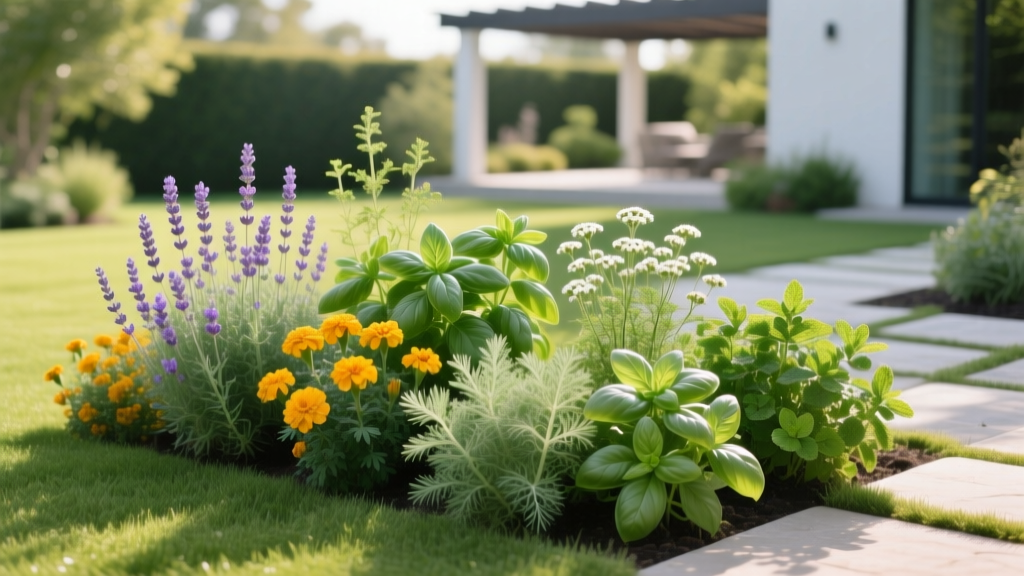
Top Bug Deterrent Plants for Insect and Rodent Yard Defense
The Science of Botanical Pest Deterrence
Integrating bug deterrent plants into your landscape is a cornerstone of ecological Integrated Pest Management (IPM). Unlike synthetic pyrethroid sprays that leave toxic residue, botanical repellents rely on Volatile Organic Compounds (VOCs) to disrupt the olfactory receptors of target pests. According to the Environmental Protection Agency (EPA), botanical pesticides and repellents degrade rapidly in sunlight and soil, making them ideal for high-traffic family yards.
However, a common misconception is that simply planting a citronella geranium will create an invisible forcefield against mosquitoes. In reality, the VOCs—such as linalool, geraniol, and citronellal—must be physically released. This requires strategic placement where human or animal movement brushes against the foliage, or routine mechanical crushing to volatilize the oils into the immediate airspace.
Myth vs. Fact: The Citronella Confusion
Myth: The 'Mosquito Plant' (Pelargonium citrosum) sold at big-box stores is true citronella.
Fact: True citronella is a tropical grass (Cymbopogon nardus) that only survives outdoors year-round in USDA Zones 10-12. The scented geranium often marketed as a mosquito repellent contains negligible amounts of actual citronellal and offers minimal spatial protection unless the leaves are continuously crushed.
Myth: The 'Mosquito Plant' (Pelargonium citrosum) sold at big-box stores is true citronella.
Fact: True citronella is a tropical grass (Cymbopogon nardus) that only survives outdoors year-round in USDA Zones 10-12. The scented geranium often marketed as a mosquito repellent contains negligible amounts of actual citronellal and offers minimal spatial protection unless the leaves are continuously crushed.
Tier 1: Insect-Repelling Botanicals & Active Compounds
When selecting bug deterrent plants, you must match the plant's active chemical profile to the specific insect pressure in your microclimate. Below is a functional matrix for landscape planning.
| Botanical Name | Common Name | Target Pests | Primary Active VOC | USDA Zones |
|---|---|---|---|---|
| Lavandula angustifolia | English Lavender | Mosquitoes, Fleas, Flies | Linalool, Camphor | 5-9 |
| Tagetes erecta | African Marigold | Nematodes, Whiteflies | Alpha-terthienyl | 2-11 (Annual) |
| Nepeta cataria | Catmint | Mosquitoes, Aphids | Nepetalactone | 3-8 |
| Mentha pulegium | Pennyroyal | Ants, Fleas, Ticks | Pulegone | 6-9 |
| Rosmarinus officinalis | Rosemary | Cabbage Moths, Slugs | 1,8-Cineole | 8-10 |
Cultivar Selection & Cost Expectations
For lavender, avoid high-camphor varieties like Lavandula latifolia (spike lavender) if you want a pleasant patio scent; instead, purchase Lavandula angustifolia 'Hidcote' or 'Munstead'. Expect to pay $5 to $8 per 1-gallon nursery pot. For root-knot nematode suppression in vegetable beds, Tagetes erecta (African Marigold) is vastly superior to Tagetes patula (French Marigold). Research from University of Minnesota Extension confirms that African marigolds secrete higher concentrations of alpha-terthienyl from their roots, effectively sterilizing the top 12 inches of soil from harmful nematodes when planted as a dense cover crop.
Tier 2: Rodent Defense Strategies
Insect defense is only half the battle; mice, voles, and groundhogs can decimate root systems and hardscaping. Rodents rely heavily on their vomeronasal organ to detect predators and toxic flora. You can exploit this by introducing plants rich in thiosulfinates and alkaloids.
The Allium Barrier
Members of the Allium genus—including garlic, onions, chives, and ornamental alliums—contain sulfur-rich compounds that severely irritate rodent nasal passages. Planting large ornamental cultivars like Allium 'Globemaster' (which reach 36 inches tall) creates a visual and olfactory barrier. Plant bulbs at a depth of 8 inches and space them 12 inches apart along the perimeter of your property. Bulb costs average $1.50 to $2.50 each when bought in fall bundles.
Toxicity as a Deterrent: Daffodils and Snowdrops
Voles and gophers will eat tulip and crocus bulbs, but they will avoid Narcissus (Daffodils) and Galanthus (Snowdrops). These plants contain lycorine, a toxic, bitter alkaloid. Interplanting daffodil bulbs among your vulnerable root vegetables or beneath fruit trees creates a subterranean defense grid that rodents will instinctively tunnel around.
Strategic Placement Framework: The 3-Zone Defense
To maximize the efficacy of bug deterrent plants, abandon random scattering and adopt this targeted 3-zone layout:
- Zone 1: The Perimeter (Rodent & Tick Defense)
Line the boundary of your property, especially near wooded edges, with tall Alliums, Daffodils, and Pennyroyal. Pennyroyal is a low-growing mint that repels ticks, but warning: it is highly invasive. Plant it inside 12-inch deep sunken PVC pipes or metal landscape edging to restrict rhizome spread. - Zone 2: The Hardscape & Patio (Flying Insect Defense)
Flank your outdoor seating with Catmint (Nepeta cataria) and Rosemary. Studies indicate that nepetalactone, the essential oil in catmint, is up to 10 times more effective at repelling mosquitoes than DEET in localized spatial tests. Plant these 18 inches from the edge of your patio so that guests brushing past them trigger oil release. - Zone 3: The Vegetable Garden (Soil & Crop Defense)
Border raised beds with African Marigolds and Nasturtiums. Nasturtiums act as a trap crop, drawing aphids and blackflies away from your brassicas and tomatoes. Space marigolds 8 to 10 inches apart to ensure their root exudates overlap and create a continuous nematode-suppressing zone.
Maintenance: Maximizing Volatile Oil Release
Bug deterrent plants require specific maintenance to keep their chemical defenses potent:
- Mechanical Agitation: Use a soft-bristled broom or your hands to gently brush the tops of lavender and rosemary plants twice a week during peak mosquito season (dusk and dawn). This mimics wind and animal movement, forcing the plant to replenish and release surface oils.
- Soil Stress for Potency: Do not over-fertilize or over-water Mediterranean herbs like lavender and rosemary. Mild drought stress and lean, sandy soils actually force the plant to produce higher concentrations of defensive essential oils. Rich, heavily composted soil produces lush, weak-smelling foliage that pests easily ignore.
- Deadheading: For marigolds and catmint, aggressive deadheading prevents the plant from putting energy into seed production, redirecting it toward continuous foliage growth and root exudate secretion.
Frequently Asked Questions
Do bug deterrent plants eliminate the need for pest control sprays?
No. Botanical plants act as a spatial repellent and a biological barrier, reducing pest pressure by 30% to 50% in localized zones. For severe infestations (e.g., active termite colonies or heavy flea populations in pet areas), they must be combined with targeted EPA-registered treatments or professional IPM interventions.
Are mint-family deterrent plants safe for dogs and cats?
Exercise extreme caution. While Catmint (Nepeta cataria) is safe, Pennyroyal (Mentha pulegium) and certain essential oil concentrations in peppermint can be highly toxic to dogs and cats if ingested, causing liver failure. If you have pets that graze on yard foliage, substitute Pennyroyal with Thyme (Thymus vulgaris), which repels insects via thymol and is generally non-toxic to foraging pets.
How long does it take for marigolds to suppress nematodes?
African marigolds must be grown as a dense cover crop for a minimum of 2 to 3 months before planting susceptible vegetables. Simply planting a marigold next to a tomato plant in the same season will not provide immediate nematode protection; the alpha-terthienyl must accumulate in the soil matrix over time.

