
Pest Control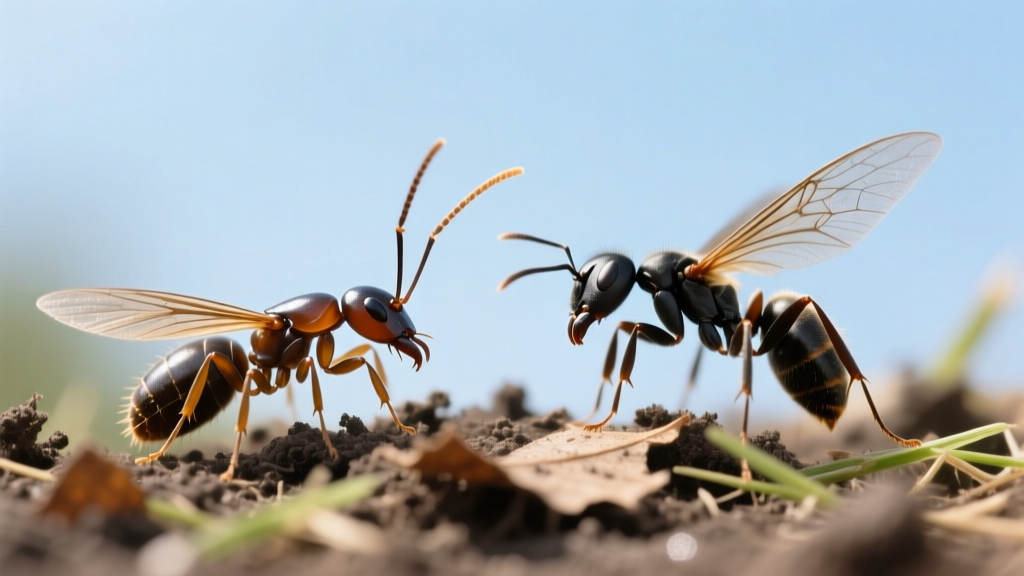
Bug That Looks Like an Ant With Wings: Termite vs. Flying Ant Guide
The Panic on the Patio: What Is That Bug?
Finding a swarm of winged insects near your home's foundation or crawling out of your baseboards is a jarring experience for any homeowner. When you spot a bug that looks like an ant with wings, your mind likely jumps to the worst-case scenario: a structural termite infestation. However, not every winged insect invading your space is a wood-destroying organism. In the vast majority of residential cases, these insects are either termite alates (swarmers) or reproductive carpenter ants.
Misidentifying these pests can lead to catastrophic financial mistakes. Treating a carpenter ant colony with a $2,500 subterranean termite baiting system is a waste of capital, while ignoring a termite swarm because you assumed they were harmless ants can result in tens of thousands of dollars in structural damage. This guide provides a definitive, expert-level framework for identifying the insect, assessing the damage, and executing the correct treatment protocol.
Morphological Matrix: Termites vs. Flying Ants
To accurately identify the bug that looks like an ant with wings, you must examine three specific anatomical features: the waist, the antennae, and the wings. Capturing a specimen in a glass jar and using a 10x jeweler's loupe or a smartphone macro lens will reveal the following distinctions.
| Anatomical Feature | Termite Swarmer (Alate) | Flying Carpenter Ant |
|---|---|---|
| Waist (Thorax-Abdomen Connection) | Broad and uniform; no distinct pinch between the thorax and abdomen. | Narrow and sharply pinched; distinct hourglass shape. |
| Antennae | Straight and beaded, resembling a string of tiny pearls. | Elbowed (bent at a 90-degree angle) with segmented clubs. |
| Wing Structure | Two pairs of equal-length wings; milky, opaque, and heavily veined. Wings extend far past the tip of the abdomen. | Two pairs of unequal-length wings (front wings longer than hind wings); clear or slightly tinted. Wings extend just past the abdomen. |
| Body Coloration | Generally pale, creamy, or dark brown/black with a uniform, soft-looking exoskeleton. | Glossy, hard exoskeleton; typically black, red, or a combination of both. |
Beyond the Bug: Inspecting the Damage
Visual identification of the insect is only half the battle. The true indicator of your treatment strategy lies in the type of damage the colony is inflicting on your property. Termites and carpenter ants interact with wood in fundamentally different ways.
Subterranean Termite Damage
Termites consume wood for sustenance. They digest cellulose, meaning the wood itself is their food source. When you probe termite-damaged wood with a screwdriver, it will feel brittle and honeycombed. Crucially, subterranean termites require moisture from the soil to survive. To protect themselves from dry air and predators while traveling between the soil and the wood, they construct mud tubes. These tubes are typically 1/4 to 1 inch wide, composed of soil, saliva, and feces, and are often found climbing up concrete foundations, piers, or sill plates. If you break open a damaged board and find packed dirt or mud inside the galleries, you are dealing with termites.
Carpenter Ant Damage
Carpenter ants do not eat wood. They excavate it to create smooth, expansive galleries for their nests. Because they are merely removing material, they must push the debris out of the nest. This results in the accumulation of frass—a sawdust-like material mixed with tiny insect parts and debris—piled beneath baseboards, window sills, or attic vents. If you probe the damaged wood, the galleries will feel incredibly smooth, as if they were sanded by a master carpenter, and they will follow the natural grain of the wood. No mud or soil will be present inside the galleries.
Swarming Seasons and Environmental Triggers
Understanding when these insects swarm can provide secondary confirmation of your identification. Swarming is a nuptial flight triggered by specific environmental conditions, designed to establish new colonies.
- Subterranean Termites: Typically swarm in early spring (March through May in most temperate zones), often on warm, sunny mornings immediately following a heavy rain. The eastern subterranean termite (Reticulitermes flavipes) is notorious for these mid-morning spring swarms.
- Drywood Termites: More common in southern coastal states, these tend to swarm in late summer or early fall, often at dusk or during the night, and are frequently attracted to exterior porch lights.
- Carpenter Ants: Generally swarm later in the season, from late spring through mid-summer (May through July). Their swarms often occur in the late afternoon or early evening and are highly attracted to indoor lighting if the nest is established within the wall voids.
Treatment Protocols and 2026 Cost Expectations
Once you have confirmed whether the bug that looks like an ant with wings is a termite or a carpenter ant, you must deploy the correct chemical or mechanical intervention. The pricing below reflects national averages for professional pest control services in 2026.
Warning: The DIY Termite Trap
While carpenter ant perimeters can sometimes be managed with retail baits, subterranean termites require professional-grade soil trenching or commercial bait matrices. Retail 'termite foams' only kill the insects they directly contact and do nothing to eliminate the subterranean colony, which may contain over a million workers. According to the EPA guidelines on termite control, structural protection requires creating a continuous chemical barrier or monitored bait perimeter.
Termite Eradication Strategies
Professional termite control relies on two primary methodologies, utilizing non-repellent active ingredients that termites carry back to the colony:
- Liquid Soil Barriers: Technicians dig a 6-inch trench around the foundation and inject a termiticide. Termidor SC (Fipronil 9.1%) and Altriset (Chlorantraniliprole) are the industry standards. These chemicals are non-repellent, meaning termites tunnel through them, unknowingly transferring the toxin to the colony via trophallaxis (food sharing). Cost: $8 to $12 per linear foot, averaging $1,400 to $2,200 for a standard 2,000 sq. ft. home.
- Bait Station Systems: Stations (like Sentricon or Trelona) are installed every 10 feet around the perimeter. They contain a cellulose matrix laced with a chitin synthesis inhibitor like Hexaflumuron or Noviflumuron, which prevents termites from molting. Cost: $1,200 to $2,800 for initial installation, plus $300 to $500 annually for monitoring and matrix replacement.
Carpenter Ant Eradication Strategies
Because carpenter ants forage widely for proteins and sugars, treatment focuses on intercepting their foraging trails and delivering slow-acting toxins to the satellite nests hidden in your walls. The University of Minnesota Extension recommends targeting the colony directly rather than relying solely on perimeter sprays, which can cause colony budding.
- Protein/Sugar Baits: Products like Advance Carpenter Ant Bait (Abamectin 0.011%) or Maxforce Fleet (Hydramethylnon) are placed directly on foraging trails. The workers carry the bait back to the queen. Cost: $150 to $350 for a professional interior and exterior baiting service.
- Dust Injections: If the nest location is identified (often by listening for a faint rustling sound in the walls at night), technicians will drill 1/8-inch holes into the wall void and inject a desiccant dust like Drione (Silica gel + Pyrethrin) or Tempo Dust (Cyfluthrin). Cost: $200 to $400, depending on the number of access points required.
Frequently Asked Questions
If I see one winged ant, does that mean my house is infested?
Not necessarily. A single flying ant may have simply blown in through an open door. However, if you find dozens of discarded wings on a windowsill, near a light source, or emerging from a baseboard crack, this indicates an active, mature colony is reproducing inside or immediately adjacent to your structure.
Do flying ants bite or sting?
Neither termite swarmers nor reproductive carpenter ants pose a direct physical threat to humans during a swarm. Termite alates have weak mandibles incapable of breaking human skin. While carpenter ant workers can deliver a mild pinch and spray formic acid if crushed, the winged reproductive caste is entirely focused on mating and flight, not defense.
Can I just spray the swarmers with aerosol bug killer?
Spraying the swarmers with a retail pyrethroid aerosol (like Raid) will kill the insects you see, but it is entirely cosmetic. The swarmers are just the reproductive offspring; the actual colony—comprising the queen and thousands of workers—remains hidden in the soil or wall voids, continuing to damage the structure. You must target the colony, not just the swarm.

