
Pest Control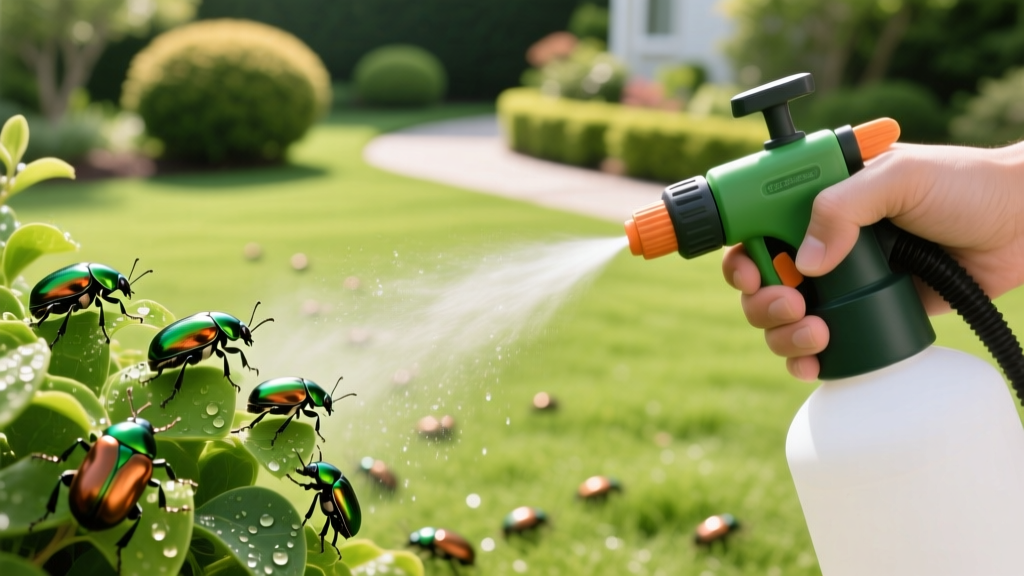
Best Bug Spray for Japanese Beetles: 2026 Yard Defense Guide
The Reality of Japanese Beetle Damage
Japanese beetles (Popillia japonica) are among the most destructive turf and ornamental pests in North America. Adult beetles skeletonize the foliage of over 300 plant species, showing an extreme preference for Tilia (linden), Rosa (roses), and Vitis (grapes), while their subterranean grub stage devours grassroots, leaving behind spongy, dead turf patches. Finding the right bug spray for Japanese beetles requires more than just picking a bottle off the shelf; it demands a strategic understanding of active ingredient residuals, pollinator safety, and precise application timing.
According to the University of Kentucky Entomology Department, adult beetles typically emerge in early summer, feeding for 30 to 45 days. Because they aggregate using pheromones, a single missed spray window can result in thousands of beetles descending on your yard. Below is a comprehensive breakdown of the most effective chemical and organic sprays, exact application rates, and integrated defense protocols for 2026.
The Japanese Beetle Life Cycle & Spray Timing Matrix
Applying a foliar bug spray for Japanese beetles during the grub stage is a waste of product, just as applying grub control during the adult swarm is ineffective. Use this matrix to align your chemical interventions with the pest's biological vulnerabilities.
| Time of Year | Life Stage | Target Area | Recommended Intervention |
|---|---|---|---|
| April - May | Grub (Late Instar) | Soil / Root Zone | Curative grub control (e.g., Trichlorfon) if damage is active. |
| June - July | Adult Emergence | Foliage / Flowers | Preventative foliar sprays (Bifenthrin, Cyfluthrin) at first sighting. |
| August - Sept | Egg / Early Grub | Soil / Root Zone | Preventative soil drench (Chlorantraniliprole) or beneficial nematodes. |
| October - March | Grub (Overwintering) | Deep Soil | No chemical action required; beetles are dormant below the frost line. |
Top Chemical Bug Sprays for Japanese Beetles
Synthetic pyrethroids and carbamates offer the fastest knockdown and longest residual protection against adult beetles. However, they vary significantly in cost, toxicity, and re-entry intervals (REI).
1. Bifenthrin (e.g., Talstar P, Bifen IT)
Bifenthrin is the gold standard for perimeter and ornamental defense. It provides a residual barrier of 21 to 30 days, meaning you only need to spray once a month during the peak summer swarm. Application Rate: 0.5 to 1.0 fl oz per gallon of water per 1,000 square feet of ornamental canopy. Cost: Approximately $0.12 per 1,000 sq ft when buying in concentrate form (3/4 gallon jug retails around $55). Failure Mode: Bifenthrin is highly toxic to aquatic invertebrates and bees. Never apply to blooming weeds or directly into water features.
⚠️ Pollinator Warning: The Rutgers New Jersey Agricultural Experiment Station explicitly warns against spraying synthetic pyrethroids on linden trees or other bee-favored plants while flowers are present. Wait until bloom drop is complete before treating the foliage.
2. Carbaryl (e.g., Sevin SL, Sevin 5% Dust)
Carbaryl provides aggressive, immediate knockdown. Beetles that contact treated foliage die within hours. However, its residual is shorter than bifenthrin (10 to 14 days), requiring more frequent applications. It is also highly toxic to beneficial insects, including honeybees and earthworms. Use Carbaryl only as a targeted spot treatment for severe, localized infestations on non-flowering ornamentals.
3. Cyfluthrin (e.g., Bayer Advanced Garden Insect Killer)
Cyfluthrin offers a middle ground: faster knockdown than bifenthrin but a slightly shorter residual (14 to 21 days). It is widely available in ready-to-spray hose-end attachments, making it ideal for homeowners who do not want to mix concentrates. Expect to pay around $18 for a 32 oz hose-end sprayer, which covers roughly 5,000 square feet of shrubbery.
Organic & Biological Alternatives That Actually Work
For gardeners managing edible crops (like grapes and raspberries) or those protecting active pollinator gardens, organic bug sprays for Japanese beetles are mandatory. These options require stricter adherence to application timing.
| Active Ingredient | Brand Example | Kill Speed | Pollinator Safety | Residual Length |
|---|---|---|---|---|
| Spinosad | Captain Jack's Deadbug Brew | 24-48 Hours | Safe once dry | 7-10 Days |
| Btg (Bacillus thuringiensis galleriae) | BeetleJiggle / SDS | 1-3 Days | Completely Safe | 5-7 Days |
| Azadirachtin (Neem Extract) | AzaMax / Azasol | Antifeedant (Starvation) | Safe once dry | 3-5 Days |
Spinosad: The Organic Heavyweight
Derived from soil-dwelling bacteria, Spinosad must be ingested by the beetle to be lethal. It causes severe neurological spasms, stopping feeding almost immediately, though death takes 24 to 48 hours. Critical Application Rule: Spinosad is highly susceptible to UV degradation. You must apply it at dusk. Spraying at noon will render the product useless within 48 hours. Cost is approximately $15 for a 16 oz concentrate.
Btg: The Beetle-Specific Pathogen
Unlike standard Bt kurstaki (which targets caterpillars), Bt galleriae specifically targets the digestive tracts of beetles. When Japanese beetles consume treated foliage, the Btg proteins crystallize in their alkaline midgut, causing fatal septicemia. It is entirely harmless to bees, birds, and mammals, making it the premier choice for organic rose and grape growers.
Application Protocols: Avoiding the 'Trap Crop' Mistake
The most common failure mode when using bug spray for Japanese beetles is inadvertently creating a 'trap crop.' If you spray a highly preferred plant (like a linden tree or a rose bush) with a slow-acting organic spray while a massive swarm is active, the plant's natural volatile oils combined with the beetles' aggregation pheromones will draw more beetles from neighboring yards to your treated plant before the spray can kill them.
- Monitor the Swarm: Watch for the first scout beetles in late June. Do not wait for the canopy to be skeletonized.
- Target the Perimeter: Apply a fast-knockdown synthetic pyrethroid (like Cyfluthrin) to the perimeter shrubs and less-preferred plants first to create a defensive buffer.
- Treat Preferred Hosts at Dusk: Apply your chosen spray to roses, grapes, and lindens in the late evening when beetle flight activity ceases and pollinators have returned to their hives.
- Remove Skeletonized Foliage: Beetles are attracted to the scent of damaged leaves. Prune and bag heavily skeletonized foliage to reduce the localized pheromone draw.
Integrated Yard Defense: Beyond the Spray Bottle
Foliar sprays only address the adult stage. True yard defense requires breaking the reproductive cycle by targeting the grubs in the soil.
- Beneficial Nematodes (Heterorhabditis bacteriophora): These microscopic worms actively hunt and infect Japanese beetle grubs in the soil. Application Rate: 25,000 to 50,000 nematodes per 1,000 square feet. Cost: ~$45 for a 50-million pack. Edge Case: Nematodes are living organisms. They must be stored between 35°F and 50°F upon arrival and applied to moist soil when ground temperatures exceed 60°F. Applying them to dry, hot soil guarantees 100% mortality of the beneficials.
- Milky Spore (Paenibacillus popilliae): A long-term biological control that builds up in the soil over 2 to 5 years. While it does not offer immediate relief, a single application (1 teaspoon per 4x4 foot grid) can provide 15+ years of localized grub suppression.
- Avoid Pheromone Traps: According to the University of Kentucky Entomology, commercial Japanese beetle traps attract far more beetles into your yard than they actually catch. They consistently result in heavier foliage damage on plants located between the trap and the beetles' origin point.
Frequently Asked Questions
How often should I reapply bug spray during peak season?
For synthetic pyrethroids like Bifenthrin, reapply every 21 to 30 days. For organics like Spinosad or Neem, reapply every 5 to 7 days, or immediately after a heavy rainfall exceeding 0.5 inches, as these products lack strong rain-fast binders.
Is Sevin dust effective against Japanese beetles?
Yes, Carbaryl (Sevin) dust is highly effective on contact. However, dust formulations are easily blown by the wind, posing a severe inhalation risk to the applicator and a high toxicity risk to foraging bees. Liquid concentrates applied via a pump sprayer offer vastly superior coverage, safety, and leaf adhesion.
Will treating my lawn for grubs stop adult beetles from flying into my yard?
No. Adult Japanese beetles are strong fliers and can travel up to 5 miles to find preferred host plants. Treating your lawn grubs protects your turf from root damage and prevents your yard from acting as a breeding ground, but it will not stop neighboring beetles from flying in to feed on your roses and trees. Foliar sprays are required for plant protection.

