
Pest Control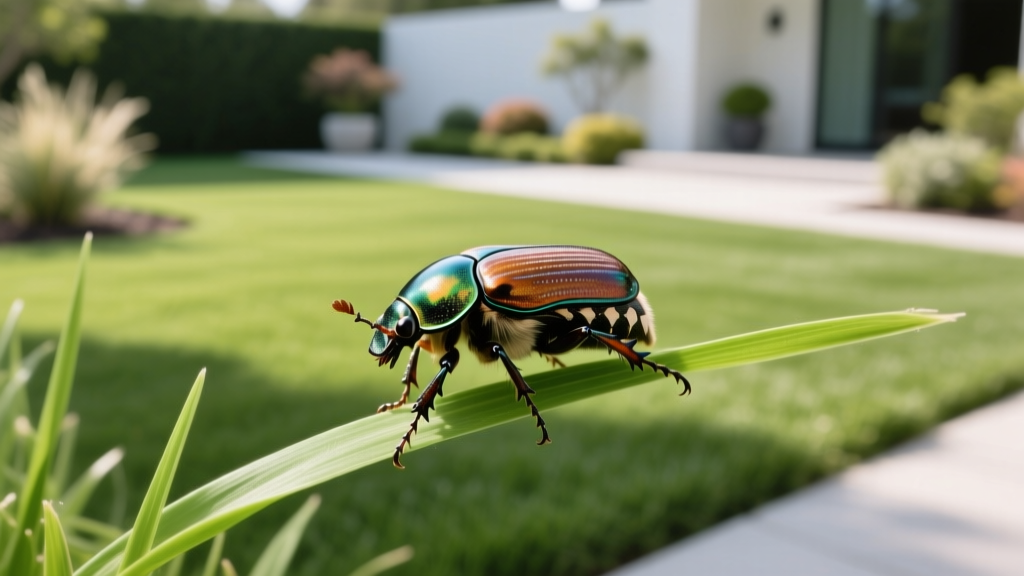
Bugs of NC: A Homeowner's Yard Defense and Treatment Guide
North Carolina's unique position in the turfgrass transition zone creates a challenging environment for lawn care. The state experiences hot, humid summers and relatively mild winters, providing an ideal breeding ground for a specific roster of destructive pests. When managing the bugs of NC, homeowners must transition from reactive spraying to proactive, seasonally timed defense strategies. Misidentifying a pest or applying the wrong active ingredient at the wrong time of year will not only waste money but can severely damage warm-season grasses like Bermudagrass, Zoysiagrass, and Centipedegrass.
This guide details the exact identification markers, biological triggers, and chemical application rates required to defend your yard against the most aggressive insects and the rodent issues they inadvertently cause.
The 'Big Four' Turf-Destroying Bugs of NC
1. White Grubs (Japanese Beetle & June Bug Larvae)
White grubs are the larval stage of several scarab beetles. They feed aggressively on turfgrass roots just below the soil surface, causing the grass to detach from the soil and roll back like loose carpet. In North Carolina, the most prevalent species are the Japanese beetle and the May/June beetle.
- Identification: C-shaped, cream-colored larvae with brown heads and six legs near the thorax. Size ranges from 0.5 to 1.5 inches depending on maturity.
- Damage Window: Peak feeding occurs in late summer (August through October). Spring feeding is usually minimal and rarely requires treatment.
- Threshold: Treatment is justified if you find more than 5 to 7 grubs per square foot when digging up a 1-foot by 1-foot section of turf.
2. Red Imported Fire Ants (RIFA)
Fire ants are arguably the most notorious pests in the southeastern United States. They build large, unsightly mounds in sunny areas of the lawn and exhibit highly aggressive behavior when disturbed, delivering painful, venomous stings that can cause severe allergic reactions.
- Identification: Reddish-brown ants ranging from 1/8 to 1/4 inch long. Mounds are dome-shaped, composed of loose soil, and lack a visible central opening.
- Damage Window: Active year-round in NC, but mound building peaks in spring and fall when soil moisture and temperatures are optimal.
3. Fall Armyworms
Despite the name, fall armyworms can strike North Carolina lawns from mid-summer through early autumn. They are surface feeders that chew the green leaf layer off the turf, leaving behind brown, ragged stubble that looks like it has been scalped by a dull mower.
- Identification: Green, brown, or black caterpillars up to 1.5 inches long with a distinct inverted 'Y' shape on the front of their heads.
- Damage Window: Late July through September. Outbreaks are often sudden and can strip a newly sodded or seeded lawn in 48 hours.
4. Southern Chinch Bugs
Chinch bugs are a severe threat to St. Augustinegrass and Centipedegrass, particularly in the coastal and southern Piedmont regions of NC. They inject a toxic saliva into the grass blade while feeding, causing rapid yellowing and death of the turf.
- Identification: Tiny insects (1/6 inch) with black bodies and white wings marked with a black triangular pattern. Nymphs are bright red with a white band.
- Damage Window: Peak damage occurs during the hottest, driest months of July and August, often mimicking drought stress.
The Rodent Connection: Why Bug Control Stops Moles
While moles are mammals, not insects, their presence in your yard is directly tied to the bugs of NC. Eastern moles consume up to 100% of their body weight daily, primarily feasting on white grubs and earthworms. By executing a targeted grub elimination strategy, you destroy the mole's primary food source. Without a reliable food supply, moles will naturally tunnel out of your property in search of better foraging grounds, effectively solving your rodent tunneling problem without the need for toxic rodenticides or lethal traps.
Seasonal Treatment Calendar for North Carolina Yards
Timing is the most critical variable in pest control. Applying a preventative product after the grubs have already hatched will yield zero results. Follow this calendar to align your treatments with the biological life cycles of NC pests.
| Season | Target Pest | Action Required | Recommended Active Ingredient |
|---|---|---|---|
| Mid-Spring (May) | White Grubs | Preventative broadcast application | Chlorantraniliprole |
| Early Summer (June) | Fire Ants | Broadcast bait application | Hydramethylnon + Methoprene |
| Late Summer (Aug) | Grubs / Armyworms | Curative spot-treatment / Rescue spray | Trichlorfon / Bifenthrin |
| Early Fall (Sept) | Fire Ants | Secondary broadcast bait application | Indoxacarb |
Targeted Product Recommendations & Application Rates
According to research from NC State TurfFiles, selecting the correct chemical class is vital for avoiding turf burn and ensuring environmental safety. Below are the industry-standard products and exact application rates for residential lawns.
Grub Preventatives: Chlorantraniliprole
Found in products like Scotts GrubEx1 and professional-grade Acelepryn, chlorantraniliprole is a systemic insecticide that must be applied before the eggs hatch. It has a low toxicity profile for mammals and pollinators.
- Application Rate: 0.08 to 0.1 oz of active ingredient per 1,000 sq ft.
- Timing: Apply between May 1 and June 15 in the Piedmont and Coastal regions.
- Cost: Approximately $15 to $20 per 5,000 sq ft for consumer-grade granular formulations.
- Crucial Step: Water the lawn with 0.25 inches of irrigation immediately after application to move the chemical into the root zone where grubs feed.
Grub Curatives: Trichlorfon
If you missed the preventative window and find active grubs in August or September, you need a fast-acting curative like Dylox (Trichlorfon). It degrades rapidly in the soil (within 7-10 days) but kills active larvae on contact.
- Application Rate: Follow label rates strictly, usually around 1.5 to 2 lbs of granular product per 1,000 sq ft.
- Warning: Trichlorfon can cause phytotoxicity (turf burn) on certain warm-season grasses if applied during peak summer heat (above 90°F). Apply in the early morning or late evening.
Fire Ant Baits: The Two-Step Method
The NC State Extension Entomology department recommends the 'Two-Step Method' for fire ant control. Do not use contact sprays on mounds, as this causes the colony to split and bud into multiple new mounds.
- Step 1 (Broadcast): Apply a slow-acting IGR (Insect Growth Regulator) bait like Extinguish Plus (Hydramethylnon + Methoprene) across the entire yard using a broadcast spreader. Use 1.5 lbs per acre. The worker ants carry the bait to the queen, sterilizing or killing her over 2 to 4 weeks.
- Step 2 (Mound Drench): For nuisance mounds near patios or mailboxes, apply a fast-acting contact liquid drench like Bifen IT (Bifenthrin) at a rate of 1 oz per gallon of water, pouring 1 to 2 gallons directly onto the mound.
Organic vs. Conventional Defense Strategies
Homeowners must weigh the speed of conventional chemicals against the environmental benefits of organic controls. Here is a practical decision matrix for NC yards.
| Strategy | Best Used For | Pros | Cons |
|---|---|---|---|
| Beneficial Nematodes (Heterorhabditis bacteriophora) | White Grubs (Organic) | 100% safe for pets, children, and earthworms. Naturally reproduces in soil. | Requires strict soil moisture; UV light kills them; must be applied at dusk; slower kill rate. |
| Spinosad | Armyworms & Chinch Bugs | Derived from soil bacteria; OMRI listed for organic use; highly effective on caterpillars. | Highly toxic to bees when wet (apply only after sundown when bees are not foraging). |
| Pyrethroids (Bifenthrin, Lambda-cyhalothrin) | Broad-spectrum rescue treatments | Fast knockdown (kills within hours); long residual activity (up to 30 days). | Highly toxic to aquatic life; requires strict buffer zones near ponds or storm drains. |
Frequently Asked Questions
Why is my NC lawn turning brown in August even though I water it?
If your irrigation system is functioning and delivering at least 1 inch of water per week, late-summer browning is highly indicative of either a white grub infestation severing the roots, or chinch bugs injecting toxic saliva into the blades. Perform a 'tug test': grab a handful of brown grass and pull. If it lifts easily with no root resistance, dig into the top 2 inches of soil to look for C-shaped white grubs.
Are the bugs of NC dangerous to pets?
Red imported fire ants pose a severe threat to dogs and cats, especially young or immobile animals. Their venom contains piperidine alkaloids that cause pustules and, in rare cases, anaphylaxis. Conversely, the chemical treatments used for pests, such as chlorantraniliprole, have extremely low mammalian toxicity and are generally safe for pets once the granules have been watered in and the grass surface is dry.
How do I prevent mosquitoes without harming my lawn?
Mosquitoes do not damage turf, but they breed in the micro-environments your lawn provides. The Asian Tiger Mosquito, prevalent in NC, breeds in tiny amounts of standing water. Eliminate water trapped in tarps, birdbaths, and clogged gutters. For adult mosquito defense, the EPA recommends targeted barrier sprays using bifenthrin applied to the undersides of shrub leaves and dense ivy borders, rather than broadcasting over the open lawn where it provides minimal residual value.

