
Pest Control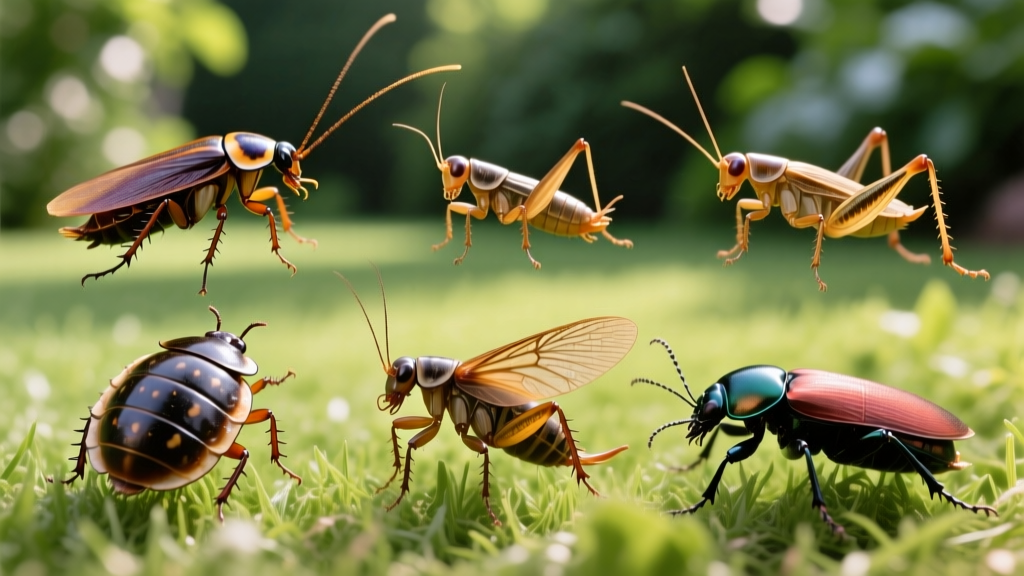
Bugs That Look Like Cockroaches But Aren't: Visual ID Guide
The Panic Factor: Why Misidentification Costs You Money
Spotting a dark, fast-moving insect scurrying across your kitchen baseboard triggers an immediate, expensive reaction. Homeowners often rush to buy $50 worth of gel baits or hire an exterminator for a $250+ initial treatment. However, misidentifying the insect is a costly mistake. Many harmless or entirely different insects share the cockroach's dark, flattened profile, long antennae, and rapid movements.
True cockroaches belong to the order Blattodea. They possess specific anatomical traits: leathery forewings (tegmina), chewing mouthparts, and incomplete metamorphosis. If the insect in your home exhibits hardened wing covers (elytra), enlarged jumping hind legs, or aquatic adaptations, you are likely dealing with an imposter. Accurately identifying bugs that look like cockroaches but aren't prevents unnecessary chemical exposure and saves you from treating the wrong pest.
Quick-Reference Matrix: Cockroaches vs. Common Imposters
Use this diagnostic table to perform a rapid visual assessment before purchasing any pest control products.
| Trait | True Cockroaches (Blattodea) | Ground Beetles (Carabidae) | June Bugs (Scarabaeidae) | Field Crickets (Gryllidae) |
|---|---|---|---|---|
| Wing Structure | Leathery, flexible tegmina | Hardened, shell-like elytra | Hardened, glossy elytra | Leathery, but fold flat; prominent hind legs |
| Antennae | Extremely long, thread-like, whiplike | Moderate, often thread-like but thicker | Short, clubbed or lamellate | Extremely long, thread-like |
| Movement | Rapid, darting scurry; avoids light | Fast running; freezes when threatened | Clumsy, erratic flight; slow crawling | Hopping, jumping, and walking |
| Light Reaction | Photophobic (flees from light) | Often attracted to porch lights | Highly attracted to bright lights | Attracted to light and warmth |
| Primary Habitat | Kitchens, bathrooms, damp crevices | Under mulch, rocks, damp soil | Trees, shrubs, lawn soil (as grubs) | Tall grass, fields, basements |
The 4 Most Common Bugs That Look Like Cockroaches But Aren't
1. Ground Beetles (Carabidae)
Ground beetles are the most frequent culprits for indoor roach panic. Ranging from 1/8 to 1 inch in length, they feature dark brown or black, flattened bodies and long legs. Unlike roaches, ground beetles possess hardened wing covers (elytra) that meet in a straight line down the center of their back.
Expert Insight: The 'Good Bug' Status
Ground beetles are highly beneficial predatory insects. A single adult ground beetle can consume dozens of soft-bodied pests, including slugs, snails, and cutworms, per season. If you find one indoors, it likely wandered in under a poorly sealed door. Simply capture it with a cup and release it outside into your garden beds.
2. June Bugs & Oriental Beetles (Scarabaeidae)
June bugs (often called May beetles) are 1/2 to 1 inch long, oval-shaped, and range from reddish-brown to almost black. While they don't scurry like roaches, their dark color and clumsy crawling on indoor floors cause confusion. Their defining trait is their erratic, loud, and clumsy flight pattern. They are highly attracted to porch lights and will blunder into windows and screens.
Lawn Impact: While the adults are a nuisance around lights, their larvae (white grubs) feed on grassroots from late summer through fall. If you see June bugs indoors, inspect your lawn for brown, easily rolled-back patches of turf, which indicate a grub infestation requiring treatment with products like Scotts GrubEx ($25-$30 per 5,000 sq ft).
3. Field Crickets (Gryllidae)
Field crickets grow up to 1 inch long and feature the same dark brown or black coloration and long antennae as the German or Oriental cockroach. The critical anatomical difference lies in their hind legs. Crickets possess enlarged, muscular hind femurs adapted for jumping, whereas roaches have uniform, spiny legs built purely for running. Furthermore, crickets produce a distinct chirping sound by stridulating their wings, a behavior roaches completely lack.
4. Giant Water Bugs (Belostomatidae)
Often mistakenly called 'water roaches,' true giant water bugs are aquatic predators that can exceed 2.5 inches in length. They share the flat, oval, brown body shape of the American cockroach. However, water bugs have raptorial (grasping) front legs designed to catch prey, and a short, retractable breathing tube at the rear of their abdomen. They are occasionally found in garages or patios near water sources, having been attracted by outdoor lighting.
Taxonomic Clarifications: Wood Roaches and Palmetto Bugs
Search intent data shows homeowners frequently confuse two specific terms when researching lookalikes. It is vital to clarify these before proceeding with treatment:
- Pennsylvania Wood Cockroaches: These are true cockroaches (Blattodea), but they are strictly outdoor insects that feed on decaying wood. They do not establish breeding colonies indoors like German roaches. If they enter your home, they will die quickly without the high humidity and decaying organic matter of their natural habitat.
- Palmetto Bugs: This is not a separate species or a lookalike. 'Palmetto bug' is simply a regional colloquialism used in the American South for the American Cockroach (Periplaneta americana) and the Smokybrown Cockroach. If you have Palmetto bugs, you have a true roach problem requiring perimeter baiting and exclusion.
The 3-Step Field Identification Protocol
When you spot a suspect insect, avoid crushing it immediately. Follow this protocol to confirm its identity, referencing the Orkin cockroach identification guidelines for visual confirmation.
- Isolate and Observe the Wings: Trap the insect under a clear glass. Look closely at the wing covers. If the wings are hard, shell-like, and meet in a perfect straight line down the back, it is a beetle. If they are leathery, flexible, and overlap, it is likely a roach or cricket.
- Test the Light Response: Shine a flashlight directly on the insect. True indoor pest roaches (German, Brown-banded) will immediately dart for the nearest dark crevice. Beetles and crickets will often freeze, or in the case of June bugs, attempt to fly toward the light source.
- Check for Cerci: Look at the rear of the abdomen. Cockroaches possess two distinct, spike-like appendages called cerci. While some beetles have similar structures, the combination of cerci, leathery wings, and rapid, light-fleeing movement is the definitive roach signature.
Targeted Action Plans Based on Identification
Once you have confirmed the insect is an imposter, adjust your strategy to avoid wasting money on roach-specific baits, which will not kill beetles or crickets.
For Ground Beetles and Crickets (Occasional Invaders)
These insects do not breed indoors. Your goal is mechanical exclusion, not chemical eradication.
- Door Sweeps: Install heavy-duty, brush-style door sweeps like the Xcluder Pest Proof Sweep ($25-$40). Standard rubber sweeps degrade and leave gaps that ground beetles easily exploit.
- Monitor Traps: Place Catchmaster 72MAX glue boards ($15 for a 30-pack) along baseboards near exterior doors. This monitors entry points and captures occasional invaders without toxic residues.
- Perimeter Lighting: Swap exterior white LED or mercury vapor bulbs for yellow sodium vapor or warm 2700K LED bulbs, which are significantly less attractive to beetles and crickets.
For June Bugs (Lawn Pests)
If June bugs are entering the home, the source is your turf. Follow the EPA's safe pest control guidelines for integrated lawn management.
- Grub Treatment: Apply a preventative grub control containing chlorantraniliprole (e.g., Scotts GrubEx1) in late spring (May/June) before eggs hatch. For active late-summer infestations, use a fast-acting curative product containing trichlorfon (e.g., Bayer Advanced 24-Hour Grub Killer).
- Window Sealing: Repair micro-tears in window screens using clear screen repair tape, as June bugs frequently blunder into and tear damaged mesh.
Frequently Asked Questions
Can a cockroach look like a beetle?
Yes, some roaches like the Oriental cockroach have a dark, somewhat glossy, and oval appearance that mimics a beetle. However, the Oriental roach still possesses leathery tegmina (wings) and long, whiplike antennae, whereas beetles have hard elytra and shorter, thicker antennae.
Do bugs that look like cockroaches but aren't carry diseases?
Generally, no. True cockroaches are notorious vectors for pathogens like Salmonella and E. coli because they forage in decaying waste and sewers. Ground beetles, June bugs, and crickets do not frequent these environments and pose virtually zero disease risk to humans or pets.
How do I handle a suspected roach that I cannot identify?
Capture the specimen intact using a jar or tape, and submit it to your local university cooperative extension office. Many state extensions, such as the UC Statewide IPM Program, offer free or low-cost insect identification services that will provide a definitive, scientific answer.

