
Pest Control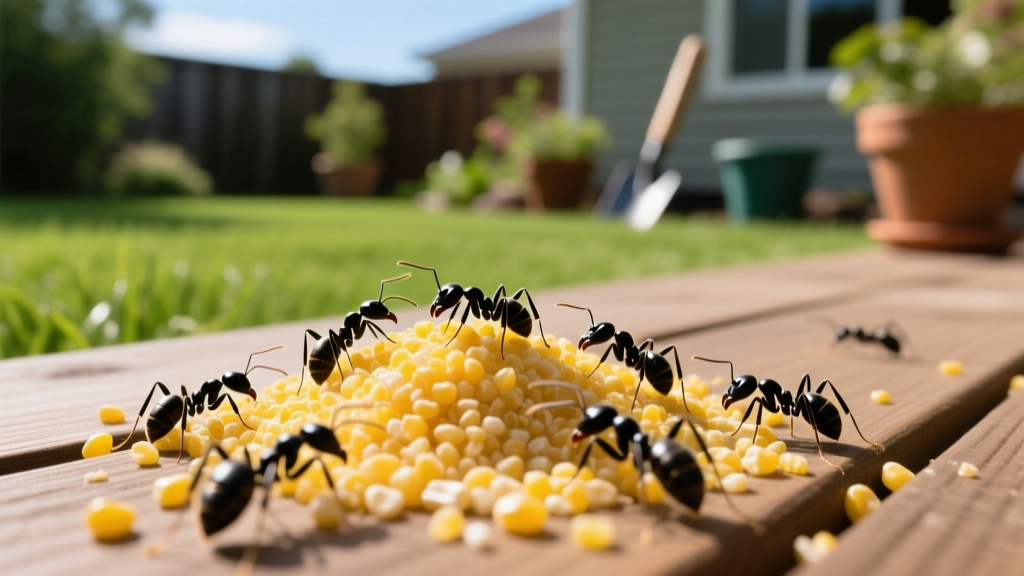
Can Grits Kill Ants? The Truth About This Viral Pest Myth
Every spring and summer, a familiar piece of pest control advice circulates on social media and neighborhood forums: sprinkle dry grits around your patio, driveway, or garden beds to eradicate ant colonies. The theory suggests that ants will consume the dry corn meal, subsequently drink water, and cause the grits to expand inside their stomachs, ultimately making them explode. But does this DIY remedy actually work, or is it just another internet myth?
The short answer is no. Grits will not kill ants. In fact, relying on kitchen staples like cornmeal, grits, or cream of wheat delays effective treatment and allows colonies to grow unchecked. To understand why this method fails, we must examine the unique biology of the ant digestive system and pivot toward scientifically proven eradication strategies.
The Biological Sieve: Why Ants Cannot Digest Solids
The fundamental flaw in the 'exploding ant' theory ignores a critical anatomical feature of adult worker ants: the infrabuccal pocket. This specialized biological filter is located just before the ant's digestive tract. When a worker ant forages and picks up solid particles—such as dry grits, sugar crystals, or soil—it does not swallow them whole.
Myth vs. Reality:
Myth: Ants eat dry grits, drink water, and the expanding grain destroys their internal organs.
Reality: Adult worker ants are physically incapable of swallowing solid food. The infrabuccal pocket filters out all solid particles, which the ant then compacts into a small pellet and ejects as waste. Only liquids pass into the digestive system.
Myth: Ants eat dry grits, drink water, and the expanding grain destroys their internal organs.
Reality: Adult worker ants are physically incapable of swallowing solid food. The infrabuccal pocket filters out all solid particles, which the ant then compacts into a small pellet and ejects as waste. Only liquids pass into the digestive system.
Because worker ants can only ingest liquids, dry grits are entirely useless as a bait matrix. The ants may investigate the pile, pick up a few granules to inspect them, and ultimately discard them. Even if the grits are soaked in water or sugar water to create a mush, the solid corn particles are still filtered out by the infrabuccal pocket, leaving the ant to consume only the flavored water.
Trophallaxis and the Social Stomach
Ant colonies operate on a liquid-sharing economy known as trophallaxis. Foragers ingest liquid nutrients and store them in their crop (often called the social stomach). Upon returning to the nest, they regurgitate these liquids to feed the queen, the larvae, and non-foraging workers. The larvae, unlike adults, actually possess the ability to digest solid proteins, but they rely on workers to bring them pre-processed liquid food or specific solid prey items that they secrete enzymes onto to dissolve externally.
This liquid-only diet for adult workers means that any successful ant bait must be formulated as a gel, a liquid, or a highly soluble granule that dissolves completely upon contact with moisture. Dry kitchen grains simply do not meet this biological requirement.
Proven Chemical Alternatives to Kitchen Myths
If grits fail, what actually eliminates a colony? The gold standard in modern urban entomology is the use of slow-acting, non-repellent active ingredients formulated in liquid or gel matrices. These compounds exploit the trophallaxis behavior mentioned above, allowing foragers to carry the toxicant back to the nest and feed it to the queen before they die.
According to EPA's Safe Pest Control guidelines, targeting the reproductive center of the colony (the queen) is the only way to achieve long-term eradication. Spraying visible workers with fast-acting contact killers or relying on DIY grains only removes 5% to 10% of the colony, triggering the nest to split and bud into multiple new colonies.
| Active Ingredient | Commercial Example | Mode of Action | Best Target Species |
|---|---|---|---|
| Indoxacarb (0.05%) | Advion Ant Gel | Bio-activation; requires ant enzymes to become toxic, ensuring deep colony transfer. | Odorous House Ants, Argentine Ants, Pavement Ants |
| Thiamethoxam (0.011%) | Optigard Ant Gel | Neonicotinoid; disrupts the insect nervous system with high transfer efficiency. | Carpenter Ants, Ghost Ants, Sweet-feeding species |
| Fipronil (0.06%) | Termidor SC / Taurus SC | Non-repellent liquid concentrate; creates an invisible transfer zone outdoors. | Fire Ants, Carpenter Ants, Perimeter invaders |
| Boric Acid (5.0%) | Terro Liquid Ant Baits | Slow-acting stomach poison; destroys the digestive tract over 24-48 hours. | Sugar Ants, Pharaoh Ants (with caution) |
Strategic Baiting Framework for Complete Eradication
Deploying professional-grade baits requires more than just squeezing gel onto a countertop. Follow this structured framework to ensure the colony consumes and distributes the toxicant effectively.
Step 1: Identify the Dietary Preference
Ant colonies shift their macronutrient preferences based on their reproductive cycle. In the spring, colonies prioritize proteins and lipids to feed developing larvae. In the late summer and fall, they shift toward carbohydrates and sugars to store energy for the queen. If a sugar-based gel like Advion is ignored, switch to a protein-based bait like Maxforce Quantum or a granular protein bait.
Step 2: Precision Placement Over Broad Application
Do not draw thick lines of gel. Instead, apply 1/4-inch dabs spaced every 12 to 18 inches directly adjacent to, but not on top of, the foraging trail. Placing bait directly on the trail can disrupt their pheromone highway, causing the ants to route around the bait entirely.
Step 3: Eliminate Competing Food Sources
Baits will fail if the ants have access to superior food sources. Wipe down countertops with an enzymatic cleaner to destroy grease residues, fix leaky faucets to limit moisture access, and manage aphid populations on outdoor ornamental plants, as aphids secrete honeydew—a highly preferred carbohydrate source for many ant species.
Expert Insight: Never spray over-the-counter aerosol insecticides (like Raid or Ortho Home Defense) in areas where you have placed ant gel baits. The repellent nature of pyrethroid aerosols will contaminate the bait, causing the ants to avoid it and potentially inducing colony budding, a survival mechanism where the colony splits into multiple satellite nests to avoid the chemical threat.
Frequently Asked Questions
Will cream of wheat, farina, or cornmeal kill ants?
No. Just like grits, these are solid, dry grains. The infrabuccal pocket of the adult worker ant will filter out the solid particles, preventing ingestion. They do not expand inside the ant because they are never swallowed.
What if I mix grits with sugar water or honey?
The ants will consume the sugar water or honey, but they will leave the grits behind. You are effectively feeding the colony carbohydrates without delivering any toxic payload, which will only help the colony grow stronger and reproduce faster.
How long does it take for professional gel baits to eliminate a colony?
When using slow-acting active ingredients like Indoxacarb or Thiamethoxam, you should see a massive reduction in foraging activity within 3 to 5 days, with complete colony collapse typically occurring between 7 and 14 days. Patience is critical; killing the foragers too quickly prevents the toxicant from reaching the queen.
For comprehensive, region-specific guidance on identifying local ant species and selecting the right treatment protocols, consult resources like the University of Minnesota Extension's ant management protocols. Ditch the pantry staples and rely on entomological science to reclaim your outdoor and indoor spaces from invasive ant colonies.

