
Pest Control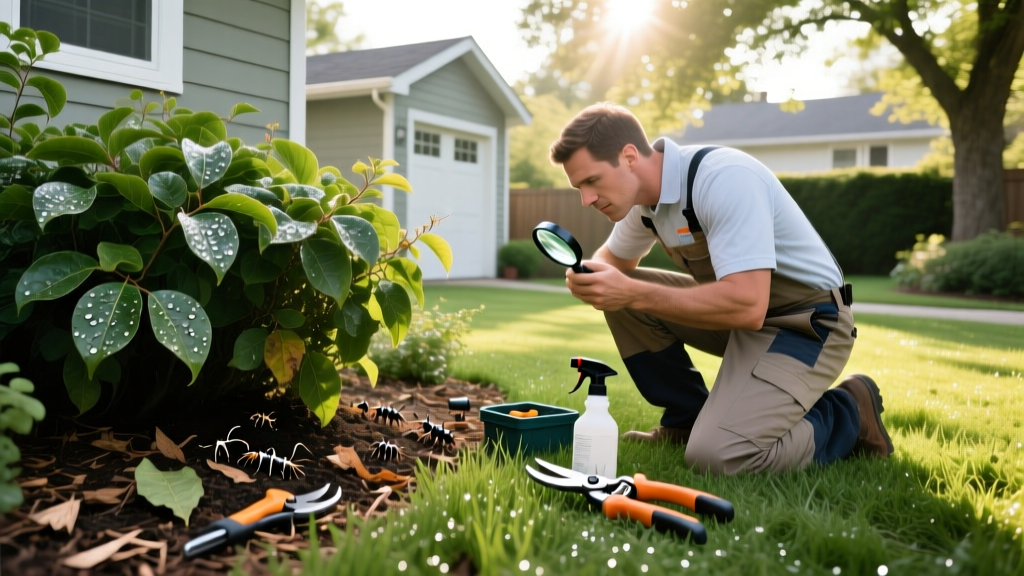
Can't Get Rid of Fleas? 5 Hidden Yard Hotspots and Pro Fixes
The "Flea Bounce-Back" Effect: Why Your Treatments Are Failing
If you feel like you can't get rid of fleas no matter how many chemicals you spray, you are likely fighting a ghost. Homeowners routinely spend hundreds of dollars on broad-spectrum insecticides, only to see a massive resurgence of biting adults 10 to 14 days later. This phenomenon, known in the pest control industry as the "bounce-back effect," is rarely due to chemical resistance. Instead, it is a failure of timing and target placement.
According to University of Minnesota Extension entomologists, adult fleas account for less than 5% of the total flea population in an infested environment. The other 95% exists as eggs, larvae, and pupae hidden in the micro-climates of your yard. Spraying a standard adulticide over the sunny expanse of your lawn does absolutely nothing to the pupal stage, which is encased in a sticky, chemical-resistant cocoon. To break the cycle, you must shift your strategy from surface-level spraying to targeted life-cycle disruption.
The Flea Life Cycle: The 150-Day Pupal Trap
Understanding why treatments fail requires a strict look at the flea life cycle, specifically the pupal stage. When a flea larva spins its cocoon, it enters a state of suspended animation. The pupa can delay emergence for up to 150 days, waiting for specific environmental triggers: vibrations, carbon dioxide, and heat.
⚠️ The Pupal Window Warning: No currently registered outdoor chemical can penetrate the flea pupal cocoon. If you treat your yard and see new adult fleas two weeks later, those fleas were not born after your treatment. They emerged from cocoons that survived the spray. This is why Insect Growth Regulators (IGRs) are mandatory for long-term control.
5 Hidden Outdoor Hotspots You Are Probably Missing
Flea larvae are photophobic (light-fearing) and require high humidity (75% or higher) to survive. If you are broadcasting granular treatments across your sun-baked front lawn, you are wasting your money. Focus your efforts on these five specific micro-climates:
- Under Decks and Porches: The shaded, undisturbed soil beneath wooden structures provides the exact humidity and temperature profile larvae need. This is the #1 hotspot for outdoor infestations.
- Pet Resting Zones: Where your dog sleeps outside, flea eggs concentrate. Look at the soil directly beneath dog houses, shaded patio furniture, and the base of favorite fence-line digging spots.
- Sandy or Loamy Soil Borders: Larvae burrow into loose, sandy soil to escape heat. The transition zones between your lawn and garden beds are prime real estate.
- Overgrown Shrub Perimeters: Thick, unpruned foundation plantings trap moisture and block UV light, creating a perfect nursery for flea development.
- Crawl Space Vents: If your home has a vented crawl space, the soil directly beneath the vents often harbors fleas that migrate indoors through the floorboards.
The Pro Protocol: Breaking the Cycle in Your Yard
To permanently eliminate an outdoor flea population, you must combine an adulticide to knock down the current biters with an IGR to sterilize the next generation. Here is the exact protocol used by licensed turf and ornamental professionals.
Step 1: Mechanical Preparation
Mow the lawn to a height of 2.5 inches and bag the clippings. Rake out heavy thatch and remove leaf litter from garden beds. Flea larvae feed on organic debris and "flea dirt" (adult flea feces). Removing this food source forces them into the open. Furthermore, exposing the soil to direct UV radiation is lethal to larvae, which dry out and die when exposed to sunlight.
Step 2: The Adulticide + IGR Tank Mix
Do not use ready-to-spray hose-end bottles; they lack the pressure and precision required for soil penetration. Use a pump sprayer or backpack sprayer to apply a tank mix directly to the hotspots identified above.
- Adulticide: Bifenthrin 7.9% (e.g., Talstar P). Mix rate: 1 oz per gallon of water per 1,000 sq ft.
- IGR: Pyriproxyfen (e.g., Archer IGR) or Methoprene (e.g., Precor). Mix rate: 1 oz per gallon of water per 1,500 sq ft. Pyriproxyfen is highly photostable and remains active in outdoor soil for up to 7 months, mimicking juvenile hormones to prevent larvae from molting into adults.
Application Tip: Use a fan-nozzle tip on your sprayer, not a pinpoint jet. You need a wide, even distribution over the soil surface and the base of the grass blades, not deep soil injection.
Step 3: Biological Warfare (Beneficial Nematodes)
For organic gardeners or those dealing with severe, entrenched infestations, apply Steinernema carpocapsae beneficial nematodes. These microscopic worms actively hunt and infect flea larvae in the soil. Purchase them from specialized biological suppliers (approx. $35 for 10 million nematodes, enough for 3,000 sq ft). They must be applied in the early evening when soil temperatures are between 55°F and 85°F, and the area must be watered immediately to wash the nematodes into the soil profile before the sun dries them out.
Active Ingredient Comparison Matrix
| Active Ingredient | Role | Target Stage | Outdoor Residual | Approx. Cost (2026) |
|---|---|---|---|---|
| Bifenthrin (Talstar P) | Adulticide | Adults | 30-45 Days | $55 / Gallon |
| Permethrin (Spectracide) | Adulticide | Adults, Larvae | 14-21 Days | $25 / 32oz |
| Pyriproxyfen (Archer IGR) | Growth Regulator | Eggs, Larvae | Up to 7 Months | $75 / 16oz |
| Spinosad (Conserve) | Organic Adulticide | Adults, Larvae | 7-14 Days | $90 / Pint |
Common Mistakes That Reset the Clock
Even with the right chemicals, poor execution will result in failure. Avoid these critical errors:
- Treating Only the Sunny Lawn: As noted by the CDC's flea prevention guidelines, fleas thrive in shaded, humid areas. Spraying the center of a sunny lawn where UV light already suppresses larvae is a waste of chemical.
- Ignoring the Pet: If your dog or cat is not on a systemic veterinary-prescribed flea preventative (like Simparic Trio or Bravecto), they will act as a mobile transport, constantly dropping new eggs into your yard and undoing your outdoor treatment.
- Watering Too Soon: Liquid IGRs and adulticides need 24 hours to bind to the soil organic matter and thatch layer. Watering your lawn or experiencing heavy rain within 12 hours of application will wash the active ingredients past the root zone where the fleas live.
- Using Granules Incorrectly: If you prefer granular Bifenthrin over liquid, you must water the granules in immediately after spreading to activate the chemical and push it into the thatch layer. Dry granules sitting on top of the grass do nothing to soil-dwelling larvae.
💡 Pro-Tip for Re-Entry Intervals (REI): Keep children and pets off the treated lawn until the liquid spray has completely dried. This typically takes 1 to 2 hours depending on humidity. Once dry, the chemical is bound to the soil and poses minimal risk to mammals, aligning with EPA safe pest control standards.
Frequently Asked Questions
How do I know if my yard actually has fleas?
Perform the "white sock test." Pull a pair of white, knee-high cotton socks up to your calves and walk slowly through the shaded areas of your yard, dragging your feet slightly through the grass and soil. If fleas are present, they will jump onto the white fabric, making them instantly visible against the bright background.
Does cedar mulch repel fleas?
While cedar and eucalyptus mulches contain natural oils that can mildly deter adult fleas, they do not kill larvae or pupae. Relying on cedar mulch as a primary control method will fail. It should only be used as a supplementary measure after a proper chemical or biological treatment has been applied.
When is the best time of year to treat the yard?
Flea populations peak in early autumn when temperatures drop into the 70s and humidity rises. However, the most effective time to treat is late spring (May/June), just as the first generation of eggs begins to hatch. Applying an IGR in late spring prevents the exponential population explosion that occurs in September.

