
Pest Control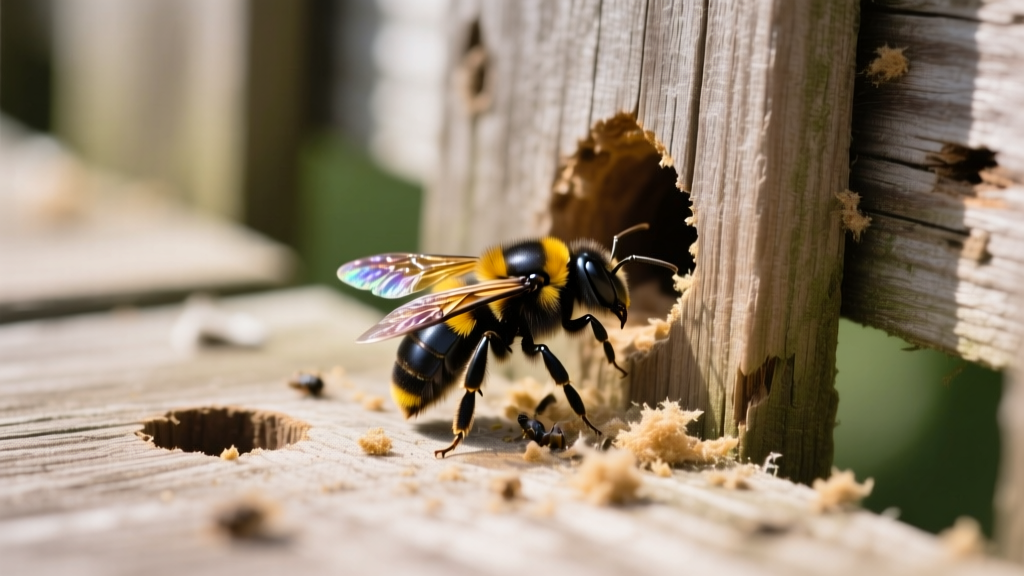
Proven Carpenter Bee Control Methods for Decks and Fences
Carpenter bees (genus Xylocopa) are formidable excavators. Unlike termites or carpenter ants, these solitary insects do not consume wood for sustenance. Instead, they chew through it to construct intricate nesting galleries, compromising the structural integrity of your yard's wooden features. Left unchecked, a single pair can initiate a multi-generational infestation that weakens deck joists, fence posts, and roof eaves, while simultaneously inviting secondary damage from wood-boring birds and moisture-induced fungal rot.
Effective carpenter bee control requires a bifurcated strategy: immediate eradication of active nests using targeted residual insecticides, followed by long-term exclusion through specific wood treatments. This guide details the exact products, application timings, and repair protocols required to defend your outdoor woodwork.
Identifying the Threat: Carpenter Bees vs. Lookalikes
Before initiating treatment, accurate identification is critical. Misidentifying a beneficial pollinator can lead to unnecessary chemical use and ecological harm. Carpenter bees are frequently confused with bumblebees and mason bees, but their behavior and physical markers are distinct.
| Feature | Carpenter Bee (Xylocopa) | Bumblebee (Bombus) | Mason Bee (Osmia) |
|---|---|---|---|
| Abdomen | Shiny, hairless, black (or metallic blue/green) | Fuzzy, covered in yellow/black hairs | Metallic blue/green, small and fuzzy |
| Nesting Site | Excavates bare, unpainted softwoods | Underground burrows or abandoned rodent holes | Pre-existing cavities (hollow stems, holes) |
| Wood Damage | Perfectly round 1/2-inch entry holes, sawdust frass | None (soil nesting) | None (uses mud to seal existing holes) |
| Flight Pattern | Fast, erratic, loud buzzing, often hovering near eaves | Slower, heavy, direct flight between flowers | Quick, darting flights close to nesting blocks |
According to entomologists at the University of Kentucky, the Eastern carpenter bee (Xylocopa virginica) and the Western carpenter bee (Xylocopa californica) are the primary culprits for structural damage in North America. Both species show a strong preference for untreated softwoods like cedar, cypress, pine, and redwood.
The Anatomy of an Infestation and Secondary Damage
Understanding the nesting cycle dictates your treatment timeline. In early spring, mated females select a site and chew a perfectly circular entry hole exactly 1/2 inch in diameter. After penetrating about an inch, the tunnel takes a sharp 90-degree turn and runs parallel to the wood grain for 6 to 12 inches.
Warning: The Woodpecker Multiplier Effect
The primary structural threat of a carpenter bee infestation is often secondary. Downy and hairy woodpeckers can hear the larvae moving inside the galleries. To extract them, woodpeckers will tear large, jagged chunks out of your fascia boards and deck railings, causing exponentially more cosmetic and structural damage than the bees themselves.
The primary structural threat of a carpenter bee infestation is often secondary. Downy and hairy woodpeckers can hear the larvae moving inside the galleries. To extract them, woodpeckers will tear large, jagged chunks out of your fascia boards and deck railings, causing exponentially more cosmetic and structural damage than the bees themselves.
Proactive Yard Defense: Preventative Wood Treatments
Carpenter bees rarely attack painted or heavily sealed wood. Prevention relies on altering the surface texture and chemical profile of your yard structures to make them unpalatable for excavation.
1. High-Build 100% Acrylic Latex Paint
Paint is the most effective deterrent. A minimum of two coats of high-quality 100% acrylic latex exterior paint fills the wood pores and creates a hard, impenetrable shell. Expect to spend $50 to $80 per gallon for premium grades (e.g., Sherwin-Williams Emerald or Benjamin Moore Aura). Stains, even solid-color stains, do not provide the same physical barrier because they penetrate rather than coat.
2. Polyurethane and Varnish Sealants
If you wish to maintain the natural grain of cedar or redwood fences, apply a marine-grade spar urethane (such as Minwax Helmsman Spar Urethane). Apply at least three coats, paying special attention to the end-grain of the wood, which is softer and highly attractive to nesting females. Reapply every 2 to 3 years as UV degradation breaks down the topcoat.
3. Physical Exclusion Screens
For roof eaves, soffits, and attic vents, install 1/8-inch aluminum or fiberglass mesh screening. Carpenter bees will not attempt to chew through metal or dense fiberglass mesh, effectively blocking access to the vulnerable wooden framing behind it.
Active Eradication: Treating Existing Nests
When prevention fails or you inherit an infested property, active treatment is required. Liquid sprays are largely ineffective because they fail to penetrate the deep, right-angled galleries. You must use residual dusts or expanding foams.
Selecting the Right Insecticide
- Deltamethrin Dust (e.g., Delta Dust 0.05%): This is the industry gold standard. Deltamethrin is highly hydrophobic, meaning it will not wash away or clump if moisture enters the tunnel. It provides a residual kill for up to 8 months. ($20-$25 for a 1 lb shaker).
- Cyfluthrin Dust (e.g., Tempo 1% Dust): A fast-acting alternative that provides excellent knockdown, though it is slightly more susceptible to moisture degradation than deltamethrin.
- Expanding Foams (e.g., Spectracide Carpenter Bee Foaming Aerosol): Best for shallow, easily accessible holes. The foam expands to fill the void, coating the gallery walls with a lethal residue. Avoid using foam if you plan to reuse the hole for structural wood injection later.
Execution Protocol: The Dusk Application
Timing is the most common point of failure in DIY carpenter bee control. Penn State Extension emphasizes that treatments must be applied at dusk or after dark. During the day, foraging bees are out of the nest; at night, they are inside and dormant, minimizing the risk of stings and ensuring the bee contacts the treated dust.
- Equip PPE: Wear a bee veil, thick leather gloves, and long sleeves. While male carpenter bees are aggressive and will dive-bomb you, they lack a stinger. Females have a stinger but are generally docile unless trapped or handled.
- Load the Duster: Use a dedicated bulb duster (like the JT Eaton 905) or a bellows hand duster. Fill it only 1/3 full with Delta Dust to allow air space for a proper puff.
- Inject the Gallery: Insert the duster nozzle directly into the 1/2-inch entry hole. Give two or three sharp puffs. The goal is to coat the interior walls with a fine layer of dust, not to pack the hole solid.
- Leave the Hole Open: Do not> plug the hole immediately. Leave it open for 48 to 72 hours. This allows foraging bees returning to the nest to track the dust deeper into the gallery and share it with the larvae.
Wood Repair and Permanent Exclusion
Once 72 hours have passed and activity has ceased, the holes must be sealed to prevent overwintering insects, moisture intrusion, and future bee generations from reusing the exact same gallery.
For a permanent fix, avoid standard lightweight spackle, which carpenter bees can easily chew through once dry. Instead, use one of the following methods:
- The Dowel Method: Dip a 1/2-inch wooden dowel in exterior-grade wood glue (like Titebond III) and tap it flush into the hole with a mallet. Once dry, cut it flush with a flush-cut saw and sand it smooth.
- Steel Wool and Putty: Stuff a small piece of coarse steel wool deep into the hole, then cap it with a two-part epoxy wood filler (like Bondo Wood Filler). The steel wool acts as a physical barrier that deters any future chewing attempts.
Frequently Asked Questions
Do carpenter bees cause structural collapse?
A single nest will not collapse a deck. However, carpenter bees are gregarious, meaning daughters often return to excavate new branches off their mother's original tunnel. Over 4 to 5 years, a single fascia board can become riddled with internal voids, severely compromising its load-bearing capacity and leading to rot.
Are there natural repellents that actually work?
Citrus oil and almond oil sprays are heavily marketed online, but university trials show they offer only temporary deterrence (usually 24 to 48 hours) and fail to stop a determined female. According to NC State Extension, physical barriers (paint) and residual insecticides remain the only reliable long-term solutions for high-value structural wood.
Should I leave some bees alone for pollination?
Carpenter bees are exceptional native pollinators, particularly for heavy crops like tomatoes and eggplants due to their ability to 'buzz pollinate.' If you have a detached, unpainted wooden shed or a dead standing tree at the back of your property far from your primary living structures, tolerating a colony there is ecologically beneficial and poses zero threat to your home's integrity.

