
Pest Control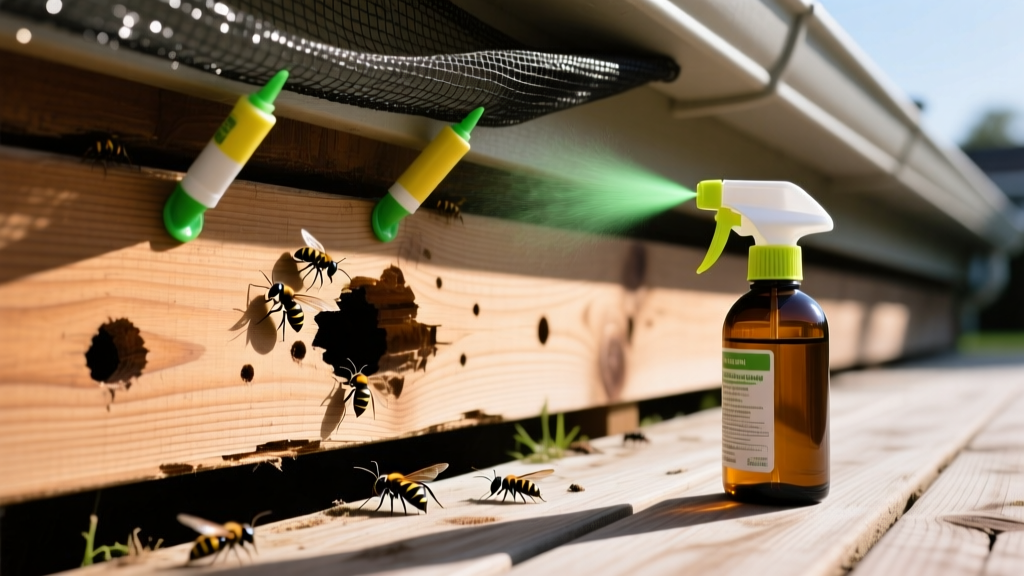
Effective Carpenter Bee Deterrent Strategies for Decks and Eaves
The Hidden Threat to Unfinished Yard Wood
Carpenter bees (Xylocopa species) are large, robust pollinators that play a vital role in native ecosystems, but they are notorious for causing structural and cosmetic damage to residential woodwork. Unlike termites or carpenter ants, carpenter bees do not consume wood for sustenance. Instead, the females use their powerful mandibles to excavate perfectly circular, half-inch (12-13 mm) galleries into unpainted, weathered softwoods to lay their eggs. Over successive generations, these initial 6-to-10-inch tunnels can branch into complex networks exceeding 4 feet in length, compromising the integrity of fascia boards, deck railings, and pergola beams.
Deploying an effective carpenter bee deterrent requires a dual-pronged approach: treating existing galleries to break the reproductive cycle and altering the wood surface to prevent future excavation. This guide details professional-grade protocols, specific product formulations, and cost-effective yard defense strategies to protect your outdoor structures without indiscriminately harming beneficial pollinator populations.
⚠️ Pollinator Identification Warning:
Before applying any chemical deterrent, confirm the insect is a carpenter bee. Carpenter bees have a shiny, hairless black abdomen, whereas bumblebees have fuzzy, yellow-and-black striped abdomens and nest underground. Furthermore, male carpenter bees (which aggressively hover near eaves) lack stingers entirely and are harmless. Only females possess stingers, and they are highly docile unless physically handled.
Carpenter Bee Deterrent Comparison Matrix
Selecting the right deterrent depends on your yard's specific exposure levels, the type of wood you are protecting, and your preference for organic versus synthetic solutions. Below is a breakdown of the most effective deterrent categories used by pest management professionals in 2026.
| Deterrent Category | Active Material / Ingredient | Avg. Cost (2026) | Longevity | Best Application Area |
|---|---|---|---|---|
| Surface Sealants | Oil-based Polyurethane / Marine Varnish | $22 - $35 / quart | 2 - 4 years | Eaves, trim, unpainted pergolas |
| Botanical Repellents | Essentria IC3 (Rosemary, Peppermint, Wintergreen) | $45 / gallon | 3 - 4 weeks | High-traffic pollinator gardens, playsets |
| Residual Insecticides | Lambda-cyhalothrin (Cyzmic CS Microencapsulated) | $42 / 8 oz bottle | 60 - 90 days | Underside of decks, remote shed rafters |
| Gallery Dusts | Deltamethrin (Delta Dust - Waterproof) | $26 / 14 oz | Up to 8 months | Inside existing 1/2-inch excavation holes |
| Physical Barriers | 1/4-inch Hardware Cloth / Aluminum Screening | $15 / 10 ft roll | Permanent | Soffit vents, exposed rafter tails |
Step-by-Step Wood Treatment and Eradication Protocol
Applying a surface deterrent over an active infestation is a critical failure mode. The bees will simply bypass the treated surface by entering through existing, untreated holes. Follow this sequential protocol to ensure complete yard defense.
Phase 1: Gallery Dusting and Neutralization
Do not use liquid sprays inside the nesting holes; liquids can stain the wood and fail to penetrate the deep, branching galleries. Instead, use a waterproof insecticidal dust like Delta Dust or Drione Dust.
- Timing: Apply dust at dusk or night when female bees are resting inside the galleries and flight activity is minimal.
- Application: Use a bellows hand duster (e.g., JT Eaton Bulb Duster). Fill the duster no more than 1/3 full to allow air space for proper dispersion. Insert the nozzle into the 1/2-inch hole and puff 2 to 3 times. The goal is a light coating on the gallery walls, not a solid plug of dust.
- Waiting Period: Leave the holes open for 48 to 72 hours. This allows foraging bees to track the dust deep into the nest and share it with the larvae through physical contact.
Phase 2: Plugging and Sealing the Galleries
Once the 72-hour window has passed, the holes must be physically sealed to prevent overwintering survivors from emerging and to stop new bees from adopting the pre-drilled tunnels.
- The Steel Wool Method: Stuff a small piece of coarse stainless steel wool or copper mesh into the hole. Carpenter bees cannot chew through metal mesh. Follow this by sealing the entrance with an exterior-grade, paintable acrylic latex caulk or wood putty.
- The Dowel Method: For a cleaner aesthetic on visible deck railings, dip a 1/2-inch wooden dowel or cork into wood glue and tap it flush into the hole using a rubber mallet. Sand the surface smooth once the glue cures.
Phase 3: Surface Deterrence and Wood Modification
Carpenter bees strongly prefer bare, weathered softwoods like cedar, redwood, cypress, and pine. They struggle to grip and excavate painted or heavily sealed surfaces.
Apply a high-quality, UV-resistant exterior sealant. Products like Minwax Helmsman Spar Urethane or Varathane Ultimate Outdoor Oil-Based Finish create a hard, impenetrable shell. Apply at least two coats, ensuring a minimum dry film thickness of 2 to 3 mils. If painting is an option, exterior acrylic latex paints are highly effective, as the thick pigment and binder matrix physically deter mandible excavation. According to entomology researchers at NC State Extension, maintaining a continuous coat of paint or polyurethane is the single most reliable long-term deterrent available to homeowners.
Natural vs. Synthetic Repellents: Making the Right Choice
For homeowners who cannot paint or seal their wood (such as those maintaining the natural aesthetic of a cedar pergola or log cabin), surface sprays are necessary. The choice between botanical and synthetic sprays hinges on maintenance tolerance and environmental proximity.
Botanical Sprays (e.g., Essentria IC3)
Pros: EPA-exempt minimum risk ingredients. Safe to use near koi ponds, bird baths, and blooming pollinator gardens once dried. Leaves no toxic residue.
Cons: Highly volatile. The essential oils (rosemary, geraniol, peppermint) degrade rapidly under UV light and rain. Requires reapplication every 3 to 4 weeks during the peak spring flight season (April-June).
Synthetic Microencapsulated (e.g., Cyzmic CS)
Pros: The microencapsulation technology allows the active ingredient (lambda-cyhalothrin) to withstand rain and UV degradation, providing 60 to 90 days of residual deterrence on wood surfaces. Highly cost-effective per treatment.
Cons: Broad-spectrum toxicity to aquatic invertebrates and foraging bees if applied directly to blooms. Must be applied strictly to the wood surfaces (eaves, underside of decks) and never sprayed into the air or onto flowering yard plants.
Designing Immune Yard Structures
The ultimate carpenter bee deterrent is material selection. When building new decks, fences, or pergolas, consider materials that are biologically immune to excavation. The University of Kentucky Entomology Department notes that while pressure-treated lumber is less resistant than it was a decade ago due to changes in chemical formulations (from CCA to ACQ and CA-C), it still offers moderate deterrence compared to raw cedar.
However, modern composite decking materials (such as Trex or TimberTech) and cellular PVC trim (like AZEK) are entirely impervious to carpenter bee mandibles. While the upfront cost of composite materials is 30% to 50% higher than pressure-treated pine, the elimination of annual sealing, staining, and pest control treatments yields a positive return on investment within 5 to 7 years for high-exposure structures like south-facing eaves and deck railings.
Frequently Asked Questions
Do carpenter bee traps actually work?
Wooden carpenter bee traps (which mimic pre-drilled galleries leading into a plastic bottle) catch a negligible percentage of the population. They primarily catch foraging males and scout females but do nothing to stop the primary nesting females who have already selected a structural beam. Traps are not a viable substitute for wood sealing and gallery dusting.
Can I use WD-40 or citrus oil to keep them away?
Spraying WD-40, almond oil, or citrus oil into holes or on wood provides only a temporary olfactory disruption lasting a few days. These substances do not kill the larvae inside the gallery, nor do they provide a physical barrier to excavation. Relying on household oils often results in severe wood staining and repeated infestations.
Will woodpeckers destroy my eaves if I have carpenter bees?
Yes. A secondary, often more destructive consequence of a carpenter bee infestation is woodpecker damage. Woodpeckers can hear the larvae moving inside the wood and will aggressively peck through fascia boards and siding to extract them. Eradicating the bee galleries promptly using the dust-and-plug protocol is essential to prevent costly woodpecker remediation.
Effective yard defense against Xylocopa species requires moving beyond reactive spraying. By combining targeted gallery dusting, physical hole plugging, and long-term surface sealing, homeowners can preserve their wooden structures while maintaining a safe environment for the broader pollinator ecosystem. For further guidance on balancing pest management with pollinator health, consult the EPA's Pollinator Protection guidelines before initiating broad-spectrum chemical treatments.

