
Pest Control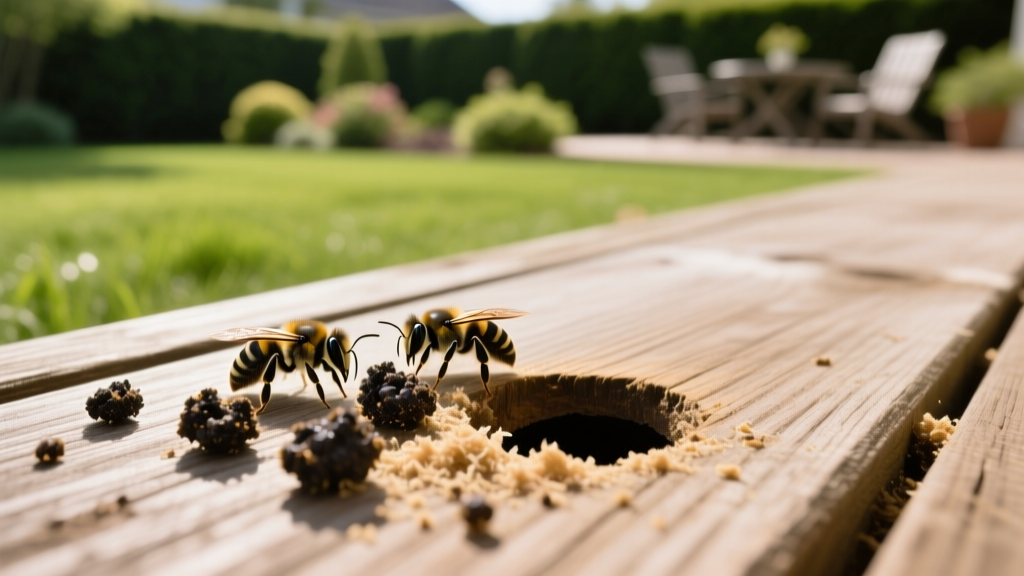
Identifying Carpenter Bee Droppings: Diagnosis and Rescue Fixes
The Diagnostic Symptom: Decoding the Stains and Sawdust
When homeowners discover coarse sawdust piles or yellowish-brown streaks running down their fascia boards, eaves, or wooden decks, the immediate assumption is often wood rot or a termite invasion. However, these specific visual markers are the hallmark diagnostic symptoms of an active carpenter bee (Xylocopa spp.) infestation. Unlike termites that consume wood, carpenter bees excavate it to create nesting galleries. The resulting debris—commonly referred to as carpenter bee droppings—is actually a combination of frass (excavated wood shavings) and genuine fecal matter.
The fecal component is what typically causes the most aesthetic alarm. As the bees digest pollen and nectar, their excrement presents as a yellowish or brownish liquid that dries into hard, crusty streaks on the wood surface directly below the nest entrance. According to Penn State Extension, these stains are highly acidic and can permanently discolor untreated softwoods if left unaddressed through multiple rain cycles. Recognizing this specific symptom is the critical first step in moving from passive observation to an active rescue protocol.
Differential Diagnosis: Carpenter Bees vs. Other Wood Pests
Misdiagnosing the pest leads to ineffective treatments and wasted money. Before purchasing insecticides, compare the physical evidence at your site against this diagnostic matrix to confirm you are dealing with carpenter bee droppings rather than ants or termites.
| Pest Type | Droppings / Frass Appearance | Hole / Gallery Characteristics | Accompanying Symptoms |
|---|---|---|---|
| Carpenter Bees | Coarse, thick sawdust mixed with yellow/brown liquid fecal streaks. | Perfectly round, 1/2-inch diameter entrance holes. | Loud buzzing, hovering male bees, secondary woodpecker damage. |
| Carpenter Ants | Fine, fibrous sawdust (no fecal stains); resembles pencil shavings. | Irregular, slit-like galleries; no distinct round exterior holes. | Ant trails at dusk, faint rustling sounds inside the wall cavity. |
| Drywood Termites | >Hard, hexagonal, seed-like pellets (frass); no liquid streaks.Tiny kickout holes (1-2mm); galleries follow the wood grain. | Autumn swarming events, hollow-sounding wood when tapped. |
Structural Triage: Assessing Wood Compromise
Finding carpenter bee droppings confirms an active nest, but it does not automatically mean your home's structural integrity is compromised. Carpenter bees prefer untreated, weathered softwoods like cedar, pine, and redwood. A single female typically excavates a 1/2-inch entrance hole that turns at a 90-degree angle and extends 4 to 6 inches into the wood.
However, the University of Kentucky Entomology department notes that carpenter bees frequently reuse and expand old galleries year after year. Over a span of three to five seasons, a single 6-inch tunnel can branch into a complex network exceeding 4 feet in total length, severely hollowing out a 2x6 fascia board. To assess the damage, use a flathead screwdriver to gently probe the wood surrounding the hole. If the screwdriver sinks easily more than 1/4 inch into the wood beyond the entrance hole, the structural member is compromised and requires replacement (averaging $15 to $25 per linear foot for professional fascia replacement). If the wood remains firm, you can proceed with a localized rescue and patching protocol.
⚠️ Warning: The Woodpecker Multiplier Effect
Do not ignore the droppings. The primary secondary damage from carpenter bees is not the bees themselves, but woodpeckers. Woodpeckers can smell the bee larvae inside the galleries and will violently tear apart your siding or eaves to extract them. A single woodpecker can cause hundreds of dollars in cosmetic damage in an afternoon while hunting for the grubs that the carpenter bee fecal stains indicate are present.
The Rescue Protocol: Step-by-Step Eradication and Cleanup
Once you have confirmed the presence of carpenter bee droppings and verified the wood is structurally sound, execute this targeted rescue sequence. Do not simply plug the hole immediately; trapping the bee inside will cause it to chew a new exit hole, creating more damage.
- Apply Residual Insecticidal Dust: Liquid sprays are ineffective because they do not penetrate deep into the 90-degree angled gallery. Use a deltamethrin-based dust like Bayer DeltaDust or a cyfluthrin-based product like Tempo 1% Dust (approx. $25 per 8 oz bottle). Load a flexible-shaft bulb duster (e.g., JT Eaton 905 Duster, $15) and inject 2 to 3 puffs of dust directly into the entrance hole during the late evening when bees are less active.
- Wait 48 to 72 Hours: Leave the hole completely open. Foraging bees will track the dust deep into the gallery and spread it to the larvae and the queen. Plugging the hole prematurely ruins the transfer effect.
- Plug and Seal the Gallery: After the waiting period, stuff a small piece of copper mesh (like Stuf-Fit) about 1 inch deep into the hole. This creates a physical barrier that prevents future bees from reusing the tunnel. Follow this by sealing the surface flush with an exterior-grade polyurethane wood filler, such as Gorilla All-Weather Wood Filler ($8 per tube).
- Neutralize and Clean the Fecal Streaks: The yellowish droppings contain tannins and acidic compounds that will bleed through standard paint. Wash the stained area with a Trisodium Phosphate (TSP) substitute like Savogran TSP-PF mixed at 2 ounces per gallon of warm water. Scrub with a stiff nylon bristle brush, then rinse thoroughly with a garden hose. For stubborn, deeply set stains on raw cedar, apply an oxalic acid-based wood brightener to bleach the organic stains out of the wood grain.
Post-Rescue Prevention: Deterring Future Excavation
Eradicating the current nest is only half the battle. Carpenter bees are highly territorial and rely on the pheromones left behind in old droppings and galleries to attract new females to the same location. To break this cycle, you must alter the surface profile of the wood.
According to entomological research, carpenter bees strongly prefer unpainted, weathered wood. While exterior stains and water sealants (like Thompson's WaterSeal) offer moisture protection, they do little to deter carpenter bees because the wood texture remains exposed. The most effective, long-term preventive measure is applying a solid, opaque exterior paint. Prime the cleaned, repaired wood with a stain-blocking primer like Zinsser B-I-N Shellac-Based Primer (specifically designed to block tannin bleed from the old fecal streaks), followed by two coats of a high-quality 100% acrylic exterior paint, such as Sherwin-Williams Emerald Exterior. The thick, plastic-like film of solid acrylic paint makes the wood surface too hard and slippery for the female bee's mandibles to grip and excavate.
Organic and Botanical Deterrents
If painting your natural cedar deck or pergola is not an option, you can utilize botanical repellents, though they require frequent reapplication. Almond oil and citrus oil (d-limonene) are proven irritants to carpenter bees. Products like Orange Guard or pure food-grade almond oil can be injected into old, empty galleries and brushed onto the wood surface. Apply these organic deterrents every 3 to 4 weeks during the peak spring nesting season (April through June in most North American hardiness zones) to mask the pheromone trails left by previous generations.
Expert Insight: "Homeowners often waste money on ultrasonic pest repellers or fake wasp nests to deter carpenter bees. These methods have zero peer-reviewed efficacy against Xylocopa species. Rely strictly on mechanical exclusion (copper mesh), residual dusts, and surface modification (solid paint) for verifiable control."
By correctly identifying carpenter bee droppings as a symptom of active excavation rather than mere surface dirt, you can deploy precise, cost-effective rescue treatments that save your wood structures from long-term degradation and secondary woodpecker damage.

