
Pest Control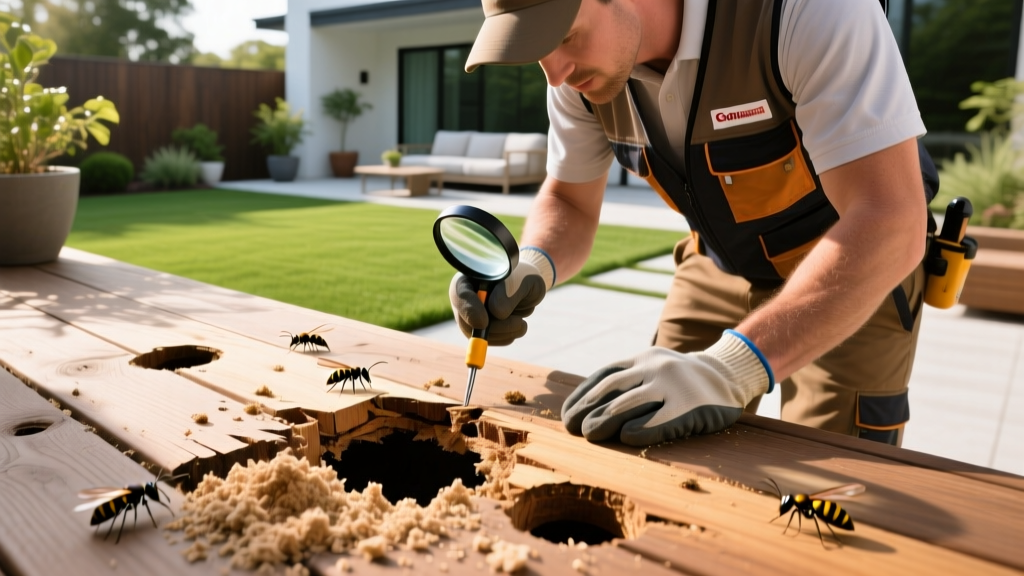
Effective Carpenter Bees Control: Prevention, Treatment, and Wood Repair
The True Cost of Carpenter Bee Damage
Carpenter bees (Xylocopa species) are often dismissed as a minor nuisance due to their docile nature and critical role as pollinators. However, from a structural and yard defense perspective, their nesting habits pose a significant threat to wooden exterior features. Unlike termites, carpenter bees do not consume wood; they excavate it to create extensive galleries for their larvae. A single bee can bore a perfectly round, half-inch diameter entry hole that leads to a tunnel system extending 6 to 10 inches deep, often branching into multiple chambers.
Left untreated, successive generations will reuse and expand these galleries, leading to severe structural compromise in fascia boards, deck railings, and wooden eaves. Furthermore, the accumulation of bee feces at the entry points causes unsightly yellowish-brown staining that is nearly impossible to remove from porous wood. Effective carpenter bees control requires a strategic approach that combines immediate eradication with long-term physical deterrents.
⚠️ Warning: The Woodpecker Multiplier Effect
The most severe structural damage associated with carpenter bees is often not caused by the bees themselves, but by woodpeckers. Woodpeckers can hear the movement of carpenter bee larvae inside the wood and will aggressively peck and tear through fascia boards and siding to reach them. This secondary damage can cost homeowners thousands of dollars in siding replacement, making early carpenter bees control a critical financial safeguard.
Timing Your Treatment: The Lifecycle Advantage
To maximize the efficacy of your treatments, you must align your efforts with the carpenter bee lifecycle. According to University of Kentucky Entomology, timing is the most common point of failure for DIY pest control attempts.
- Spring (April - June): Adult bees emerge, mate, and initiate new nesting sites or expand old ones. This is the optimal time to deploy baited wooden traps and apply residual dusts to active entry holes.
- Summer (July - August): Larvae are developing deep inside the galleries. Surface sprays are entirely ineffective during this stage, as the adults are no longer actively entering and exiting the nests.
- Fall (September - November): Newly matured bees and overwintering adults return to the galleries to sleep through the cold months. Treating holes in late fall eliminates the overwintering population before they can emerge the following spring.
Preventative Yard Defense: Denying the Nesting Site
Carpenter bees strongly prefer untreated, unpainted, and weathered softwoods (such as pine, cedar, and redwood). Altering the physical properties of your exterior wood is the most reliable long-term carpenter bees control strategy.
Paint vs. Stain: The Science of Deterrence
While many homeowners believe a clear wood sealer or semi-transparent stain is sufficient, entomological studies show that carpenter bees can still detect the wood grain and texture through these thin coatings. For absolute prevention, you must use a solid, opaque exterior paint. The heavy acrylic or oil-based pigment completely masks the wood grain and creates a hard, impenetrable shell that deters excavation.
Wood Substitution and Physical Barriers
If painting is not an option for your aesthetic (such as on a natural cedar pergola), consider wrapping vulnerable areas with aluminum flashing or vinyl trim coil. For new construction or deck replacements, utilizing composite lumber (like Trex or TimberTech) or pressure-treated hardwoods eliminates the nesting substrate entirely.
Active Carpenter Bees Control: Treatment Matrix
When preventative measures fail or you inherit an active infestation, chemical and mechanical interventions are required. The table below outlines the most effective professional-grade and consumer-grade solutions available on the market.
| Method | Top Product Examples | Average Cost | Best Application Scenario |
|---|---|---|---|
| Insecticidal Dust | Delta Dust (Deltamethrin), Drione Dust (Silica + Pyrethrins) | $18 - $28 | Deep gallery treatment. Dust clings to bee bodies and is carried deep into the nest, killing larvae and the queen. |
| Aerosol Sprays | Spectracide Wasp & Hornet, Raid Wasp & Hornet | $6 - $12 | Quick knockdown of visible, hovering adults. Poor residual control inside deep wood galleries. |
| Expanding Foam | Terro Carpenter Bee & Wasp Foam | $10 - $15 | Hard-to-reach eaves. The foam expands to fill the gallery, ensuring contact with all occupants before hardening. |
| Wooden Traps | Catchmaster 1230, Mac's Carpenter Bee Trap | $15 - $35 | Passive population reduction in spring. Works best when placed on the sunny, southern-facing corners of structures. |
Step-by-Step Eradication and Hole Sealing Protocol
Simply spraying a nest is insufficient. If you do not physically seal the gallery after treatment, a new bee will inevitably claim the pre-excavated tunnel next season. Follow this precise protocol for permanent carpenter bees control:
- Identify Active Holes: Look for perfectly round, half-inch holes accompanied by small piles of coarse sawdust (frass) on the ground below. Listen for a distinct buzzing or crackling sound emanating from within the wood.
- Treat at Dusk: Carpenter bees are diurnal and return to their nests at sunset. Wait until dusk or after dark when all bees are inside and less aggressive. Wear protective eyewear and long sleeves.
- Apply Residual Dust: Using a hand-held bulb duster (like the JT Eaton Bellows), insert the nozzle into the entry hole and puff 2 to 3 bursts of Delta Dust or Drione Dust. Do not overfill; the bees need space to walk through the dust and spread it to the deeper chambers.
- Wait 48 to 72 Hours: Leave the hole open. This allows foraging bees to return, track the insecticide deep into the gallery, and eliminate the developing larvae. Plugging the hole immediately will trap surviving bees inside, prompting them to chew a new exit hole through your wood.
- Insert a Physical Barrier: After the waiting period, stuff a small piece of copper mesh or coarse steel wool into the hole. Expert Insight: Do not rely on caulk or wood putty alone. Carpenter bees possess powerful mandibles and can easily chew through dried polyurethane caulk. The metal mesh acts as an impenetrable physical roadblock.
- Seal and Paint: Cover the mesh with a high-quality, exterior-grade wood filler or paintable silicone caulk. Once dry, sand it flush and apply a coat of solid exterior paint to match the surrounding wood.
Deploying Wooden Traps: The Geometry of Success
Commercial and DIY wooden traps are highly effective in the spring, but only if their geometry mimics natural nesting preferences. According to research cited by Penn State Extension, the angle and intersection of the drilled holes dictate the trap's success rate.
Optimal Trap Drill Specifications
- Wood Type: Use untreated pine or cedar. The trap must smell and feel like a natural nesting site.
- Hole Diameter: Exactly 1/2 inch or 9/16 inch to match the bee's thorax size.
- Drill Angle: Drill the entry holes at a 45-degree upward angle. This prevents rain from washing out the trap and mimics the natural upward slope bees prefer to keep water out of their nurseries.
- Depth and Intersection: Drill 2 to 3 inches deep. Crucially, drill a larger, intersecting chamber from the bottom or top of the block that connects all the angled holes, and attach a plastic bottle or mesh bag to this central chamber to catch the bees as they fall through.
Frequently Asked Questions
Will carpenter bees sting me while I treat the nest?
Male carpenter bees are highly territorial and will aggressively hover and dive-bomb intruders near their nest, but they are physically incapable of stinging (they lack a stinger). Females possess a stinger but are extremely docile and will only sting if directly handled or trapped against the skin. Treating nests at night virtually eliminates the risk of being stung.
Are there natural or organic repellents that work?
Citrus oil sprays (containing d-limonene) and almond oil can act as mild, short-term repellents when sprayed on wood surfaces. However, they degrade rapidly under UV light and rain. For reliable, long-term yard defense, physical barriers (paint, flashing) and targeted insecticidal dusts remain the only proven methods.
When should I call a professional exterminator?
If the infestation is located on a second-story fascia board, high peaks, or inside structural roof joists where DIY access is unsafe, hire a licensed pest control operator. Professional carpenter bees control typically costs between $150 and $300 per visit, which is highly cost-effective when weighed against the $1,500+ cost of replacing woodpecker-damaged siding.

