
Pest Control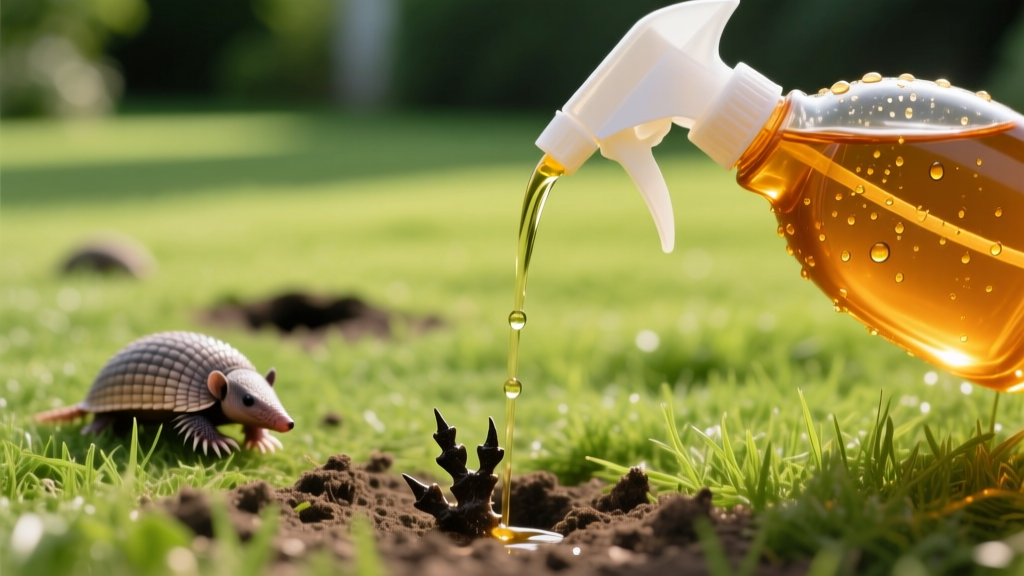
How to Use Castor Oil for Armadillos to Protect Your Lawn
Nine-banded armadillos (Dasypus novemcinctus) can transform a pristine turf into a minefield of 3-to-5-inch craters overnight. These mammals are not malicious; they are simply foraging for grubs, earthworms, and beetle larvae. While lethal trapping is heavily restricted in many states and physical fencing is cost-prohibitive for large properties, castor oil for armadillos has emerged as a highly effective, non-lethal biological deterrent.
According to the Texas A&M AgriLife Extension, armadillos rely heavily on their olfactory senses to locate prey beneath the soil surface. By altering the chemical and olfactory profile of your lawn's topsoil, you can force them to relocate without harming the animals or your turfgrass.
The Biological Mechanism: Why Castor Oil Repels Armadillos
Castor oil, derived from the seeds of the Ricinus communis plant, contains high concentrations of ricinoleic acid. When applied to the soil, it functions as a dual-action deterrent:
- Olfactory Rejection: Armadillos possess an acute sense of smell. The strong, distinct odor of ricinoleic acid masks the scent of their preferred prey (grubs and earthworms) and signals an inhospitable environment.
- Gastrointestinal Distress: If an armadillo ingests soil or insects coated in castor oil, the oil acts as a powerful, fast-acting laxative. The mammal quickly associates the physical discomfort with the specific foraging territory, triggering a conditioned avoidance response.
Expert Insight: Castor oil does not kill the armadillo or the grubs. It strictly modifies the behavioral pattern of the mammal. For long-term eradication of the digging, castor oil must be paired with targeted grub control.
DIY Castor Oil Emulsion vs. Commercial Repellents
Homeowners generally choose between mixing a DIY emulsion or purchasing a pre-formulated commercial hose-end sprayer. Because oil and water do not naturally mix, a surfactant (like dish soap) is mandatory to ensure the castor oil coats the soil particles evenly rather than pooling on the surface.
| Feature | DIY Castor Oil Emulsion | Commercial Repellent (e.g., Bonide MoleMax) |
|---|---|---|
| Active Ingredient | 100% Cold-Pressed Castor Oil | Castor Oil (typically 15-20% concentration) |
| Surfactant | Must add manually (Dish Soap) | Pre-mixed proprietary emulsifiers |
| Cost per 1,000 sq ft | $1.50 - $2.50 | $4.00 - $7.00 |
| Application Method | Pump Sprayer or Watering Can | Hose-End Sprayer Attachment |
| Shelf Life | 1-2 Years (stored in cool, dark place) | 2-3 Years (chemical stabilizers added) |
While commercial products like Bonide MoleMax or Sweeney's Mole & Gopher Repellent offer unmatched convenience, the DIY route provides a higher concentration of active ricinoleic acid per square foot, making it more effective for severe, active infestations.
Step-by-Step Application Protocol
To achieve maximum soil penetration and behavioral deterrence, follow this exact application sequence.
Step 1: Prepare the DIY Emulsion
In a 1-gallon pump sprayer, combine the following:
- 1 Cup (8 oz) of 100% cold-pressed castor oil.
- 2 Tablespoons of a high-quality grease-cutting dish soap (e.g., Dawn Ultra). This acts as the emulsifier.
- 1 Gallon of warm water. Warm water helps the soap break down the oil's surface tension more effectively than cold water.
Shake the sprayer vigorously for 60 seconds until the mixture turns a uniform, milky white. If oil slicks appear on the surface, add one more teaspoon of dish soap and shake again.
Step 2: Time the Application Correctly
Armadillos are primarily crepuscular and nocturnal foragers. Apply the emulsion in the early evening (between 6:00 PM and 8:00 PM). This ensures the scent profile is at its peak concentration when the armadillos begin their nightly foraging routes.
Step 3: Target the Damage Zones and Buffer
Spray the mixture directly into existing armadillo holes and over the surrounding damaged turf. Crucially, you must treat a 10-foot buffer zone beyond the visible damage. According to the Internet Center for Wildlife Damage Management, treating only the active holes fails to intercept the animal's approach path.
Step 4: Water It In
Castor oil must reach the root zone (the top 2 to 4 inches of soil) where the grubs reside. Immediately after spraying, run your irrigation system or use a hose to apply roughly 1/4 inch of water. This pushes the emulsion off the grass blades and down into the soil profile.
Weather Warning: Never apply castor oil if a heavy rain event (greater than 0.5 inches) is forecasted within 12 hours. Excessive rainfall will wash the ricinoleic acid past the root zone and into the water table, rendering the treatment useless and wasting your materials.
Maximizing Efficacy: The Grub Control Synergy
Using castor oil for armadillos is a behavioral modification tactic, not a food-source elimination tactic. If your lawn harbors a massive grub population, the armadillo's hunger may eventually override its aversion to the castor oil. To create an impenetrable defense, pair your castor oil applications with biological grub controls.
- Beneficial Nematodes (Heterorhabditis bacteriophora): Apply these microscopic worms in late summer. They actively hunt and destroy white grubs in the soil. Castor oil does not harm nematodes, making them a perfect simultaneous application.
- Milky Spore (Paenibacillus popilliae): A long-term bacterial solution specifically targeting Japanese beetle grubs. It takes 1-3 years to establish in the soil but provides decades of control.
Common Application Mistakes That Fail
Many homeowners report that castor oil 'doesn't work' due to fundamental application errors. Avoid these pitfalls:
- Spraying Foliage Instead of Soil: Armadillos do not eat grass blades. Spraying the tops of your turf wastes the product. The goal is soil drenching.
- Ignoring the Perimeter: Armadillos travel along fence lines and wooded edges. You must spray a 5-foot perimeter along the border of your property where the mammals enter from adjacent wild spaces.
- Infrequent Reapplication: Castor oil degrades via UV exposure and microbial breakdown. You must reapply the emulsion every 3 to 4 weeks, or immediately after a heavy rainfall, to maintain the olfactory barrier.
Frequently Asked Questions
Is castor oil safe for dogs and cats?
Yes, castor oil is non-toxic and is classified by the EPA as a minimum-risk pesticide. However, if a dog or cat ingests a large amount of freshly treated, wet soil, the laxative effect will cause temporary diarrhea and vomiting. Keep pets off the lawn until the treated soil has completely dried (usually 2-4 hours).
Will castor oil harm my Bermuda or St. Augustine grass?
No. Castor oil is entirely safe for all warm-season and cool-season turfgrasses. In fact, the dish soap used as a surfactant can act as a mild wetting agent, helping water penetrate hydrophobic (water-repellent) soils. Do not exceed 2 cups of castor oil per 1,000 square feet, as excessively thick oil layers can temporarily impede soil oxygen exchange.
How long does it take to see results?
Most homeowners notice a cessation of new digging within 48 to 72 hours of the first properly watered-in application. If digging persists after one week, the armadillo is likely accessing an adjacent untreated property and crossing over; expand your buffer zone accordingly.

