
Pest Control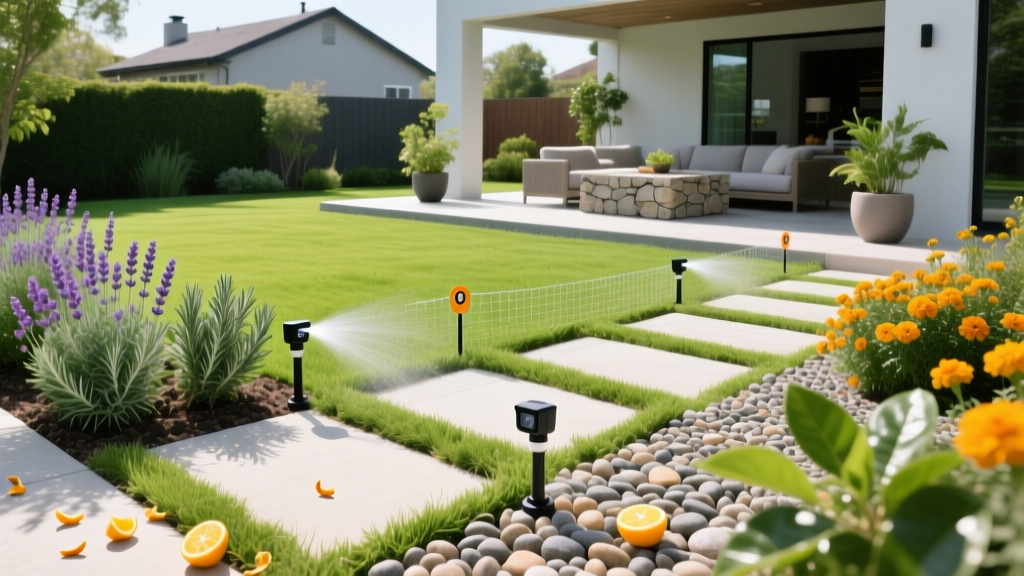
How to Build a Cat Repellent Lawn: Proven Deterrent Playbook
The Reality of Feline Intrusions
Neighborhood cats treat loose, freshly tilled soil and dry mulch as premium litter boxes. This behavior is not malicious; it is driven by instinctual digging preferences and territorial marking. Beyond the aesthetic damage to your turf and garden beds, feline feces carry severe health risks. According to the Centers for Disease Control and Prevention (CDC), cat feces can harbor Toxoplasma gondii, a parasite that poses significant risks to pregnant women and immunocompromised individuals. Building a highly effective cat repellent lawn requires a multi-sensory approach that targets their olfactory, tactile, and auditory sensitivities without causing harm.
Critical Health Warning: Never use mothballs, ammonia, or bleach as outdoor cat repellents. These chemicals leach into the soil, poison local wildlife, and violate environmental protection regulations in most municipalities.
Botanical Barriers: Plants Cats Actually Hate
Felines possess roughly 200 million odor-sensitive cells in their noses—nearly 14 times more than humans. Certain botanical terpenes and alkaloids overwhelm these receptors, triggering an avoidance response. However, simply planting a few marigolds will not secure your perimeter. You must establish dense, continuous botanical borders.
The Feline Aversion Plant Matrix
| Plant Species | Active Repellent Compound | Hardiness Zones | Effectiveness Rating | Notes & Caveats |
|---|---|---|---|---|
| Plectranthus caninus (Scaredy-Cat) | Sklareol, Camphor | 9-11 (Annual elsewhere) | High | Often mislabeled as Coleus. Requires full sun; emits a skunk-like odor when brushed. |
| Lavender (Lavandula angustifolia) | Linalool, Linalyl acetate | 5-9 | Medium-High | Must be planted densely. Humans love the scent; cats find it overpowering. |
| Rosemary (Salvia rosmarinus) | 1,8-Cineole, Camphor | 7-10 | Medium | Woody texture deters digging. Best used as a low hedge along fence lines. |
| Lemon Thyme (Thymus citriodorus) | Citronellal, Geraniol | 5-9 | Medium | Excellent groundcover. Releases citrus oils when stepped on or brushed. |
Note: Always cross-reference new botanical additions with the ASPCA's Toxic and Non-Toxic Plants database to ensure you are not introducing species like Lilies or Sago Palms, which are highly lethal to felines if ingested.
Physical & Sensory Deterrents: What Works
Plants alone rarely stop a determined tomcat. You must alter the physical environment to make your lawn uncomfortable to walk on and dangerous to their sense of surprise.
Tactile Deterrents: Altering the Ground Game
Cats require soft, yielding soil to dig and bury waste. By changing the surface texture of your garden beds and lawn borders, you eliminate the primary incentive for intrusion.
- 1.5 to 2-Inch River Rock: Standard mulch is easily kicked aside. Heavy, smooth river rock in the 1.5 to 2-inch diameter range is too heavy for cats to displace and too large for them to dig through.
- Holly Leaf Cuttings: Prune your English or American Holly bushes and lay the spiky branches directly over bare soil in garden beds. As the leaves dry, they become rigid and highly uncomfortable for feline paws.
- Buried Chicken Wire: For newly seeded lawns or vulnerable tulip beds, lay 1-inch galvanized chicken wire flat on the soil and cover it with exactly 1 inch of topsoil. Grass grows through the gaps, but cats cannot dig past the metal barrier.
Technological Deterrents: Motion-Activated Systems
When physical barriers fail, automated sensory punishment creates a negative association with your yard.
Motion Sprinklers vs. Ultrasonic Repellers
| Feature | Motion-Activated Sprinkler (e.g., Orbit 62100) | Ultrasonic Repeller (e.g., Pest Rid Solar) |
|---|---|---|
| Mechanism | Sudden burst of water + mechanical 'click' sound | High-frequency sound waves (13.5-45.5 kHz) + LED flash |
| Detection Range | Up to 40 feet (35-degree arc) | Typically 30 feet (120-degree arc) |
| Average Cost | $75 - $90 (Requires hose connection) | $30 - $50 (Solar/Battery powered) |
| Effectiveness | Extremely High (Combines tactile and auditory shock) | Moderate (Cats may habituate over time; blocked by fences) |
| Best Use Case | Open lawns, large garden perimeters, daytime/nighttime | Enclosed patios, small garden beds, areas without water access |
Pro-Tip for Orbit Yard Enforcer Users: Set the device to 'Night Only' mode during the first two weeks. Feline intrusions peak between 2:00 AM and 5:00 AM. Once the cats associate your yard with the water burst, switch to 'Day and Night' to catch daytime stragglers.
The Scent Matrix: Essential Oils and Natural Repellents
Commercial chemical repellents often wash away after a single rainstorm and can harm your soil's microbiome. A customized essential oil spray provides a highly concentrated, biodegradable olfactory barrier.
The 'Citrus-Peppermint' Perimeter Recipe
Cats despise the scent of citrus and the sharp sting of peppermint. However, simply dropping lemon peels on the grass is ineffective; the peels decay, attract fruit flies, and lose their potency within 48 hours. Instead, formulate a stabilized spray.
- The Base: Fill a 16 oz glass spray bottle with warm distilled water.
- The Surfactant: Add 1 teaspoon of liquid Castile soap or unscented dish soap. (Crucial step: Essential oils and water do not mix. The surfactant emulsifies the oils so they coat the grass blades evenly rather than floating to the top).
- The Active Ingredients: Add 15 drops of pure Peppermint essential oil, 10 drops of Lemongrass oil, and 10 drops of Wild Orange oil.
- Application: Shake vigorously before every use. Spray along fence lines, the base of trees, and the edges of garden beds. Reapply every 5-7 days, or immediately after heavy rainfall.
Step-by-Step Implementation Playbook
Transforming your yard into a fortress requires a phased approach to ensure you do not overwhelm your budget or your landscape's aesthetics.
Phase 1: Eradication and Sanitation (Days 1-3)
Remove all existing feces using a dedicated scooper. Do not compost it. Next, use an enzymatic cleaner designed for outdoor pet stains (such as Nature's Miracle Outdoor) on areas where cats have repeatedly urinated. If you do not neutralize the uric acid, the territorial pheromones will draw them back regardless of the repellents you apply.
Phase 2: Hardscaping and Texture Modification (Days 4-7)
Replace loose cedar or pine bark mulch in high-traffic garden beds with 1.5-inch river rock. Install buried chicken wire beneath the topsoil of any newly seeded lawn patches or vulnerable bulb gardens.
Phase 3: Botanical and Tech Deployment (Days 8-14)
Plant Plectranthus caninus and Lavender along the primary entry points (usually the corners of your fence line). Mount the Orbit Yard Enforcer motion sprinkler at the choke point where you have observed the most feline traffic. Ensure the infrared sensor is positioned exactly 8 to 12 inches off the ground to target the cat's body heat signature, avoiding false triggers from wind-blown branches.
Common Mistakes and Edge Cases
- Using Predator Urine: Fox or coyote urine is frequently recommended online. In urban and suburban environments, cats often do not recognize these scents as threats, and the urine simply smells like a foul organic fertilizer that washes into storm drains.
- Ignoring Vertical Intrusion Points: Cats are climbers. If your fence is under 6 feet, install a 12-inch PVC pipe along the top edge, threaded with a wire. The pipe will spin if a cat attempts to grab the top, preventing them from pulling themselves over.
- Inconsistent Scent Application: Essential oil sprays degrade under UV light. If you apply the spray only once and expect results, you will fail. Consistency over a 21-day period is required to break the cat's habitual routing.
Frequently Asked Questions
Will motion-activated sprinklers damage my lawn?
No. The Orbit 62100 delivers a short, 3-second burst of water. Even if triggered 20 times a night, the total water volume is less than a standard 5-minute manual watering session. Ensure you move the stake every few weeks to prevent localized soil compaction or minor overwatering in one specific spot.
Are ultrasonic cat repellers safe for my dog?
Ultrasonic devices operate between 13.5 kHz and 45.5 kHz. While dogs can hear up to 45-65 kHz, most commercial repellers are calibrated to frequencies that cause annoyance rather than pain. However, if your dog is highly noise-sensitive or suffers from anxiety, avoid ultrasonic devices and rely strictly on motion sprinklers and botanical barriers.
How do I stop cats from using my sandbox as a litter box?
Sandboxes are highly attractive to cats due to the soft, dry texture. The only 100% effective solution is a tight-fitting, solid lid when the sandbox is not in active use by children. Sprinkling cinnamon or spraying vinegar inside the sandbox is ineffective and ruins the play environment for children.

