
Pest Control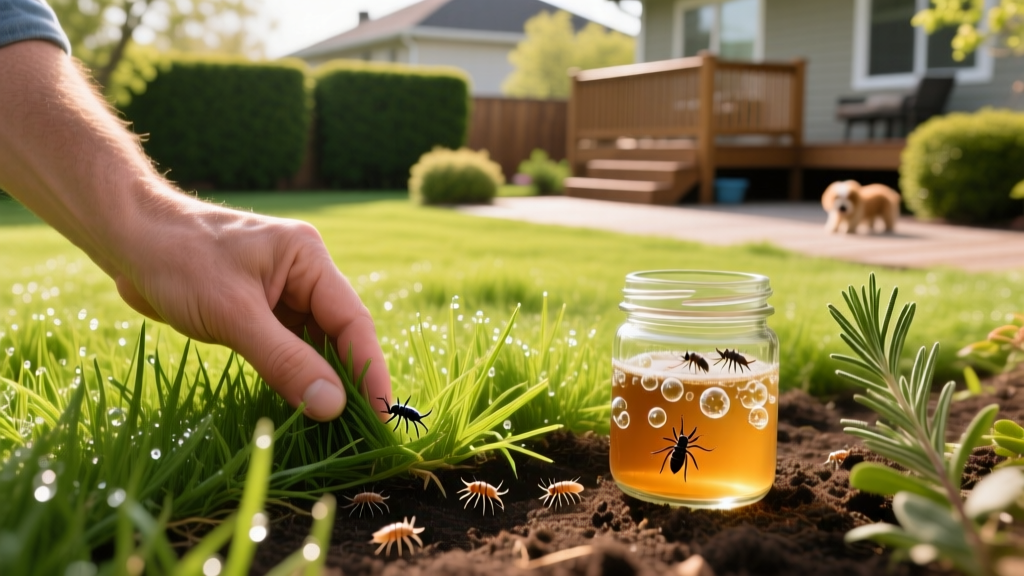
Proven Homemade Remedy to Kill Fleas in Yards and Homes
Chemical flea treatments containing fipronil or imidacloprid are facing mounting resistance, and synthetic runoff poses severe toxicity risks to aquatic ecosystems and pollinators. For homeowners seeking an effective homemade remedy to kill fleas without synthesizing neurotoxins, the solution lies in desiccation, biological disruption, and botanical repellency. According to Texas A&M AgriLife Extension, the cat flea (Ctenocephalides felis) accounts for over 90% of yard and home infestations, and breaking their life cycle requires targeting the pupal stage, which synthetic sprays frequently fail to penetrate.
The Biology of the Enemy: Why Most Homemade Remedies Fail
Before mixing any solution, you must understand the flea life cycle. A typical yard infestation consists of 50% eggs, 35% larvae, 10% pupae, and only 5% biting adults. Most DIY vinegar or essential oil sprays only repel the 5% adult population while ignoring the 95% developing in the soil and thatch. An effective organic protocol must desiccate the eggs, poison the larvae, and physically trap the emerging adults. The Centers for Disease Control and Prevention (CDC) notes that flea pupae can remain dormant in their cocoons for up to five months, waiting for the vibrations and carbon dioxide of a passing host. This means your homemade remedy to kill fleas must be applied consistently over a 21-to-28-day window to catch every emerging adult.
The Core Remedy: Texas Cedarwood and Castile Soap Emulsion
Texas cedarwood essential oil (Juniperus ashei) contains high concentrations of cedrol and thujopsene. These sesquiterpenes are highly toxic to flea larvae and act as a powerful octopamine receptor blocker in adult insects, causing rapid neurological failure and death. Because essential oils are hydrophobic, they must be properly emulsified to coat grass blades and soil surfaces evenly.
The 16-Ounce Eradication Recipe
- 16 oz distilled water (Tap water contains minerals that can break the emulsion)
- 1.5 teaspoons liquid castile soap (Acts as the emulsifier and a mild desiccant)
- 40 drops Texas cedarwood essential oil (Ensure it is 100% pure Juniperus ashei, not a synthetic fragrance)
- 10 drops peppermint essential oil (Adds d-limonene for enhanced larval toxicity)
Mixing and Application Protocol
- Add the distilled water to a 16-ounce amber glass spray bottle.
- Add the castile soap first and gently swirl to mix. Adding oil before soap will cause the oil to float and clog the sprayer nozzle.
- Add the cedarwood and peppermint essential oils.
- Shake vigorously for 30 seconds before every single spray. The emulsion will separate after 10 minutes of rest.
- Apply heavily to shaded areas, under decks, and along fence lines. Fleas cannot survive in direct, unshaded sunlight.
Cost Analysis (2026 Pricing): A 4 oz bottle of high-grade Texas cedarwood oil costs approximately $22. This yields roughly 8 batches of the 16-ounce spray. The total cost per batch is roughly $3.50, making it highly economical for targeted perimeter treatments compared to $45 synthetic yard sprays.
Yard-Wide Organic Eradication Matrix
While the cedarwood spray is an excellent contact killer and repellent, large lawns require area-wide biological controls. The following matrix compares the three most effective organic treatments for outdoor flea management.
| Method | Target Life Stage | Application Rate | Cost per 1,000 sq ft | Reapplication |
|---|---|---|---|---|
| Cedarwood Emulsion | Adults & Larvae | 16 oz per 250 sq ft | $14.00 | Every 7 days |
| Beneficial Nematodes (S. carpocapsae) | Larvae & Pupae | 1 million per 1,000 sq ft | $8.50 | Every 30 days |
| Food-Grade Diatomaceous Earth (DE) | Adults & Larvae | 1 lb per 1,000 sq ft | $0.70 | After every rainfall |
Deploying Beneficial Nematodes
The Environmental Protection Agency (EPA) recognizes beneficial nematodes as a safe, non-toxic biological control agent. Steinernema carpocapsae are microscopic worms that actively hunt flea larvae in the soil. Once they enter the larva, they release symbiotic bacteria that kill the host within 48 hours. To apply, mix the nematode sponge or powder with water in a hose-end sprayer and apply to damp soil at dusk. UV light kills nematodes instantly, so evening application is non-negotiable. Keep the soil moist for 7 days post-application to ensure survival.
Indoor Protocol: Eradicating the Reservoir
Your yard is only half the battle. Pets track pupae indoors, where climate-controlled environments allow year-round breeding. To create a comprehensive homemade remedy to kill fleas inside the home, rely on mechanical desiccation rather than chemical foggers.
The Food-Grade DE Carpet Treatment
Food-grade Diatomaceous Earth consists of fossilized diatoms with microscopic, razor-sharp silica edges. When fleas crawl across it, the silica cuts their waxy exoskeleton, causing them to bleed out and dehydrate.
- Vacuum all carpets and upholstery thoroughly to stimulate pupae to emerge via vibration.
- Using a bulb duster, apply a barely visible layer of food-grade DE to carpets, focusing on baseboards and under furniture.
- Allow the DE to sit for 48 to 72 hours. Do not walk on treated areas barefoot.
- Vacuum slowly using a machine equipped with a sealed HEPA filter to prevent microscopic silica dust from exhausting back into the room.
WARNING: Never use pool-grade or filter-grade Diatomaceous Earth. It undergoes high-heat calcination, which converts the silica into crystalline silica, a known respiratory carcinogen. Always verify the packaging explicitly states 'Food Grade' and contains less than 1% crystalline silica.
Environmental Modification: The Non-Negotiable Step
No homemade remedy will succeed if the microclimate favors flea reproduction. Fleas require temperatures between 70°F and 85°F and humidity levels above 70% to survive the larval stage. You must alter the yard's physical environment to make it hostile to flea development.
- Canopy Reduction: Mow your lawn to a height of 2 to 2.5 inches. Taller grass traps moisture and blocks UV radiation, creating the perfect flea nursery.
- Thatch Management: If your thatch layer exceeds 0.5 inches, rent a power dethatcher. Thatch acts as a physical shield, preventing your cedarwood spray and nematodes from reaching the soil where larvae reside.
- Debris Clearance: Rake and remove all leaf litter, pine needles, and organic debris from under shrubs and along fence lines. These are primary flea aggregation zones.
Common Failure Modes and Troubleshooting
Even with the right ingredients, application errors can render your organic protocol useless. Avoid these frequent mistakes:
- Applying DE to Wet Grass: Diatomaceous earth requires a completely dry surface to function. If the grass is wet from morning dew or irrigation, the DE clumps and loses its desiccating properties. Apply only in the late afternoon after the lawn has fully dried.
- Misidentifying the Pest: Springtails and fungus gnats are frequently mistaken for fleas. If the insects are jumping but not biting, you likely have a moisture issue causing springtails, which requires reducing irrigation rather than applying cedarwood oil.
- Spraying Cedar Oil in Direct Sun: Essential oils can cause phytotoxicity (leaf burn) on sensitive grasses like St. Augustine or Centipede if applied when temperatures exceed 85°F. Always spray at dawn or dusk.
Frequently Asked Questions
Does apple cider vinegar kill fleas?
No. Apple cider vinegar alters the pH of the surface slightly, which can act as a mild deterrent, but it lacks the chemical properties required to penetrate the flea exoskeleton or kill larvae. Relying on vinegar will allow the infestation to multiply unchecked. Stick to cedarwood oil and desiccants for actual eradication.
How long until my yard is completely flea-free using organic methods?
Expect a 21 to 28-day timeline. Because the pupal stage is protected by a sticky cocoon that repels both chemical and organic sprays, you must wait for the adults to emerge. Consistent weekly applications of the cedarwood emulsion will kill them immediately upon emergence, eventually exhausting the pupal reservoir.
Is cedarwood oil safe for dogs and cats?
Yes, when properly diluted. The 40-drop-per-16-ounce ratio outlined above is safe for pets once the spray has completely dried (usually 30 to 45 minutes). However, keep cats indoors during application, as their livers lack the specific enzymes to process high concentrations of volatile terpenes while the oil is still wet.

