
Pest Control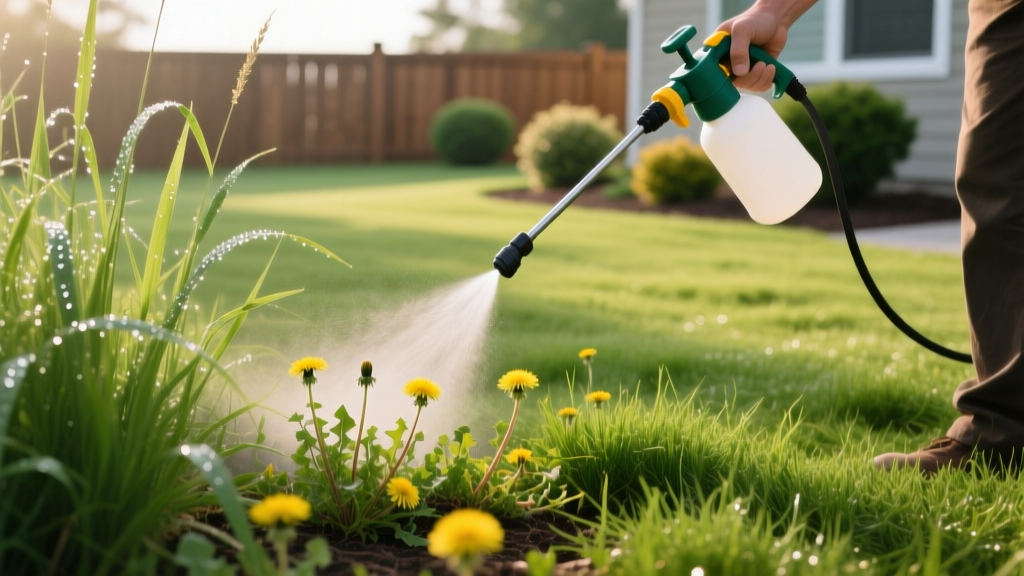
Celsius Weed Killer Label Guide: Spot-Treating Warm-Season Lawns
The Core Chemistry: Why the Celsius Label is Unique
Celsius WG, now manufactured by Envu (formerly Bayer Environmental Science), is widely considered the gold standard for selective broadleaf and grassy weed control in warm-season turfgrasses. Unlike off-the-shelf 2,4-D products, Celsius WG is a highly concentrated, low-dose herbicide. A single 5-ounce bottle retails between $140 and $155 in 2026, but because the application rates are measured in fractions of an ounce, the cost per gallon of mixed solution is less than $0.60.
The Celsius weed killer label is legally binding and scientifically precise. It dictates the use of three active ingredients: thiencarbazone-methyl (19.2%), iodosulfuron-methyl-sodium (5.5%), and dicamba (57.4%). This specific combination attacks weeds via both ALS inhibition and synthetic auxin pathways, making it devastating to tough species like Virginia buttonweed and doveweed while remaining remarkably safe for sensitive warm-season grasses like St. Augustinegrass and Centipedegrass.
⚠️ CRITICAL LABEL WARNING: Celsius WG is strictly for warm-season grasses (Bermuda, Zoysia, St. Augustine, Centipede, Bahiagrass). Applying this product to cool-season grasses (Fescue, Kentucky Bluegrass, Ryegrass) will result in severe injury or total turf death.
Decoding the Spot-Treatment Mix Rates
The most common mistake homeowners make with Celsius WG is attempting to calculate square footage for a spot treatment. The label explicitly provides a simplified protocol for spot spraying that eliminates the need for complex turf calibration.
According to the manufacturer's label, for spot treatments, you must mix 0.057 oz (1.6 grams)1 gallon of water. The 5-ounce bottle includes a specialized 0.057 oz scoop. One level scoop equals exactly one gallon of mixed solution for spot treatment. You then spray the target weeds until the foliage is uniformly wet, avoiding runoff.
| Application Method | Celsius WG Rate | Water Volume | Coverage Area |
|---|---|---|---|
| Broadcast (Blanket) | 0.057 - 0.113 oz | 1 to 2 Gallons | 1,000 sq ft |
| Spot Treatment | 0.057 oz (1 Scoop) | 1 Gallon | Spray to wet foliage |
Surfactant Requirements: The Label's Hidden Key
If you read the Celsius weed killer label closely, you will find a mandatory stipulation that many DIYers ignore: the inclusion of a Non-Ionic Surfactant (NIS). The active ingredients in Celsius WG, particularly the ALS inhibitors, require a surfactant to break the surface tension of the water and penetrate the waxy cuticle of broadleaf weeds.
The label mandates an NIS concentration of 0.25% to 0.5% v/v (volume by volume). For a 1-gallon spot sprayer, this translates to:
- 0.25% Rate: 9.5 ml (approximately 2 teaspoons) of NIS per gallon.
- 0.50% Rate: 19 ml (approximately 4 teaspoons) of NIS per gallon.
Expert Insight: Use the 0.25% rate for sensitive grasses like St. Augustinegrass during summer heat, and bump to the 0.50% rate for mature, waxy weeds like Doveweed or Torpedograss in Bermuda or Zoysia lawns. Never use dish soap or crop oil concentrate (COC) as a substitute; the label specifically requires a high-quality NIS (such as Dyne-Amic or a generic 80/20 NIS) to prevent turf phytotoxicity.
Target Weed Species & Application Timing
Celsius WG is not a pre-emergent. It is a post-emergent herbicide that excels at killing actively growing weeds. Based on Texas A&M AgriLife Extension turfgrass guidelines and the product label, here is how to approach specific problem weeds:
Virginia Buttonweed & Doveweed
These are notoriously difficult summer annuals/perennials that choke out St. Augustine and Centipedegrass. The label specifies that a single application will only suppress or partially control these species. You must plan for a second application 2 to 4 weeks later. Apply when the weeds are young and actively growing (early summer), rather than waiting until they form dense, waxy mats in late August.
Dallisgrass & Torpedograss
For these invasive perennial grasses, the label notes 'suppression' rather than complete control at standard rates. To maximize efficacy, use the higher spot-treatment rate (if scaling up to broadcast) or ensure thorough foliar coverage during spot spraying. Multiple applications spaced 4 to 6 weeks apart are required to exhaust the rhizome energy reserves.
Chamberbitter & Lawn Burweed
Celsius WG provides excellent control of these broadleaf pests. A single spot treatment applied in late spring when the weeds are under 2 inches tall will typically result in complete necrosis within 14 to 21 days.
Real-World Edge Cases & Label Restrictions
Reading between the lines of the University of Florida IFAS turf management protocols and the manufacturer label reveals several critical environmental restrictions:
- Temperature Thresholds: Do not apply Celsius WG when ambient temperatures exceed 90°F. At high temperatures, the dicamba component can volatilize (turn into a gas) and drift onto nearby desirable broadleaf plants, shrubs, or trees, causing severe cupping and stunting.
- Rainfastness: The product requires a minimum of 2 hours to become rainfast. If a sudden summer thunderstorm washes the application off the foliage before the 2-hour mark, the spot treatment must be reapplied.
- Overseeding Restrictions: If you plan to overseed your warm-season lawn with annual ryegrass in the fall, the label dictates a waiting period. Do not overseed for at least 1 month following the last Celsius application to prevent seedling injury.
Step-by-Step Spot Treatment Protocol
Follow this exact sequence to ensure compliance with the Celsius weed killer label and maximum weed mortality:
1. Prep the Sprayer: Fill your 1-gallon pump sprayer halfway with clean water.
2. Add Surfactant: Pour in 2 teaspoons (9.5 ml) of Non-Ionic Surfactant. Agitate gently to prevent excessive foaming.
3. Add Herbicide: Use the provided scoop to add exactly 1 level scoop (0.057 oz / 1.6 g) of Celsius WG granules.
4. Dilute & Mix: Fill the sprayer to the 1-gallon mark with water. Secure the lid and shake vigorously for 30 seconds to ensure the water-dispersible granules (WG) are fully dissolved.
5. Apply: Pump to 40-50 PSI. Adjust the nozzle to a fine mist or narrow cone. Spray the target weed foliage until wet, but stop before the liquid drips onto the soil.
2. Add Surfactant: Pour in 2 teaspoons (9.5 ml) of Non-Ionic Surfactant. Agitate gently to prevent excessive foaming.
3. Add Herbicide: Use the provided scoop to add exactly 1 level scoop (0.057 oz / 1.6 g) of Celsius WG granules.
4. Dilute & Mix: Fill the sprayer to the 1-gallon mark with water. Secure the lid and shake vigorously for 30 seconds to ensure the water-dispersible granules (WG) are fully dissolved.
5. Apply: Pump to 40-50 PSI. Adjust the nozzle to a fine mist or narrow cone. Spray the target weed foliage until wet, but stop before the liquid drips onto the soil.
Frequently Asked Questions
How long does it take to see results?
According to NC State Turfgrass Extension data, ALS inhibitors work slowly. You will notice weed growth cessation within 3 to 5 days, followed by yellowing (chlorosis) and browning over 14 to 28 days. Do not reapply just because the weed hasn't died in a week.
Can I mix Celsius WG with other herbicides?<
The label allows tank-mixing with certain pre-emergents and other post-emergents (like Quinclorac for crabgrass), but for spot treatments, mixing is unnecessary and increases the risk of turf burn. Stick to the standalone Celsius + NIS formula for spot spraying.
What if my grass turns slightly yellow after spraying?
St. Augustinegrass and Centipedegrass can exhibit temporary chlorosis (yellowing) if the sprayer overlaps too heavily or if applications are made during heat stress. This is usually cosmetic and the turf will recover within 2 to 3 weeks. Always adhere strictly to the 0.057 oz per gallon spot-treatment limit to minimize this risk.

