
Pest Control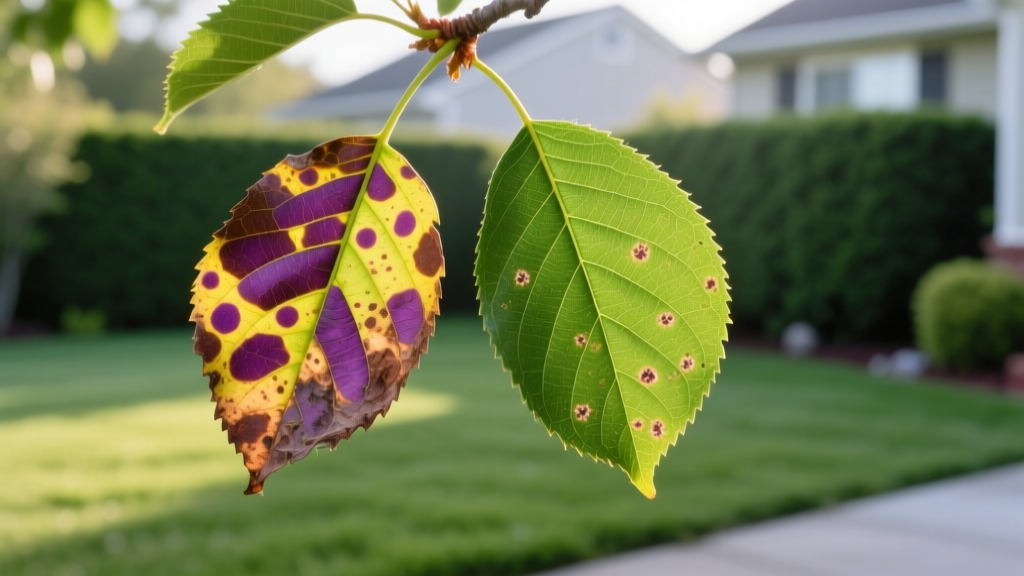
Cherry Leaf Spot Fungicide: Symptom Diagnosis and Rescue Fixes
Cherry leaf spot, driven by the fungal pathogen Blumeriella jaapii, is the most destructive foliar disease affecting tart and sweet cherries in humid climates. When left unchecked, it triggers premature defoliation by mid-summer, robbing the tree of the carbohydrates required to survive winter dormancy and initiate next year's fruit buds. If your canopy is already showing signs of infection, deploying the correct cherry leaf spot fungicide immediately is the only way to salvage the remaining foliage and protect the tree's long-term viability.
Symptom Diagnosis: Confirming Blumeriella jaapii
Before mixing any chemicals, you must confirm the pathogen. Misdiagnosing bacterial canker or powdery mildew as leaf spot will lead to ineffective treatments and wasted money. Blumeriella jaapii follows a highly specific visual progression on the leaves of Montmorency, English Morello, and sweet cherry cultivars.
Diagnostic Checklist: Cherry Leaf Spot
- Initial Stage: Small (1-3mm), distinct purple-to-reddish spots appear on the upper surface of older, lower-canopy leaves.
- Progression: Spots enlarge, merge, and turn brown. The tissue surrounding the spots turns chlorotic (yellow).
- Sporulation: Flip the leaf over. In humid conditions, the undersides of the spots develop tiny, white-to-pinkish spore masses (acervuli).
- Advanced Stage: The dead brown centers of the spots often drop out, creating a 'shot-hole' appearance. Leaves turn entirely yellow and abscise (drop) prematurely.
Differentiation Tip: Bacterial canker causes dark lesions on the wood and buds accompanied by gummy sap (gummosis). Powdery mildew presents as a chalky white coating on the leaf surface, not discrete purple spots.
According to Penn State Extension, the fungus overwinters in infected leaf litter on the orchard floor. Ascospores are released during spring rains, making early canopy monitoring critical. Once the primary infection takes hold, the fungus produces conidia on the leaf undersides, which splash to new leaves during every subsequent rain event, creating an exponential secondary infection cycle.
The Rescue Protocol: When and How to Intervene
A 'rescue' treatment in plant pathology does not mean curing dead tissue. A leaf that has turned completely yellow and is detaching from the petiole cannot be saved. The goal of a rescue application is to halt the sporulation cycle, protect uninfected leaves in the upper and outer canopy, and preserve enough photosynthetic area for the tree to harden off for winter.
The Decision Tree for Rescue Timing
- Is the tree actively defoliating? If less than 30% of the canopy has dropped, a systemic fungicide can still save the remaining leaves. If over 50% has dropped, chemical rescue is largely futile; pivot immediately to sanitation and soil care.
- Is rain in the forecast? Fungicides need 2 to 4 hours of dry weather to bind to the leaf cuticle or penetrate the stomata. Do not spray if rain is expected within 6 hours.
- What is the temperature? Avoid applying copper-based rescue treatments if temperatures are below 50°F (10°C) or if the tree is under drought stress, as this drastically increases the risk of phytotoxicity (chemical leaf burn).
Top Cherry Leaf Spot Fungicides for Rescue Treatments
Not all fungicides offer curative action. Contact protectants (like Chlorothalonil) are excellent for preventative spring sprays but are nearly useless once the fungus has penetrated the leaf tissue. For a mid-season rescue, you must rely on locally systemic or translaminar active ingredients that can reach the fungus inside the leaf.
| Active Ingredient | Brand Example | Mobility | Curative Reach | Est. Price (2026) |
|---|---|---|---|---|
| Myclobutanil | Spectracide Immunox | Locally Systemic | Up to 72 hrs post-infection | $18 / 16 oz |
| Propiconazole | Fertilome Liquid Systemic | Systemic (Xylem) | Up to 96 hrs post-infection | $24 / 16 oz |
| Chlorothalonil | Ortho MAX Disease Control | Contact Only | None (Protectant only) | $15 / 32 oz |
| Copper Octanoate | Bonide Captain Jack's Copper | Contact / Translaminar | Limited (halts sporulation) | $16 / 16 oz |
Expert Recommendation: For an active, mid-summer outbreak, Myclobutanil or Propiconazole are your best rescue options. They belong to the DMI (Demethylation Inhibitor) class of fungicides, which disrupt the ergosterol biosynthesis of the fungus, effectively stopping its growth even after it has entered the leaf. To prevent the pathogen from developing chemical resistance, do not apply DMI fungicides more than twice consecutively. Alternate with a contact fungicide like Chlorothalonil for the third application.
Application Mastery: Avoiding Common Rescue Failures
The most common reason cherry leaf spot fungicides fail during a rescue operation is poor spray coverage and improper water chemistry. Blumeriella jaapii infects primarily through the stomata, which are concentrated on the underside of the leaf. If you only spray the top of the canopy, the disease will continue to ravage the lower branches.
Critical Application Parameters
- Spray Volume: A mature, 12-foot semi-dwarf tart cherry tree requires 1.5 to 2.5 gallons of finished spray solution to achieve 'just-to-drip' coverage on both leaf surfaces. Do not skimp on water volume.
- Surfactant Inclusion: Cherry leaves have a waxy cuticle that repels water. Always add a non-ionic surfactant (NIS) at a rate of 1/4 teaspoon per gallon of spray mix. This reduces surface tension, allowing the fungicide to spread evenly and penetrate the leaf tissue.
- Water pH Adjustment: Myclobutanil and Propiconazole undergo alkaline hydrolysis (rapid chemical breakdown) in water with a pH above 7.0. Test your tap water. If the pH is high, add a spray buffer or acidifier to bring the solution pH down to 5.5–6.5 before adding the fungicide.
- Agitation: DMI fungicides can settle in the tank. Agitate your pump sprayer vigorously every 10 minutes during application to ensure uniform chemical distribution.
Post-Rescue Sanitation and Long-Term Prevention
Chemical rescue buys you time, but it does not eliminate the inoculum source. As outlined by researchers at Ohio State University Extension, the fungus survives the winter exclusively in fallen leaf debris. If you do not manage the leaf litter, next year's primary infection will be severe, regardless of your current fungicide program.
The Urea Acceleration Technique
Raking and destroying every fallen cherry leaf is nearly impossible in a mature landscape. Instead, use agricultural science to your advantage. Immediately after leaf drop in autumn, apply a foliar spray of 46-0-0 Urea (mixed at 4 lbs per 100 gallons of water) directly to the fallen leaves on the ground. Alternatively, broadcast granular urea at a rate of 0.5 lbs per 1,000 square feet over the root zone.
Why this works: Urea provides a massive nitrogen spike to saprophytic bacteria and fungi in the soil, accelerating the decomposition of the cherry leaf litter before the Blumeriella jaapii fungus can form its overwintering fruiting bodies (pseudothecia). This biological warfare drastically reduces the spring spore load.
Canopy Management for Airflow
During the dormant season (late winter), prune the tree to an open-center or modified leader structure. Remove crossing branches, water sprouts, and any wood that shades the inner canopy. The goal is to reduce the relative humidity inside the tree canopy. Blumeriella jaapii requires prolonged leaf wetness (at least 4 to 6 hours of continuous moisture) to infect. By maximizing solar penetration and wind airflow, you reduce the duration of leaf wetness after morning dew and rain events, making the microclimate hostile to the pathogen.
Monitor local agricultural weather models for leaf wetness duration during the spring. If your region experiences consecutive days of rain and high humidity immediately after petal fall, initiate your preventative fungicide rotation before the first purple spots ever appear. Rescue treatments are a valuable safety net, but proactive canopy management and precise chemical timing remain the hallmarks of professional-grade orchard health.

