
Pest Control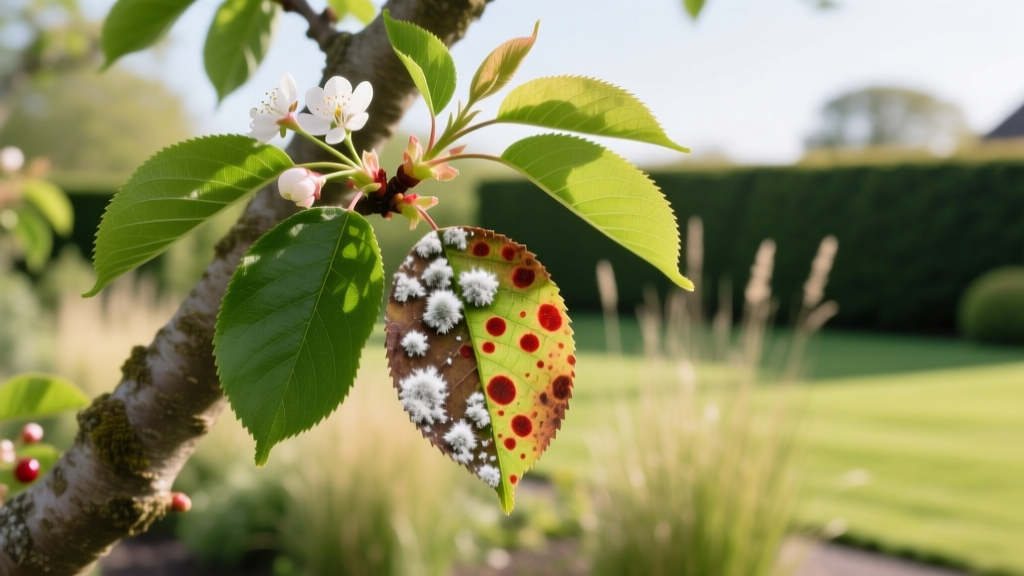
Diagnosing Cherry Tree Diseases: Symptoms & Rescue Fixes
The Diagnostic Framework: Identifying Cherry Tree Pathogens
Cherry trees (Prunus avium and Prunus cerasus) are highly susceptible to a specific matrix of fungal and bacterial pathogens. Because symptoms often overlap—such as sudden wilting or branch dieback—misdiagnosis leads to wasted chemical applications and irreversible tree decline. Effective rescue relies on matching the exact visual symptom to the pathogen's life cycle and applying targeted treatments at precise phenological stages.
⚠️ Critical Rule of Cherry Pathology: Never prune a cherry tree during wet weather or active spring growth. Fresh pruning wounds are the primary entry points for Pseudomonas syringae (bacterial canker) and Monilinia fructicola (brown rot). Restrict structural pruning to dry, late-summer days or deep dormancy.
Brown Rot (Monilinia fructicola)
Symptom Profile
- Blossom Blight: Flowers turn brown, wilt, and cling to the spur rather than dropping.
- Twig Cankers: Sunken, dark lesions on twigs directly beneath blighted blossoms, often oozing clear sap.
- Fruit Mummies: Developing cherries develop tan, velvety spore masses, shrivel, and harden into black 'mummies' that remain attached to the branch through winter.
Rescue Fix & Chemical Protocol
Once brown rot infects the fruit, it cannot be cured; you must protect uninfected tissue and halt the sporulation cycle. Prune out all blighted twigs at least 6 inches below the visible margin of necrotic bark. Destroy all mummified fruit on the tree and the orchard floor.
Fungicide Application: Apply Bonide Captan 50 W (active ingredient: captan) at a rate of 1.5 to 2.0 tablespoons per gallon of water. For systemic protection during heavy spring rains, alternate with Spectracide Immunox (myclobutanil) at 1.5 fluid ounces per gallon. Timing is non-negotiable: spray at the pink bud stage, full bloom, petal fall, and 14 days pre-harvest. According to the University of California IPM, failing to spray at petal fall leaves the green fruit highly vulnerable to latent infections that manifest only at harvest.
Cherry Leaf Spot (Blumeriella jaapii)
Symptom Profile
This fungal disease primarily targets sour cherries and defoliates trees by mid-summer if unchecked. Look for small (1/8 inch) reddish-purple spots on the upper leaf surface. As the disease progresses, the centers of these spots drop out, creating a 'shot-hole' appearance. Severely infected leaves turn bright yellow and fall prematurely, starving the tree of the carbohydrates required to survive winter and set next year's buds.
Rescue Fix & Chemical Protocol
Sanitation is your first line of defense. The fungus overwinters in fallen leaves. Rake and destroy all leaf litter beneath the canopy before bud swell. If the tree is actively defoliating in June or July, initiate a rescue spray program using Syngenta Daconil (chlorothalonil). Mix at 2.25 teaspoons per gallon of water. Apply every 7 to 10 days until the threat subsides, ensuring complete coverage of the leaf undersides where stomata are most concentrated. The Penn State Extension Tree Fruit program emphasizes that chlorothalonil is a protectant, meaning it must coat the leaf before rain events wash spores onto the tissue.
Bacterial Canker (Pseudomonas syringae)
Symptom Profile
- Gummosis: Profuse oozing of sour-smelling, amber-colored sap from bark fissures on the trunk and main scaffolds.
- Sour Sap: Beneath the oozing bark, the cambium layer is reddish-brown and emits a distinct fermented odor.
- Dieback: Entire branches or scaffolds suddenly fail to leaf out in spring, or leaves emerge and immediately wilt.
Rescue Fix & Chemical Protocol
Bacterial canker is notoriously difficult to eradicate because it lives systemically within the tree's vascular tissue. Rescue requires aggressive dormant-season bactericide applications. Use a fixed copper product like Kocide 3000 (copper hydroxide). Apply at 50% leaf drop in late autumn, and again in late winter just before bud swell.
⚠️ Phytotoxicity Warning for Sweet Cherries: Sweet cherries (Prunus avium) are highly sensitive to copper. Applying copper sprays during active spring growth or in wet, cold conditions will cause severe leaf burn, defoliation, and can actually kill the tree. Restrict copper applications strictly to the dormant season.
Phytophthora Root & Crown Rot
Symptom Profile
Often misdiagnosed as drought stress, Phytophthora attacks the root system and the crown (soil line). Symptoms include a sudden, uniform wilting of the entire canopy during summer heat, dark water-soaked cankers at the soil line, and a lack of fine feeder roots when the soil is excavated.
Rescue Fix & Chemical Protocol
First, excavate the soil away from the root flare to expose the trunk base to air and sunlight; Phytophthora thrives in dark, saturated environments. Next, apply a phosphite-based systemic fungicide. Agri-Fos (potassium phosphite) can be painted directly onto the lower trunk (mix 1:1 with water) or applied as a soil drench at 1.25 fluid ounces per gallon. Phosphites do not kill the pathogen outright but boost the tree's natural phytoalexin defense response, halting the spread of the rot. Ensure the soil drainage is corrected, as no chemical will save a cherry tree sitting in a perched water table.
Chemical Control Matrix: Active Ingredients & Timing
| Target Disease | Active Ingredient | Product Example | Critical Application Timing |
|---|---|---|---|
| Brown Rot | Captan / Myclobutanil | Bonide Captan 50 W | Pink bud, petal fall, pre-harvest |
| Cherry Leaf Spot | Chlorothalonil | Syngenta Daconil | Petal fall, then every 7-10 days |
| Bacterial Canker | Copper Hydroxide | Kocide 3000 | 50% leaf drop (autumn), late dormant |
| Root & Crown Rot | Potassium Phosphite | Agri-Fos | Early spring or late autumn soil drench |
The Expert Pruning & Sanitation Protocol
When executing rescue pruning for canker or brown rot, cross-contamination via pruning shears is the primary vector for spreading pathogens across the canopy. The Royal Horticultural Society advises against using a 10% bleach solution for tool sterilization; bleach pits the metal blades, creating microscopic grooves that harbor bacteria and cause jagged cuts that heal poorly.
- Use 70% Isopropyl Alcohol in a spray bottle. It evaporates quickly, does not corrode high-carbon steel, and kills Pseudomonas on contact.
- Spray the blades and wipe with a clean rag between every single cut when removing cankered wood.
- Make pruning cuts at a 45-degree angle, exactly 1/4 inch above a healthy outward-facing bud, to ensure water sheds away from the wound.
- Do not use pruning sealants or wound paint. Research confirms these trap moisture and accelerate wood decay; allow the tree's natural compartmentalization (CODIT) process to seal the wound.
Frequently Asked Questions
Why are my cherries rotting and collapsing before they ripen?
This is the hallmark of Brown Rot, often exacerbated by micro-punctures from the Spotted Wing Drosophila (SWD) fruit fly. The fly pierces the fruit skin to lay eggs, creating a direct entry wound for Monilinia spores. To manage this, you must integrate an insecticide like Spinosad for the SWD alongside your Captan fungicide program during the fruit coloring stage.
Can I save a mature cherry tree that is oozing sap from the main trunk?
If the gummosis is restricted to one side of the trunk and the canopy is still 70% viable, the tree can be saved. Excavate the soil from the base, scrape away the necrotic bark to expose healthy green cambium, and paint the area with a copper hydroxide paste. However, if the canker girdles more than 50% of the trunk's circumference, the tree's vascular system is fatally compromised and removal is the only option to protect neighboring trees.
Is Neem oil effective for treating cherry tree fungal diseases?
No. While cold-pressed neem oil has mild fungicidal properties, it is entirely insufficient for aggressive stone-fruit pathogens like Brown Rot or Cherry Leaf Spot. Relying on neem during a wet spring will result in total crop loss. Use registered synthetic protectants (Captan, Chlorothalonil) or high-grade fixed coppers for reliable pathogen suppression.

