
Pest Control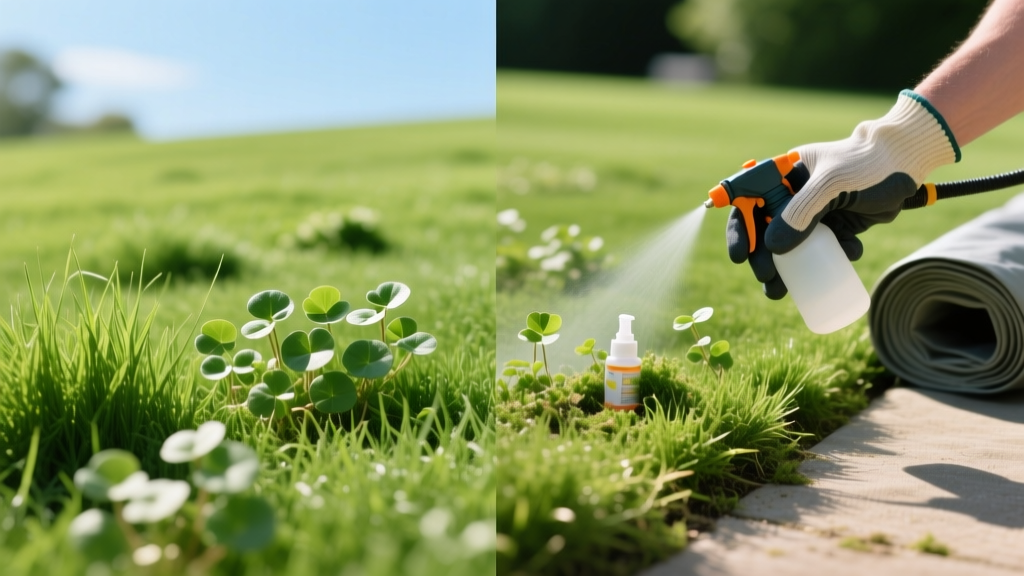
Effective Chickweed Killer Strategies for Lawn Spot Treatments
Identifying the Target: Common vs. Mouse-Ear Chickweed
Before selecting a chickweed killer, accurate identification is critical because herbicide efficacy varies between species. Common chickweed (Stellaria media) is a winter annual that germinates in early fall, matures over winter, and flowers in spring. According to NC State Extension, it features smooth, hairless stems with a single line of hairs running down one side, and small, white, star-shaped flowers with deeply notched petals. Mouse-ear chickweed (Cerastium fontanum), a perennial relative, is densely covered in fine hairs and requires higher herbicide concentrations or repeated applications due to its thicker, waxier leaf cuticle.
Misidentifying these weeds often leads homeowners to apply standard crabgrass pre-emergents in the spring, which is entirely ineffective against actively growing broadleaf chickweed. Spot-treatment requires targeting the foliage of the mature winter annual before it sets seed in late April or May.
The Chemistry of Chickweed Killers: What Actually Works?
Not all broadleaf herbicides are formulated equally. The primary failure mode for DIY chickweed control is relying on single-active-ingredient products like basic 2,4-D amine. Chickweed has developed varying levels of tolerance to auxin-type herbicides, making multi-way mixtures mandatory for complete control.
| Active Ingredient | Mode of Action | Efficacy on Chickweed | Best Use Case |
|---|---|---|---|
| 2,4-D (Ester) | Synthetic Auxin (Group 4) | Moderate (alone) | Cool weather penetration (below 65°F) |
| MCPP-p (Mecoprop) | Synthetic Auxin (Group 4) | High | Core component of 3-way mixes |
| Carfentrazone | PPO Inhibitor (Group 14) | Very High (Burn-down) | Rapid visual results, cold weather |
| Triclopyr | Synthetic Auxin (Group 4) | High | Hard-to-kill weeds, woody stems |
| Iron HEDTA | Iron Toxicity (Organic) | Moderate to High | Organic lawns, sensitive areas |
For spot treatments, a 3-way or 4-way mixture combining an auxin (2,4-D, MCPP, or Dicamba) with a PPO inhibitor (Carfentrazone) is the industry gold standard. The PPO inhibitor provides rapid cellular membrane disruption (visible burn-down within 24 hours), while the auxins translocate to the root system to prevent regrowth.
Top Commercial Spot-Treatment Products
1. SpeedZone Southern (PBI Gordon)
Formulation: 4-way ester (Carfentrazone, 2,4-D ester, MCPP-p, Dicamba).
Price: ~$130 per gallon (concentrate).
Mix Rate: 1.0 to 1.5 fl oz per gallon of water per 1,000 sq ft.
Pros: Exceptional cold-weather performance. The ester formulation penetrates the waxy chickweed leaf cuticle rapidly when soil temperatures are between 50°F and 60°F. Visible necrosis occurs in 48 hours.
Cons: High cost per gallon; ester formulations can volatilize and drift if sprayed when air temperatures exceed 80°F.
2. Ortho WeedClear for Lawns
Formulation: 3-way amine (2,4-D, MCPP, Dicamba).
Price: ~$16 per 32 oz (ready-to-spray or concentrate).
Mix Rate: 2 fl oz per gallon (if using concentrate).
Pros: Readily available, safer for beginner applicators, lower volatility risk in warmer spring weather.
Cons: Amine formulations are slower to act in cool weather. Expect 10 to 14 days for complete control. Often requires a second application for mature mouse-ear chickweed.
3. Fiesta Turf Weed Killer (Iron HEDTA)
Formulation: Chelated Iron (24% Iron HEDTA).
Price: ~$45 per quart.
Mix Rate: 3 to 5 fl oz per gallon of water.
Pros: OMRI-listed organic option. Causes rapid oxidative stress and desiccation in broadleaves without harming monocot grasses.
Cons: Non-systemic. Only burns off the top growth; requires 2 to 3 applications spaced 14 days apart to exhaust the chickweed root system.
Step-by-Step Spot-Spraying Protocol
Proper application technique minimizes herbicide waste and prevents turf damage. Follow this exact protocol for spot-treating chickweed patches.
⚠️ Critical Weather Windows: Do not apply ester-based chickweed killers if temperatures are forecasted to exceed 85°F within 48 hours, as vapor drift can damage nearby ornamental shrubs. Avoid spraying if rainfall is expected within 6 hours, or if heavy dew is currently present on the foliage, which dilutes the active ingredient.
- Calibrate Equipment: Use a 1-gallon or 2-gallon pump sprayer equipped with a flat-fan nozzle (e.g., TeeJet 11002 VS). Maintain a steady pressure of 30 to 40 PSI. This produces medium-coarse droplets that resist wind drift compared to fine mist cone nozzles.
- Add Surfactant: If using a concentrate like SpeedZone or generic 3-way mixes, add a non-ionic surfactant (NIS) at a rate of 0.25% v/v (roughly 1/2 teaspoon per gallon). This breaks the surface tension of the water, allowing the herbicide to spread evenly across the chickweed's hydrophobic leaves.
- Target the Foliage: Hold the nozzle 12 to 18 inches above the weed canopy. Spray until the leaves are uniformly wet, but not to the point of runoff. Dripping herbicide wastes chemical and increases soil residual, which can harm shallow-rooted turfgrasses.
- Wait and Monitor: Do not mow the lawn for 48 hours before and 48 hours after application. This maximizes the leaf surface area available for herbicide absorption and allows time for translocation to the roots.
Organic and Non-Chemical Alternatives
For homeowners managing organic lawns or treating chickweed near edible garden beds, synthetic auxins are off-limits. Beyond Iron HEDTA (Fiesta), horticultural vinegar (20% to 30% acetic acid) is frequently recommended. However, Penn State Extension notes that acetic acid is a non-selective contact desiccant. It will burn the chickweed foliage rapidly but will also severely burn any desirable turfgrass it contacts. Furthermore, repeated applications of high-strength vinegar can temporarily lower soil pH and harm soil microbial life. For isolated patches, manual extraction using a stand-up weeder tool that grips the taproot is highly effective, provided the soil is moist and the entire root system is removed before seed set.
Post-Treatment Lawn Recovery and Prevention
Killing chickweed leaves bare patches in the turf canopy. Because chickweed is a winter annual, spot-treatment usually occurs in early spring. Immediately following the herbicide application and subsequent weed death, overseed the bare spots with a shade-tolerant, aggressive turfgrass blend (such as fine fescue or Kentucky bluegrass) to outcompete summer annual weeds like prostrate knotweed or spurge that will attempt to colonize the bare soil.
To prevent chickweed from returning the following year, apply a pre-emergent herbicide containing dithiopyr (e.g., Dimension) in late August to early September, when soil temperatures drop to 70°F. This creates a chemical barrier in the top inch of soil that stops chickweed seeds from germinating in the fall.
Frequently Asked Questions
Can I use a chickweed killer on newly seeded grass?
No. Most selective broadleaf herbicides require the turfgrass to be fully established, which typically means it has been mowed at least three to four times. Applying 2,4-D or Carfentrazone to seedlings will cause severe stunting or death.
Why did my chickweed turn red but not die?
This is a common symptom of a sub-lethal dose of herbicide or application during drought stress. When chickweed is drought-stressed, its stomata close and metabolic processes slow down, preventing the systemic translocation of the herbicide to the roots. Always water the lawn deeply 24 hours before spot-treating to ensure the weeds are actively growing and absorbing the chemical.
Is chickweed edible or useful?
While common chickweed is technically edible and has been used in foraging, consuming it from a lawn treated with synthetic fertilizers, pesticides, or unknown herbicide residues is highly discouraged.

