
Pest Control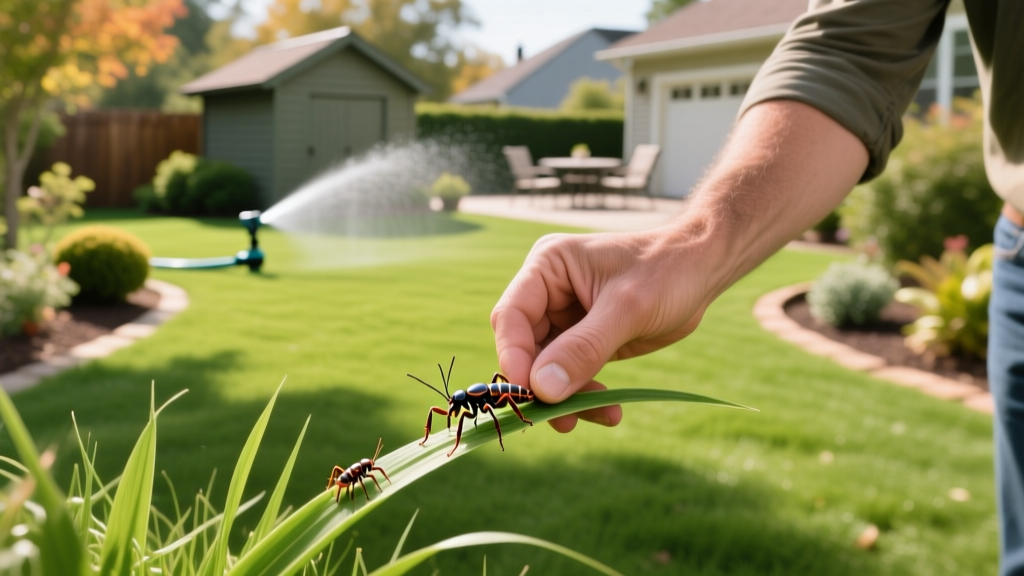
Effective Chigger Yard Treatment: Reclaim Your Itch-Free Lawn
The Biology of the Itch: Why Chiggers Target Your Yard
Chiggers (family Trombiculidae) are not insects; they are the larval stage of trombiculid mites. The intense, localized itching they cause is not a bite in the traditional sense. The six-legged larvae inject digestive enzymes into the skin that dissolve tissue, creating a feeding tube called a stylostome. While adults and nymphs feed on soil-dwelling insects, the larvae require a vertebrate host to progress to their next life stage. According to the Centers for Disease Control and Prevention (CDC), chiggers do not burrow into the skin or drink blood, but the localized tissue destruction and subsequent allergic reaction cause the hallmark red, intensely itchy welts.
A successful chigger yard treatment requires understanding their micro-habitat preferences. Chiggers desiccate rapidly in direct sunlight and low humidity. Therefore, they cluster in 'ecotones'—transitional zones where dense, shaded vegetation meets open areas. Treating the dead center of a sun-baked bermudagrass lawn is a waste of chemicals. Effective eradication demands targeting the perimeter, shaded brush piles, and overgrown fence lines where soil-surface humidity remains above 70%.
Phase 1: Ecotone Management and Habitat Denial
Chemical applications will fail if the underlying microclimate remains favorable for mite survival. Before mixing any insecticide, you must alter the yard's physical structure to expose the soil surface to UV light and airflow.
- Thatch Reduction: Chiggers thrive in thatch layers exceeding 0.5 inches. The spongy organic matter retains moisture and shields larvae from predators and pesticides. Core aerate and dethatch your lawn in early spring before larval populations peak in late May.
- Perimeter Clearing: Establish a 3-foot 'dry zone' between woodland edges and your turf. Remove leaf litter, trim low-hanging branches to allow sunlight penetration, and clear out ivy or dense groundcovers where chiggers ambush passing hosts.
- Moisture Control: Fix leaking irrigation heads and regrade low-lying areas that hold standing water. Chiggers require high surface humidity to survive off a host.
Pro Tip: Use a digital soil moisture meter. If the top 1 inch of soil in your shaded border zones reads above 40% moisture content consistently, the habitat remains highly conducive to chigger proliferation regardless of chemical treatments.
Phase 2: Selecting the Right Chemical Chigger Yard Treatment
When cultural controls are insufficient, targeted acaricide applications are necessary. The two most effective active ingredients for residential chigger yard treatment in 2026 are Bifenthrin and Permethrin. Both are synthetic pyrethroids that disrupt the mite's nervous system, providing rapid knockdown and extended residual control.
| Active Ingredient | Common Trade Names | Application Rate (per 1,000 sq ft) | Residual Life | Est. Cost (2026) |
|---|---|---|---|---|
| Bifenthrin (7.9%) | Talstar P, Bifen XTS | 1.0 fl oz per 1 gallon water | 30 - 45 days | $45 - $60 / pint |
| Permethrin (36.8%) | Tengard SFR, Nyguard | 1.67 fl oz per 1 gallon water | 21 - 30 days | $50 - $75 / quart |
| Carbaryl (43%) | Sevin SL | 1.5 fl oz per 1 gallon water | 14 - 21 days | $25 - $35 / quart |
Pet Safety Warning: Permethrin is highly toxic to cats until completely dry. If you have feline pets that roam the yard, avoid permethrin-based chigger yard treatments or strictly enforce a 24-hour yard ban until the application has fully dried and settled into the thatch.
For severe infestations, the University of Missouri Extension recommends applying Bifenthrin using a hose-end sprayer to ensure the chemical penetrates deep into the thatch layer and soil surface where larvae wait for hosts. Do not use a standard fan-nozzle backpack sprayer for perimeter treatments; the droplet size is often too fine and evaporates before reaching the soil surface in dense vegetation.
Phase 3: Biological Warfare with Beneficial Nematodes
For homeowners seeking an organic chigger yard treatment, beneficial nematodes offer a highly effective, non-toxic alternative. Specifically, the species Steinernema carpocapsae actively seeks out and infects soil-dwelling arthropods, including mite nymphs and adults, breaking the reproductive cycle before larvae can emerge.
Nematode Application Protocol
- Purchase Fresh Stock: Nematodes are living organisms. Buy from reputable biological control suppliers and ensure they are shipped with cold packs. Do not use stock that has been sitting on a garden center shelf in the sun.
- Timing is Critical: Apply when soil temperatures are consistently between 60°F and 85°F. Applications in early spring (April) target the overwintering nymphs before they molt into egg-laying adults.
- Mixing and Spraying: Mix 1 billion nematodes (the standard coverage for roughly 1 acre, or scale down to ~25,000 per 1,000 sq ft) in a 5-gallon bucket of cool, unchlorinated water. Let it sit for 3 minutes, stir gently, and apply using a watering can or a sprayer with the filter screen removed.
- Post-Application Watering: Immediately irrigate the treated area with 0.25 inches of water to wash the nematodes off the grass blades and down into the top 2 inches of soil where they hunt.
The 72-Hour Application Protocol for Maximum Efficacy
To guarantee your chigger yard treatment succeeds, follow this strict 72-hour timeline surrounding your chemical or biological application.
- Day -1 (Preparation): Mow the lawn slightly shorter than your normal maintenance height (e.g., drop from 3.5 inches to 2.5 inches for tall fescue). This removes the upper canopy where chiggers climb to quest for hosts and exposes the soil surface. Water the yard deeply to encourage chiggers to move closer to the surface.
- Day 0 (Application): Apply your chosen Bifenthrin or Permethrin treatment in the early evening. UV light degrades pyrethroids rapidly; evening application allows the chemical to bind to the organic matter overnight. Spray the ecotones, fence lines, and shaded areas until the ground is visibly wet, but avoid creating runoff.
- Day 1 (Rest): Keep all humans and pets off the treated zones for 24 hours. Do not irrigate. Allow the chemical to dry and penetrate the thatch.
- Day 2 & 3 (Maintenance): Resume normal irrigation. Avoid heavy foot traffic in the treated perimeter zones for at least a week to allow the residual barrier to establish.
Troubleshooting: Why Your Lawn Still Has Chiggers
If you are still experiencing bites two weeks after a thorough chigger yard treatment, evaluate these common failure points:
1. Ignoring the 'Questing' Zone
Chiggers climb to the top of grass blades or low vegetation to 'quest'—waiting with their front legs extended to grab onto a passing host. If your sprayer pressure was too low, or you used a misting nozzle that only coated the top of the leaves, the chemical may not have reached the soil surface where the majority of the population resides. Always use a coarse spray pattern directed at the base of the vegetation.
2. Re-introduction from Wildlife Corridors
Chiggers hitch rides on rodents, deer, and stray cats. If your yard borders a dense forest and serves as a wildlife corridor, you will face constant re-introduction. In these scenarios, a single treatment is insufficient. You must establish a recurring 30-day maintenance schedule using Bifenthrin along the property borders throughout the summer months.
3. Misidentifying the Pest
Not all itchy red bumps are chiggers. Fleas, bird mites, and even contact dermatitis from poison ivy can mimic chigger bites. Chigger bites typically occur in clusters around tight clothing restrictions (ankles, waistlines, behind knees). If the bites are randomly distributed or primarily on the upper body, you may be dealing with mosquitoes, fleas, or a completely different dermatological issue, rendering your chigger yard treatment irrelevant to the actual problem.

