
Pest Control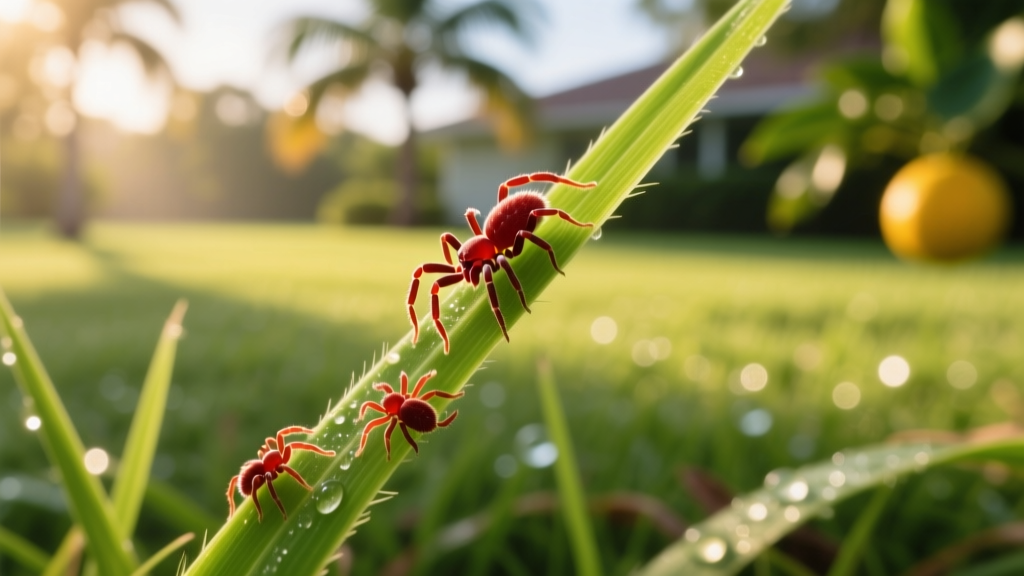
Chiggers in Florida: Seasonal Calendar and Peak Activity Guide
The Florida Chigger Lifecycle & Climate Impact
Managing chiggers in Florida requires understanding that you are not dealing with a single, uniform season. The primary species troubling Florida homeowners, Trombicula alfreddugesi (the North American chigger) and Eutrombicula splendens, thrive in the state's high-humidity microclimates. Only the larval stage bites humans and pets, and these larvae require ambient humidity levels above 80% and soil temperatures between 77°F and 86°F to remain active on the soil surface.
Critical Data Point: The Stylostome Formation
Chiggers do not suck blood. They inject digestive enzymes into the skin that dissolve tissue, forming a hardened feeding tube called a stylostome. This is why the intense itching peaks 24 to 48 hours after the initial bite—the delayed hypersensitivity reaction to the enzymes and the physical presence of the stylostome causes the severe welts common in Florida yards.
Because Florida's temperature and rainfall patterns vary drastically from the Panhandle to the Keys, a one-size-fits-all approach to pest control fails. Timing your barrier sprays and landscaping adjustments to the specific regional calendar is the most cost-effective way to suppress larval populations before they attach to hosts.
Seasonal Activity Calendar for Florida Yards
Use this matrix to schedule your chemical applications, organic treatments, and yard maintenance. The activity levels below assume a typical residential lot with St. Augustine or Zoysia grass and shaded perimeter zones.
| Timeframe | Activity Level | Required Action Protocol |
|---|---|---|
| Jan - Feb | Low (Moderate in South FL) | Clear winter leaf litter. Prune lower tree canopy to 6 feet to increase UV soil penetration. |
| Mar - Apr | Moderate (Warming) | Apply first pre-season Bifenthrin barrier spray. Core aerate heavily compacted, damp zones. |
| May - Aug | Extreme (Peak) | Bi-weekly inspections. Reapply chemical/organic sprays every 21 days. Use personal repellents. |
| Sep - Oct | High (Cooling but humid) | Aggressive fall debris removal. Adjust irrigation to prevent evening soil saturation. |
| Nov - Dec | Low (Dormancy) | Winterize irrigation systems. Dethatch St. Augustine lawns if thatch exceeds 0.5 inches. |
Regional Hotspots: North vs. Central vs. South Florida
Florida's microclimates dictate the exact start and end of your chigger season. Treating a yard in Pensacola on the same schedule as a yard in Naples will result in wasted chemicals and unprotected exposure.
North Florida (Panhandle to Jacksonville)
North Florida experiences a distinct winter dormancy period. Soil temperatures drop below the 60°F threshold required for larval activity from December through February. Peak season: May through September. Homeowners here should focus heavily on late-April perimeter treatments to catch the first wave of hatching larvae emerging from overwintering sites in forested property lines.
Central Florida (Orlando, Tampa, Ocala)
The Central corridor features an extended season due to the urban heat island effect and high ambient humidity trapped by dense oak canopies. Peak season: April through October. The frequent afternoon thunderstorms in July and August create temporary puddles and saturated thatch layers, leading to localized chigger explosions in poorly drained yard depressions.
South Florida (Miami, Fort Lauderdale, Naples)
South Florida presents a year-round threat. While activity dips slightly in January, larvae remain active in protected, shaded hammocks and dense hedge lines. Peak season: June through September (coinciding with the wet season). In South Florida, managing moisture is vastly more important than managing temperature.
Pre-Season Preventative Treatments: Chemical vs. Organic
When timing your applications, you must choose a product that aligns with your yard's ecology and your budget. Below is a direct comparison of the most effective professional-grade and consumer-accessible options for Florida lawns.
- Chemical Standard (Bifenthrin 7.9%): Products like Talstar P remain the industry standard for chigger suppression.
- Dilution: 1 oz per gallon of water.
- Coverage: 1 gallon covers 1,000 sq ft.
- Cost: Approximately $45 for a 3/4 gallon jug (yields ~96 gallons of finished solution).
- Timing: Apply in early March and reapply every 30 days during peak season. Keep pets off the lawn until completely dry (usually 2-4 hours in FL humidity).
- Organic Alternative (Cedarwood Oil): Products like Wondercide Outdoor Pest Control use cedarwood oil to block the octopamine receptors in insects, causing dehydration and death.
- Application: Ready-to-use hose-end sprayer attachment.
- Cost: ~$35 for a 32 oz bottle (covers up to 10,500 sq ft).
- Timing: Requires more frequent application. Spray every 14 days during the May-August peak, ideally in the early evening to prevent rapid UV degradation of the essential oils.
- Personal Defense (Permethrin 0.5%): For the humans working in the yard, treating clothing with Sawyer Permethrin Insect Repellent (~$15 per 24 oz aerosol) provides a 6-week barrier that kills chiggers on contact before they can reach the skin. According to the EPA's insect repellent guidelines, permethrin is strictly for fabrics, never for direct skin application.
Expert Landscaping Tactics to Suppress Chigger Habitats
Chemicals fail if the underlying habitat remains untouched. Chiggers are notoriously poor travelers; they climb to the top of a grass blade and wait for a host to brush past. Altering the physical environment makes your yard inhospitable.
- Thatch Reduction: St. Augustine grass is prone to thick thatch buildup. If your thatch layer exceeds 0.5 inches, it acts as a humidity sponge, protecting larvae from desiccation. Rent a vertical mower (power rake) in late February to physically tear out the thatch before the spring hatch.
- Canopy Pruning: Chiggers require shade to prevent their bodies from drying out. Prune the lower branches of your Live Oaks and Magnolias to a minimum height of 6 feet. This allows direct UV sunlight to strike the soil surface between 10 AM and 2 PM, naturally baking the top inch of soil and killing exposed larvae.
- Mowing Height Calibration: Do not scalp your lawn to fight pests. Cutting St. Augustine below 3 inches stresses the root system and invites weeds. Maintain a height of 3.5 to 4 inches, but ensure you are mowing frequently enough that you never remove more than 1/3 of the blade at once.
- Irrigation Audits: Switch your sprinkler timers from early evening to pre-dawn (4:00 AM - 5:00 AM). Evening watering leaves the thatch layer wet all night, creating the exact 80%+ humidity pocket chiggers need to survive and migrate.
Post-Bite Protocol: Debunking the Nail Polish Myth
If you or your family members do suffer bites despite your seasonal calendar, proper medical protocol is vital to prevent secondary staph infections from scratching.
The Nail Polish & Bleach Myth: A pervasive internet myth claims you must suffocate chiggers with clear nail polish, rubbing alcohol, or bleach. This is entirely false and damages the skin. The Centers for Disease Control and Prevention (CDC) confirms that chiggers do not burrow under the skin or remain attached after the initial feeding. The larva typically falls off within 3 to 4 days on its own. The hard, red welt you see is the stylostome and localized inflammation, not a bug trapped beneath your epidermis.
Actionable Relief Protocol: Immediately upon returning indoors from a high-risk zone, take a hot shower using a washcloth and heavy lathering soap to physically scrub off unattached larvae. For existing welts, apply an over-the-counter hydrocortisone cream (1%) or a pramoxine-based anti-itch lotion to numb the nerve endings. Keep nails trimmed short to prevent breaking the skin during sleep, which is when most secondary infections occur.

