
Pest Control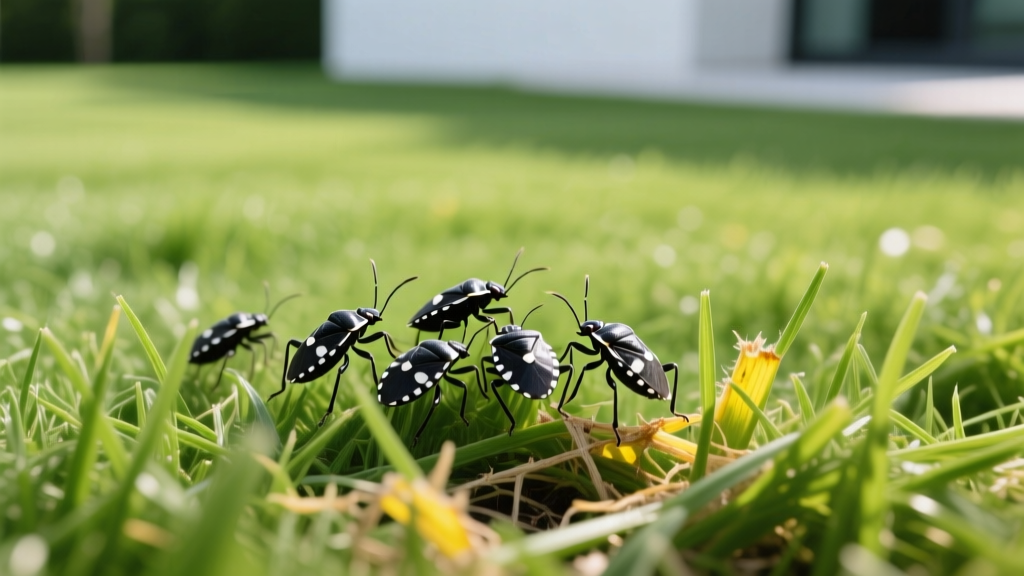
How to Get Rid of Chinches (Chinch Bugs): Dosage & Cost Guide
Understanding the "Chinches" Threat in Turfgrass
When homeowners and landscaping crews search for how to get rid of chinches in a lawn care context, they are referring to chinch bugs (Blissus species). While "chinches" is the Spanish term for bed bugs, in the US turf and landscaping industry—particularly across Texas, Florida, and California—it is the common colloquial name for the Southern chinch bug (Blissus insularis) and the hairy chinch bug (Blissus leucopterus). These sap-sucking insects devastate St. Augustine, Bermuda, and Zoysia grasses by injecting a toxic saliva that blocks the plant's vascular system, causing rapid, irreversible yellowing and necrosis.
Successfully eradicating a chinch bug infestation requires precise chemical selection, accurate dosage calculations, and an understanding of thatch penetration. Misjudging the application rate or failing to water the insecticide into the thatch layer will result in treatment failure and wasted capital. According to the University of Florida IFAS Extension, chinch bugs have developed documented resistance to several older classes of insecticides, making precise rotation of modern active ingredients critical for long-term control.
Treatment Comparison Matrix: Active Ingredients & Dosages
Selecting the correct chemistry depends on your grass type, the severity of the infestation, and your environmental constraints. Below is a breakdown of the most effective active ingredients for chinch bug control as of 2026, including exact dosage rates per 1,000 square feet.
| Active Ingredient | Common Brand Example | Class / Mode of Action | Dosage per 1,000 sq ft | Water Carrier Volume | Re-entry Interval (REI) |
|---|---|---|---|---|---|
| Bifenthrin (7.9%) | Talstar P Professional | Pyrethroid (IRAC Group 3A) | 0.5 - 1.0 fl oz | 1.5 - 2.0 gallons | 12 Hours |
| Lambda-cyhalothrin (22.8%) | Scimitar GC | Pyrethroid (IRAC Group 3A) | 0.15 - 0.30 fl oz | 1.5 - 2.0 gallons | 24 Hours |
| Carbaryl (22.5%) | Sevin SL | Carbamate (IRAC Group 1A) | 1.5 - 2.0 fl oz | 2.0 - 3.0 gallons | 12 Hours |
| Azadirachtin (4.5%) | Azatrol EC | Botanical Insect Growth Regulator | 0.5 - 1.0 fl oz | 2.0 gallons | 4 Hours |
CRITICAL APPLICATION WARNING: Chinch bugs live and feed at the soil-thatch interface, not on the upper grass canopy. If you apply these chemicals with too little water, the product will dry on the grass blades and fail to reach the pests. You must use a minimum of 1.5 to 2.0 gallons of water per 1,000 square feet to act as a carrier, followed immediately by 0.25 inches of irrigation to wash the active ingredient down into the thatch.
Calculating Coverage and Exact Dosage Rates
To determine how much product you need, you must first calculate your lawn's exact square footage and the required concentration. Many homeowners fail because they mix for the total water volume rather than the total area. The Environmental Protection Agency (EPA) strictly mandates that pesticide applications be calibrated by area, not by tank volume.
The Math: Treating a 6,500 Sq Ft St. Augustine Lawn
Let us walk through a real-world calculation using Bifenthrin 7.9% EC (e.g., Talstar P) for a moderate-to-severe chinch bug infestation.
- Total Area: 6,500 sq ft (6.5 units of 1,000 sq ft).
- Target Dosage: 0.8 fl oz per 1,000 sq ft (mid-to-high rate for active nymphs and adults).
- Total Chemical Needed: 6.5 x 0.8 = 5.2 fl oz of Bifenthrin.
- Water Carrier Rate: 2 gallons per 1,000 sq ft.
- Total Water Needed: 6.5 x 2 = 13 gallons of water.
You will mix 5.2 fl oz of Bifenthrin into 13 gallons of water in your backpack or tank sprayer. You will then spray the entire 6,500 sq ft area evenly until the tank is empty. Do not spot-treat; chinch bugs migrate rapidly through the thatch, and perimeter barrier applications are largely ineffective for established turf populations.
2026 Cost Breakdown: DIY vs. Professional Application
The financial investment required to eliminate chinches varies significantly based on whether you purchase commercial-grade concentrates or hire a licensed turf management company. Below is a realistic cost analysis for a standard 5,000 sq ft lawn requiring two applications spaced 21 days apart to break the nymphal hatching cycle.
| Cost Category | DIY (Commercial Concentrate) | Professional Lawn Care Service |
|---|---|---|
| Initial Chemical/Service Fee | $45 - $65 (32oz bottle of Bifenthrin) | $120 - $180 per application |
| Equipment Cost (Amortized) | $120 - $160 (2-gallon tank sprayer) | $0 (Included in service) |
| Second Application (Day 21) | $0 (Using remaining concentrate) | $120 - $180 |
| Post-Treatment Irrigation | $15 - $25 (Municipal water cost) | $0 (Often included or homeowner's responsibility) |
| Total Estimated Cost | $180 - $250 | $240 - $360 |
While DIY application offers a slight cost savings, professional services utilize high-volume ride-on sprayers that guarantee exact thatch penetration, which is the most common point of failure for DIY homeowners using low-pressure pump sprayers.
Step-by-Step Application Protocol
Follow this exact sequence to maximize mortality rates and prevent chemical runoff.
- Mow the Turf: Mow your lawn 24 hours before application. Remove the clippings if the thatch layer exceeds 0.5 inches. Excessive thatch will bind the pyrethroid molecules, rendering the insecticide useless.
- Calibrate the Sprayer: Fill your sprayer with plain water and spray a 1,000 sq ft test area. Measure how much water was used to ensure you are hitting the 1.5 to 2.0 gallon target.
- Mix the Solution: Add the required amount of water to the tank first, then add the insecticide concentrate, and finally add a non-ionic surfactant (at 0.25% v/v) to break the surface tension of the waxy grass blades and thatch.
- Apply Evenly: Spray in the early morning (before 9:00 AM) when chinch bugs are most active near the surface and temperatures are below 85°F to prevent phytotoxicity.
- Water In Immediately: Within 30 minutes of application, run your irrigation system to deliver exactly 0.25 inches of water. Use a rain gauge or empty tuna cans placed on the lawn to measure the output.
Pro-Tip for Resistance Management: If you have used Bifenthrin or other pyrethroids for two consecutive seasons without success, your local chinch bug population likely possesses the kdr (knockdown resistance) gene mutation. Switch immediately to a Carbamate (Carbaryl) or a rotational product like Closer (Isoclast active) to bypass the resistance mechanism, as noted by Penn State Extension turfgrass researchers.
Cultural Controls and Long-Term Prevention
Chemical eradication is only half the battle. Chinch bugs thrive in hot, dry, heavily fertilized lawns with thick thatch layers. To prevent a resurgence next season, implement these cultural modifications:
- Thatch Management: Core aerate your lawn annually and use a vertical mower (dethatcher) in the spring to keep the thatch layer below 0.25 inches. This removes the physical habitat the chinches require to hide from predators and UV light.
- Nitrogen Regulation: Avoid high-nitrogen, quick-release fertilizers during the peak summer months (June through August). Excessive nitrogen produces lush, soft leaf tissue that is highly susceptible to chinch bug saliva toxins.
- Endophyte-Enhanced Seed: If you are overseeding a cool-season lawn or repairing patches, select turfgrass varieties enhanced with endophytic fungi. These naturally occurring fungi produce alkaloids that are highly toxic to chinch bugs and deter feeding.
Frequently Asked Questions
Can I use diatomaceous earth to kill chinches in my lawn?
Food-grade diatomaceous earth (DE) is largely ineffective for outdoor turf applications. DE requires direct, dry contact with the insect's exoskeleton to cause desiccation. Because chinch bugs live deep in the moist thatch layer and DE loses its abrasive properties the moment it gets wet from dew or irrigation, it will not provide reliable control in a lawn environment.
Why are the chinches returning three weeks after I sprayed Bifenthrin?
Bifenthrin is highly lethal to adult chinch bugs and active nymphs, but it has poor ovicidal (egg-killing) activity. The eggs laid prior to your first application will hatch 21 to 28 days later. A second application is strictly required at the 21-day mark to eliminate the newly hatched nymphs before they mature and lay a second generation of eggs.
Do chinch bugs fly into my house like bed bugs?
No. While adult chinch bugs do possess wings and can fly short distances to locate new turfgrass hosts, they do not infest indoor environments, feed on human blood, or survive inside homes. The linguistic overlap between "chinches" (bed bugs) and chinch bugs causes frequent confusion, but turf chinch bugs are strictly outdoor agricultural pests that will die within hours if trapped indoors without a grass host.

