
Pest Control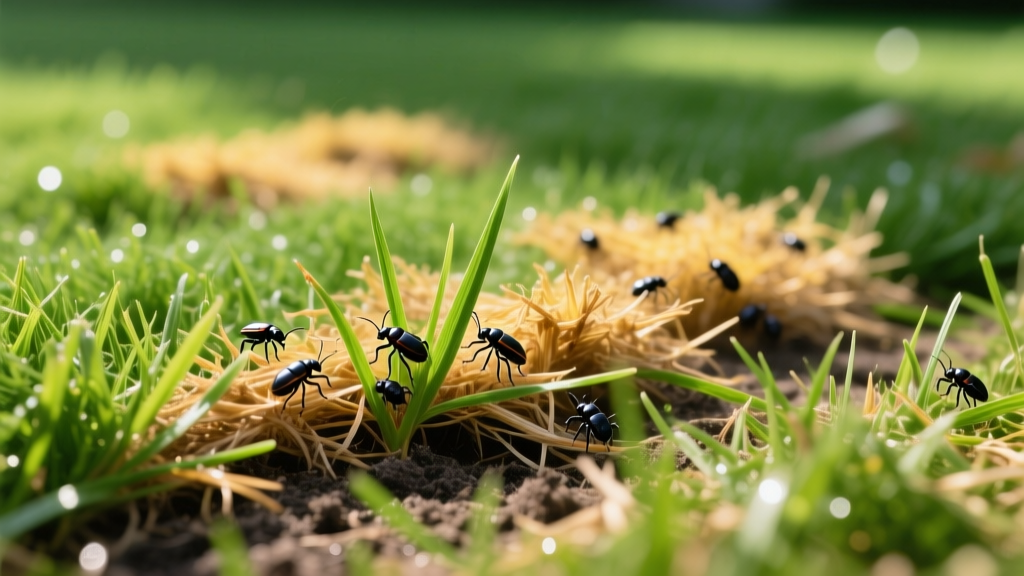
Is This Chinch Bug Time Lapse Damage? Identifying Rapid Lawn Browning
Why Homeowners Search 'Is This Chinch Bug Time Lapse Damage'
When a vibrant green lawn degrades into patchy, straw-colored turf in under 14 days, the visual shock often prompts homeowners to compare the destruction to viral time-lapse videos of agricultural decay. If you are asking, 'is this chinch bug time lapse damage happening in my yard,' you are likely witnessing the explosive population growth of Blissus insularis (Southern chinch bug) or Blissus leucopterus (Hairy chinch bug). Unlike fungal diseases that spread slowly via spores, chinch bugs multiply and feed en masse, creating a 'time-lapse' effect where large swaths of turf appear to die overnight.
Chinch bugs utilize piercing-sucking mouthparts to extract sap from grass crowns and stolons while simultaneously injecting a salivary toxin. This toxin blocks the plant's vascular system, preventing water transport. The result is rapid desiccation that mimics severe drought stress, but no amount of irrigation will reverse it. Understanding the biological mechanics behind this rapid decline is the first step in saving your turf.
The Biology of the Time-Lapse Effect
The alarming speed of chinch bug damage is directly tied to their life cycle and environmental triggers. In regions with hot, dry summers (optimal temperatures between 80°F and 85°F), a single female can lay up to 250 eggs over a 3-week period. These eggs hatch in as little as 10 days, releasing hundreds of red-orange nymphs that immediately begin feeding.
- Week 1-2: Eggs hatch. Nymphs (instars 1-3) feed aggressively on tender crown tissue. Damage is microscopic and invisible to the naked eye.
- Week 3-4: Nymphs mature into later instars and adults. The population density peaks. Salivary toxins accumulate in the grass stolons.
- Week 5-6: The 'time-lapse' browning becomes visible. St. Augustine, Zoysia, and Bermuda grasses turn yellow, then straw-brown, starting at the edges of driveways and sidewalks where heat radiates and accelerates insect metabolism.
Diagnostic Decision Tree: Chinch Bugs vs. Drought Stress
Because the visual symptoms of chinch bug damage and drought stress are nearly identical, you must use environmental clues to differentiate them before applying expensive pesticides.
Symptom Checkpoint 1: Soil Moisture
If the soil beneath the browning patch is moist from recent irrigation or rainfall, but the grass remains brown and wilted, suspect chinch bugs. Drought-stressed grass will recover within 24 hours of deep watering; chinch-damaged grass will not.
Symptom Checkpoint 2: The Halo Effect
Chinch bugs thrive in hot, dry microclimates. Inspect the perimeter of your lawn near concrete sidewalks, asphalt driveways, and south-facing foundations. If the browning forms a distinct 'halo' radiating outward from these heat-retaining surfaces while the center of the lawn remains green, you are likely dealing with an infestation.
Symptom Checkpoint 3: Thatch Depth
Measure your thatch layer with a trowel. If it exceeds 0.5 inches, it provides an ideal, insulated habitat for chinch bugs to hide from predators and surface-applied insecticides.
If the soil beneath the browning patch is moist from recent irrigation or rainfall, but the grass remains brown and wilted, suspect chinch bugs. Drought-stressed grass will recover within 24 hours of deep watering; chinch-damaged grass will not.
Symptom Checkpoint 2: The Halo Effect
Chinch bugs thrive in hot, dry microclimates. Inspect the perimeter of your lawn near concrete sidewalks, asphalt driveways, and south-facing foundations. If the browning forms a distinct 'halo' radiating outward from these heat-retaining surfaces while the center of the lawn remains green, you are likely dealing with an infestation.
Symptom Checkpoint 3: Thatch Depth
Measure your thatch layer with a trowel. If it exceeds 0.5 inches, it provides an ideal, insulated habitat for chinch bugs to hide from predators and surface-applied insecticides.
The 3-Step Soapy Flush Test for Definitive ID
Visual symptoms are not enough to justify chemical application. According to Penn State Extension, the industry-standard diagnostic tool is the soapy water flush test, which forces hidden insects to the surface.
- Prepare the Solution: Mix 2 tablespoons of liquid dish soap (lemon-scented varieties work best due to the d-limonene content) into 1 gallon of water.
- Isolate the Margin: Do not test the completely dead center of the patch; the bugs have already migrated. Pour the solution over a 1-square-yard area at the margin where green grass meets brown, dying grass.
- Count and Identify: Wait 5 to 10 minutes. Chinch bugs will float to the surface. Count the adults (black with white wings folded flat) and nymphs (red-orange with a white band). If you count 15 to 20 or more bugs per square yard, treatment is economically justified.
Treatment Protocols and Chemical Rotation
Applying the wrong chemical, or repeatedly using the same class of insecticide, is the primary reason homeowners fail to stop the 'time-lapse' spread. Southern chinch bugs have developed documented resistance to many pyrethroids. The EPA Safe Pest Control Guidelines emphasize rotating modes of action to prevent colony adaptation.
| Active Ingredient | Product Example | IRAC Group | Target Stage | Est. Cost / 1k sq ft |
|---|---|---|---|---|
| Bifenthrin | Talstar P Professional | 3A (Pyrethroid) | Adults & Nymphs | $1.20 - $1.50 |
| Clothianidin | Arena 50 WDG | 4A (Neonicotinoid) | Nymphs & Eggs | $4.00 - $4.50 |
| Imidacloprid | Merit 0.5 G | 4A (Neonicotinoid) | Early Nymphs | $2.50 - $3.00 |
| Beauveria bassiana | BotaniGard ES (Organic) | Biological Fungus | All Stages | $6.00 - $8.00 |
Critical Resistance Warning: If you have applied bifenthrin or lambda-cyhalothrin twice in the past year and the lawn is still browning, your local chinch bug population is likely resistant. You must immediately switch to a Group 4A neonicotinoid (like Arena) or a biological control (like BotaniGard) to break the genetic resistance cycle.
Cultural Controls: Starving the Colony
Chemical treatments will fail if the underlying lawn conditions continue to favor chinch bug reproduction. Implementing these cultural controls disrupts their habitat:
- Thatch Reduction: Core aerate and apply a liquid dethatcher (containing Bacillus enzymes) in early spring. Keeping thatch below 0.25 inches exposes nymphs to ground beetles and big-eyed bugs, their natural predators.
- Endophyte-Enhanced Seed: If you are repairing cool-season lawns damaged by hairy chinch bugs, overseed with endophyte-enhanced tall fescue or perennial ryegrass (e.g., Rebel IV or Titan Ultra). These grasses contain symbiotic fungi that produce alkaloids, making the grass tissue toxic to chinch bugs.
- Strategic Irrigation: Chinch bugs thrive in hot, dry soil. Water deeply but infrequently (providing 1 inch of water per week) to encourage deep root growth while occasionally wetting the thatch layer to promote the growth of the naturally occurring fungus Beauveria bassiana, which parasitizes chinch bugs.
Expert FAQ: Edge Cases and Recovery
Q: My lawn turned brown in three days. Could this be a chinch bug time-lapse effect, or is it something else?
A: Three days is unusually fast for chinch bugs unless the population density exceeds 50 bugs per square foot. Damage this rapid is more characteristic of Sod Webworms or Armyworms, which chew the grass blades entirely off at the soil line. Perform the flush test; if no chinch bugs appear, look for green frass (caterpillar droppings) on the soil surface.
Q: How long does it take for St. Augustine grass to recover after the bugs are eliminated?
A: If the stolons (runners) are still firm and white when you pull on them, the grass will push new nodes and recover in 3 to 4 weeks with proper nitrogen fertilization. If the stolons snap easily and are brown, the tissue is dead, and you must plug or sod the affected areas.
Q: Do bug zappers or ultrasonic repellers work against chinch bugs?
A: No. Chinch bugs do not exhibit phototaxis (attraction to light) like mosquitoes or moths, nor do they respond to ultrasonic frequencies. Rely strictly on chemical rotation and cultural thatch management.

