
Pest Control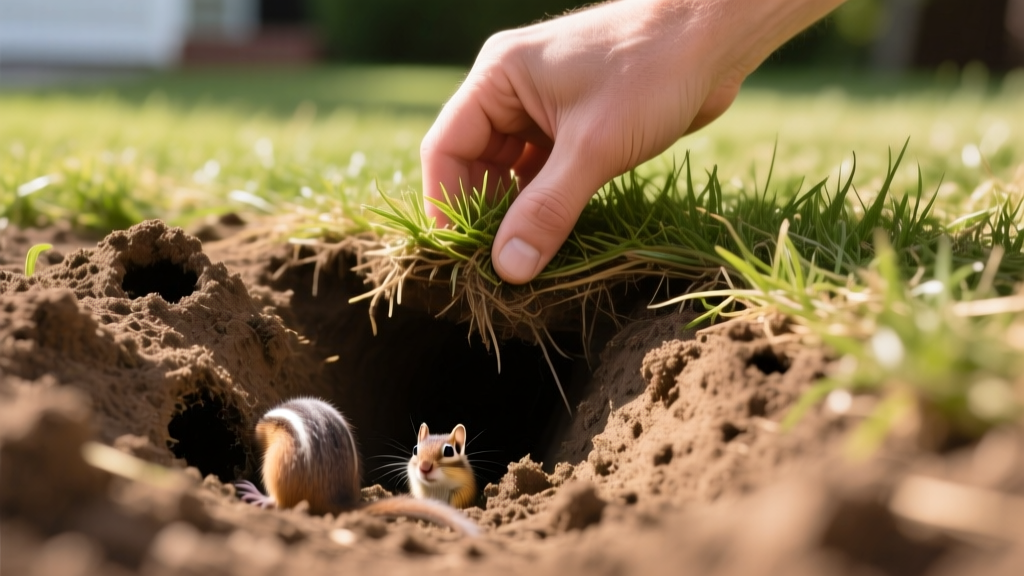
Chipmunk Extermination Guide: Diagnose Damage and Evict Burrowers
Diagnosing Chipmunk Damage vs. Other Rodents
Eastern chipmunks (Tamias striatus) are often dismissed as harmless garden visitors, but a single adult can displace up to 20 pounds of soil while constructing a subterranean burrow network. Before initiating any chipmunk extermination protocol, accurate diagnosis is mandatory. Misidentifying the pest leads to wasted capital on ineffective traps and repellents. Chipmunk damage is frequently confused with vole, mole, or ground squirrel activity, but the structural signatures of their burrows and surface runways differ significantly.
| Rodent Species | Hole Diameter | Soil Mound | Surface Runways |
|---|---|---|---|
| Chipmunk | 1.5 to 2 inches | None (soil is carried away) | Faint, intermittent paths |
| Vole | 1 to 1.5 inches | Small, irregular dirt piles | Well-defined 1-2 inch wide grass runways |
| Mole | N/A (surface tunnels) | Volcano-shaped mounds | Raised soil ridges across lawn |
| Ground Squirrel | 3 to 4 inches | Large, flat dirt berms | Broad, heavily trafficked trails |
According to Penn State Extension, the most definitive hallmark of a chipmunk burrow is the absence of a soil mound at the primary entrance. Chipmunks meticulously carry excavated dirt away from the hole in their cheek pouches, depositing it elsewhere to camouflage their home base. If you see a clean, 2-inch hole near foundations, retaining walls, or woodpiles with no displaced dirt, you are dealing with chipmunks.
Mapping the Burrow System
Effective chipmunk extermination requires understanding their subterranean architecture. A mature chipmunk burrow system can extend 20 to 30 feet in length and plunge 3 feet deep. The system features two distinct types of entrances:
- Primary Entrances: Used for daily foraging and soil removal. These are typically located near protective cover (shrubs, stumps, or foundations).
- Secondary (Escape) Entrances: Smaller, hidden holes used strictly for emergency evasion. These are often found in open lawn areas or under dense groundcover.
Before setting traps, map the perimeter of the suspected burrow network. Dust the area around suspected holes with a fine layer of flour or talcum powder in the evening. Inspect the powder at dawn; distinct, small five-toed paw prints will confirm active traffic routes and help you pinpoint the optimal trap placement zones.
Chipmunk Extermination and Eviction Tactics
Once the active burrow network is mapped, you must choose between lethal elimination, humane relocation, or chemical eviction. Your choice dictates the specific hardware and active ingredients required.
Lethal vs. Humane Trapping Strategies
Trapping remains the most reliable method for immediate population reduction. However, success hinges on the 'pre-baiting' protocol. Chipmunks are highly neophobic (fearful of new objects). Placing a trap and expecting immediate captures is a primary failure mode for DIY extermination.
The 3-Day Pre-Baiting Protocol:
- Days 1-3: Wire the trap doors open. Place a high-value bait mixture (1 part creamy peanut butter, 1 part black oil sunflower seeds, a dash of vanilla extract) on the trigger pan and just outside the entrance. Allow the chipmunks to feed safely and associate the trap with a reliable food source.
- Day 4: Set the trigger mechanism. Bait only the trigger pan. Check traps at dawn and dusk; leaving a trapped chipmunk in direct midday sun can result in fatal heatstroke within 45 minutes.
Recommended Trap Models:
- Havahart 1020 (Two-Door Live Trap): Priced around $28 in 2026. The dual-door design allows placement directly over a runway or flush against a burrow entrance, mimicking a natural tunnel. Dimensions (10 x 3 x 3 inches) perfectly accommodate adult chipmunks without allowing larger squirrels to trigger it.
- Victor 0645 Easy Set Snap Trap: Priced at $9. If local regulations prohibit relocation and lethal control is preferred, this expanded polystyrene base snap trap provides a high-impact strike. Bait the rear trigger cup with a single whole peanut.
Chemical Repellents and Taste Deterrents
Repellents do not exterminate populations but serve as critical perimeter defenses to protect high-value assets like bulb beds and foundation plantings.
- Capsaicin-Based Sprays (e.g., Liquid Fence): Effective for surface applications on hardscapes and plant foliage. Must be reapplied after 0.5 inches of rainfall.
- Thiram-Based Fungicides: The only reliable method for protecting subterranean tulip and crocus bulbs. Soak bulbs in a Thiram solution prior to planting; the bitter taste deters digging without harming the plant tissue.
- Predator Urine Granules (e.g., Shake-Away Fox Urine): Creates an olfactory boundary. Place granule packets 10 feet apart along retaining walls. Efficacy degrades after 14 days due to UV exposure and soil microbial breakdown.
Long-Term Exclusion: The L-Footer Trenching Method
Trapping removes current occupants, but vacant burrows are rapidly colonized by transient chipmunks within 48 hours. Permanent exclusion requires physical barriers. The industry standard for protecting patios, sheds, and deck foundations is the L-Footer Trench.
Execution Steps:
- Dig a trench 12 inches deep and 6 inches wide along the perimeter of the structure you wish to protect.
- Purchase 19-gauge, 1/4-inch galvanized hardware cloth. Do not use chicken wire; chipmunks can easily compress their skulls to pass through 1-inch hexagonal gaps.
- Cut the hardware cloth to a width of 24 inches.
- Bend the bottom 12 inches of the cloth at a 90-degree angle to form an 'L' shape.
- Place the vertical section in the trench so it extends 12 inches above grade (or attach it flush to the foundation). The horizontal 12-inch flange must point away from the structure, resting at the bottom of the trench.
- Backfill the trench. When a chipmunk digs down along the foundation, it hits the vertical wire, digs deeper, and encounters the horizontal flange, preventing entry.
Legal Warning Regarding Relocation:
Before transporting live-trapped chipmunks off your property, consult your state Department of Natural Resources. As noted by The Humane Society of the United States, relocating wildlife across county lines or into state parks is illegal in most jurisdictions due to the risk of introducing parasites and disrupting local ecosystems. If relocation is prohibited, on-site euthanasia or release exactly where trapped (after installing exclusion barriers) are the only legal options.
Before transporting live-trapped chipmunks off your property, consult your state Department of Natural Resources. As noted by The Humane Society of the United States, relocating wildlife across county lines or into state parks is illegal in most jurisdictions due to the risk of introducing parasites and disrupting local ecosystems. If relocation is prohibited, on-site euthanasia or release exactly where trapped (after installing exclusion barriers) are the only legal options.
Cost Breakdown: DIY vs. Professional Extermination (2026)
Understanding the financial commitment helps homeowners decide between weekend DIY efforts and hiring licensed wildlife control operators (WCOs).
| Service Tier | Estimated Cost | What is Included |
|---|---|---|
| DIY Trapping & Repellents | $45 - $90 | 2 Havahart traps, capsaicin spray, peanut butter bait |
| DIY Exclusion (L-Footer) | $120 - $250 | Hardware cloth, trenching tools, landscape staples (per 20 linear feet) |
| Professional WCO Visit | $275 - $450 | Inspection, multi-catch trap deployment, 2-week monitoring, basic hole sealing |
| Full Pro Exclusion Package | $800 - $1,500+ | Trenching, hardware cloth installation, foundation sealing, warranty |
Frequently Asked Questions
Do ultrasonic chipmunk repellents work?
No. Independent entomological and wildlife studies consistently show that ultrasonic stakes and solar-powered sonic spikes fail to deter chipmunks. Chipmunks quickly habituate to the frequencies, and soil density rapidly absorbs the sound waves, rendering them useless beyond a 2-foot radius.
Will filling the holes with mothballs exterminate them?
Using mothballs (naphthalene or paradichlorobenzene) outdoors is a violation of federal pesticide law. These chemicals are highly toxic to soil microbiomes, groundwater, and domestic pets. Furthermore, chipmunks will simply dig a new bypass tunnel around the toxic zone rather than abandon the burrow network.
How do I protect my bird feeder from attracting chipmunks?
Chipmunks are drawn to spilled seed. Upgrade to a weight-activated bird feeder (like the Droll Yankees Yankee Flipper) that closes access ports when a heavy animal lands on it. More importantly, install a 24-inch diameter metal baffle on the feeder pole, mounted at least 5 feet above the ground, and ensure the pole is placed 10 feet away from any jumping-off points like fences or tree branches.

