
Pest Control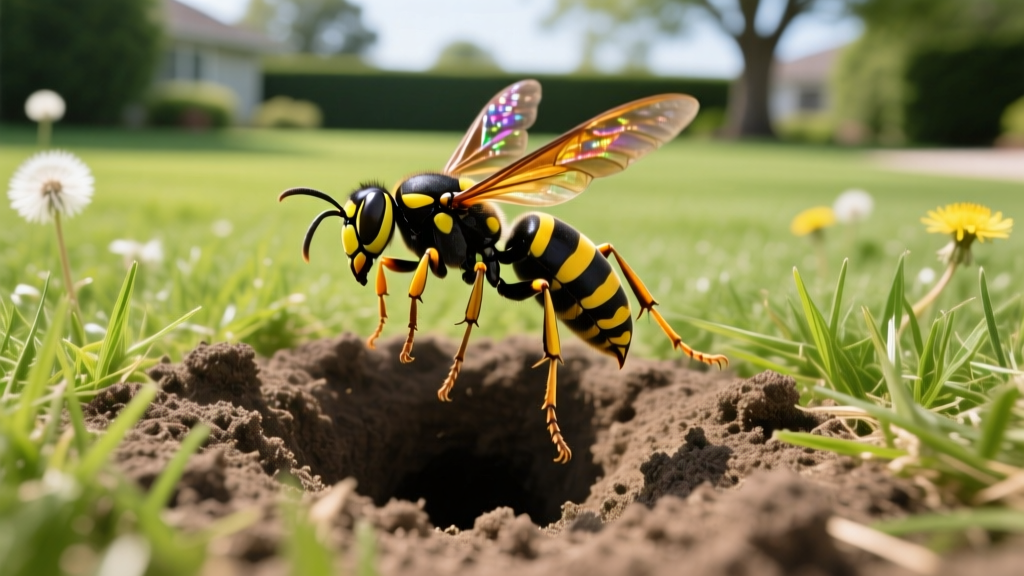
How to Identify and Manage a Cicada Killer Nest in Your Lawn
The Solitary Reality: Anatomy of a Cicada Killer Nest
Encountering a two-inch-long wasp hovering over your lawn triggers an immediate defensive response for most homeowners. However, finding a cicada killer nest in your yard requires a different approach than dealing with communal stinging insects. The Eastern Cicada Killer (Sphecius speciosus) is a solitary ground-nesting wasp. They do not build papery hives or maintain large, aggressive colonies. Instead, a "nest" is actually an individual subterranean burrow dug by a single female.
These burrows are engineering marvels of the insect world. A female excavates a main shaft that plunges 6 to 10 inches straight down into the soil, followed by a U-turn into lateral nesting chambers. As she digs, she pushes loose soil to the surface, creating a distinctive horseshoe-shaped or crescent-shaped dirt mound measuring 2 to 3 inches high and up to 5 inches across. Each lateral chamber is provisioned with one or two paralyzed cicadas, which serve as a living food source for her single larva. Once the chambers are stocked and an egg is laid, the female seals the burrow and moves on to dig another, meaning a single lawn can host dozens of individual, unconnected burrows.
⚠️ Stinger Fact Check: Male cicada killers are highly territorial and will aggressively buzz around your head to defend their mating territory, but they do not possess stingers. Females have large stingers but are extremely docile and will only sting if physically crushed or handled bare-handed. According to University of Kentucky Entomology, human stings from this species are exceptionally rare and usually the result of accidental contact with a lawnmower or bare feet.
Identification Matrix: Cicada Killers vs. Yellowjackets vs. Digger Bees
Misidentifying a ground burrow can lead to disastrous pest control decisions. Treating a solitary cicada killer burrow with the same aggressive foaming aerosols meant for yellowjackets is a waste of money and chemicals. Use this matrix to accurately identify the insect utilizing your lawn's soil.
| Feature | Cicada Killer | Yellowjacket | Andrenid (Digger) Bee |
|---|---|---|---|
| Insect Size | 1.5 to 2 inches (Massive) | 0.5 to 0.75 inches | 0.25 to 0.5 inches |
| Nest Structure | Solitary, 6-10" deep shafts | Communal, large paper hive underground | Solitary, shallow 2-4" tunnels |
| Surface Mound | Crescent-shaped, loose soil | Small, crater-like hole, no large mound | Small conical turrets, pencil-width holes |
| Aggression Level | Low (Females rarely sting) | Extremely High (Will swarm) | None (Males buzz, females docile) |
| Activity Peak | July to August (Cicada hatch) | Late Summer to Fall | Early Spring (April to May) |
Cultural Defense: Engineering an Uninviting Lawn
Cicada killers are highly selective about where they excavate. They require well-drained, sandy, or loose soil with sparse vegetation to easily navigate their flight paths and dig their burrows. If your lawn is heavily infested, it is sending a clear signal that the turf is too thin and the soil is too dry. The most effective long-term management strategy is altering the habitat to make it physically difficult for them to nest.
Turf Density and Mowing Heights
A dense root mat and thick canopy of grass blades physically block female wasps from reaching the soil surface. If you are managing a cool-season lawn, transition to or overseed with Tall Fescue, which develops a remarkably dense, deep root system. Set your mower deck to 3.5 to 4 inches. This height shades the soil, retains moisture, and creates a physical barrier that deters nesting. For warm-season lawns like Bermuda or Zoysia, maintain a height of 1.5 to 2 inches but ensure you are fertilizing heavily in the spring to promote lateral stolon growth.
Irrigation and Soil Compaction
Cicada killers avoid wet, muddy soil because it collapses their tunnel chambers. Implementing a rigorous irrigation schedule during their July-August flight season is a highly effective deterrent. Apply 1.5 inches of water per week in two deep soakings rather than daily shallow sprinklings. Furthermore, core aerate your lawn in the fall. While aeration reduces compaction for grass roots, the resulting dense, healthy turf outcompetes the bare patches that wasps seek out.
Mulching Garden Beds
If the wasps are targeting the edges of your landscaping or bare spots near retaining walls, apply a thick layer of organic mulch. A 3-inch layer of double-shredded hardwood bark creates an impenetrable barrier for ground-nesting insects while retaining soil moisture for your ornamental plants.
Targeted Eradication: Step-by-Step Burrow Treatment
While cultural controls are the best long-term fix, you may need to eliminate active burrows if they are located in high-traffic areas where children or pets play. Liquid sprays are largely ineffective because they fail to penetrate the 10-inch lateral chambers. You must use an insecticidal dust that the wasp will track into the nest on her legs and body.
- Timing is Critical: Wait until dusk or early evening. Female cicada killers are out hunting cicadas during the heat of the day and return to their burrows at night. Treating at dusk ensures the female is inside and will immediately contact the dust.
- Select the Right Product: Purchase a dust formulation containing Deltamethrin (e.g., DeltaDust) or Carbaryl 5% (e.g., Sevin Dust). Dusts are superior because they do not alter the soil moisture and remain active in the dry tunnel environment.
- Application Technique: Wear thick leather gloves and safety glasses. Using a handheld bulb duster, puff a small cloud of dust (about 1 to 2 grams) directly into the entrance of the burrow. Do not flood the hole; a light coating is all that is required.
- Do Not Plug the Hole: This is the most common mistake homeowners make. Leave the burrow entrance open. If you plug it with dirt or a rock, the returning female will simply dig a new entrance nearby or abandon the treated tunnel. You want her to walk through the dust, enter the lateral chambers, and groom herself, ingesting the active ingredient.
- Monitor and Re-treat: Check the burrow the following afternoon. If you see fresh soil being pushed out or new wasp activity, apply a second light dusting at the next dusk.
"Cicada killers are beneficial predators that naturally regulate cicada populations, which can themselves be damaging to deciduous trees. Eradication should always be a last resort, reserved only for burrows that pose a direct tripping hazard or are located in areas of heavy human activity."
— Adapted from University of Minnesota Extension guidelines on beneficial ground-nesting insects.
2026 Cost Breakdown: DIY vs. Professional Intervention
Because cicada killers are solitary and relatively docile, hiring a professional exterminator is rarely necessary unless the infestation spans an entire acre or the homeowner has severe phobias or allergies. Here is what you can expect to spend on management in 2026.
| Management Strategy | Estimated Cost | Effectiveness Timeline |
|---|---|---|
| DIY Chemical Dusting | $15 - $35 (Dust + Bulb Duster) | 24 to 48 hours per burrow |
| Cultural Turf Renovation | $150 - $400 (Seed, Aeration, Fertilizer) | 1 to 2 growing seasons |
| Professional Pest Control | $200 - $350 (Per visit / spot treatment) | Immediate (Same day) |
Frequently Asked Questions
Will the cicada killer nest return in the same spot next year?
Yes, it is highly likely. Female cicada killers exhibit strong site fidelity, often returning to the exact same patch of soil where they emerged as larvae. If you do not alter the habitat by thickening your turf or applying mulch, the next generation of females will re-excavate the same area the following July.
Can I just flood the burrow with a garden hose?
Flooding is largely ineffective. Because the burrows are dug in highly permeable, well-drained soil, the water will quickly dissipate into the surrounding earth before it drowns the larva in the lateral chambers. Furthermore, the female will simply dig a new shaft a few inches away once the soil dries.
Are cicada killers attracted to sweet foods like yellowjackets?
No. Adult cicada killers feed exclusively on flower nectar and plant sap. They will not land on your picnic table, scavenge in your trash cans, or bother you while you are drinking soda outdoors. Their only interest in your yard is the bare soil required for nesting and the canopy of nearby trees where they hunt cicadas.

