
Pest Control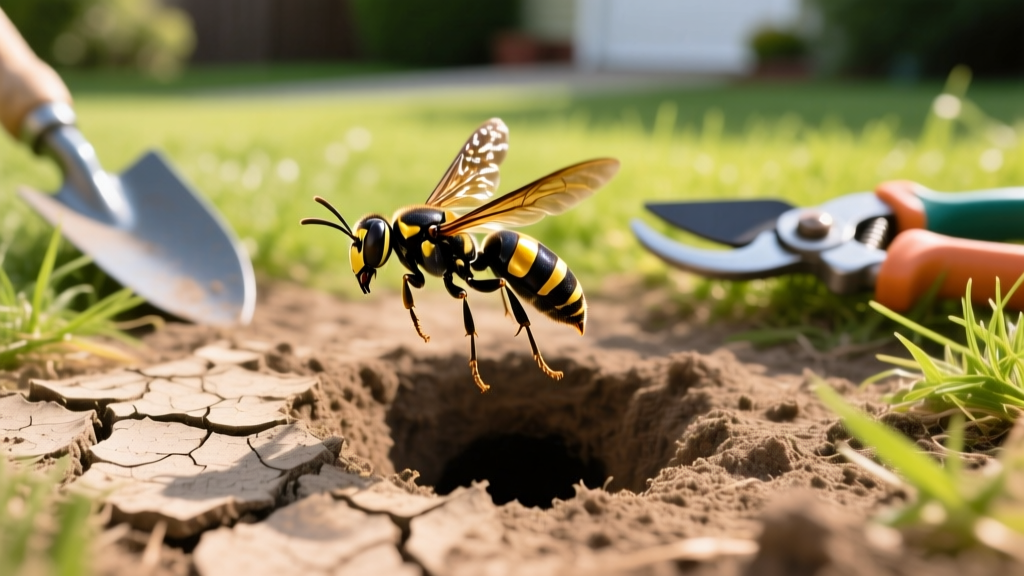
Cicada Killer Queen Myth: How to Manage Solitary Wasps
Every July, a familiar panic sets in across suburban neighborhoods. Homeowners step onto their patios to find massive, two-inch-long wasps hovering over the lawn, darting through the air, and excavating small mounds of dirt in flower beds and bare turf patches. These are Sphecius speciosus, commonly known as cicada killers. When faced with an invasion of these intimidating insects, the most common instinct is to find and eliminate the nest's leader. This leads thousands of homeowners to search for a cicada killer queen, assuming that destroying her will collapse the colony and end the infestation.
Here is the biological reality that changes everything about your yard defense strategy: there is no such thing as a cicada killer queen. Unlike yellowjackets, hornets, or honeybees, cicada killers are strictly solitary wasps. They do not live in colonies, they do not have a caste system, and they do not have a central nest to defend. Every female you see is an independent, reproductive operator digging her own burrow and hunting her own prey. Understanding this fundamental difference is the key to effectively managing them without wasting time and money on ineffective colony-eradication tactics.
The Biological Reality: Solitary vs. Social Wasps
To defend your yard, you must understand the enemy's social structure. Social wasps operate as a single super-organism. If you destroy a yellowjacket queen in the spring, the colony dies. If you kill a cicada killer, you have only removed one single female out of potentially dozens operating independently in your yard. According to entomologists at Penn State Extension, female cicada killers emerge in mid-summer, mate, and immediately begin digging individual U-shaped burrows that can reach 10 to 12 inches deep into the soil.
| Trait | Social Wasps (Yellowjackets/Hornets) | Solitary Wasps (Cicada Killers) |
|---|---|---|
| Colony Structure | Hive with a single queen and thousands of workers | No colony; every female is independent and reproductive |
| Nesting Behavior | Large, centralized paper nests (aerial or underground) | Individual, shallow U-shaped dirt burrows |
| Aggression Level | Highly aggressive; will swarm to defend the nest | Extremely docile; females rarely sting, males cannot sting |
| Eradication Strategy | Locate and destroy the central nest/queen | Alter soil conditions and treat individual burrows |
| Diet | Scavengers (meat, sugar, other insects) | Specialized hunters (adults drink nectar, larvae eat cicadas) |
Identifying the Real Threat: Males vs. Females
Before deploying any pest control products, you need to know which wasps are actually capable of harming you. The aggressive, loud buzzing wasps that dive-bomb your head and fiercely guard territories in the yard are males. Male cicada killers emerge a few weeks before the females. Their sole purpose is to fight other males for mating territories. While their behavior is terrifying to witness, males do not possess a stinger. They are physically incapable of stinging you.
The females are larger, quieter, and spend most of their time on the ground. They are the ones digging the burrows and dragging paralyzed cicadas back to their nests. Females do possess a stinger, which they use exclusively to paralyze their cicada prey. According to the National Pest Management Association, female cicada killers are highly docile toward humans. They will only sting if physically restrained, stepped on barefoot, or trapped inside clothing. If you leave them alone, they will ignore you entirely.
Stinging Risk Assessment: If you have small children who play barefoot in the yard, or if you frequently walk through garden beds in sandals, the presence of female cicada killers poses a minor but real stinging hazard. In these specific scenarios, targeted burrow management is recommended.
Yard Defense Strategy: Managing Solitary Burrows
Because there is no cicada killer queen to eliminate, your defense strategy must shift from "colony eradication" to "habitat modification and targeted burrow treatment." Cicada killers are highly selective about where they dig. They require well-drained, sandy, loose soil that is exposed to direct sunlight and mostly devoid of thick vegetation.
Phase 1: Cultural Controls (Habitat Modification)
The most effective, long-term defense against cicada killers is making your lawn physically impossible for them to excavate. This requires altering the soil and turf environment.
- Thicken the Turf: Cicada killers cannot dig through dense root systems. Overseed bare patches in the spring using a shade-tolerant or drought-resistant seed blend appropriate for your zone. Maintain your mowing height at 3.5 to 4 inches to promote deep, dense root growth.
- Adjust Irrigation: These wasps prefer dry, dusty soil. Switch to a deep, infrequent watering schedule (e.g., 1 inch of water twice a week) rather than light daily sprinklings. This keeps the topsoil firm and difficult to excavate while promoting healthy grass.
- Mulch Garden Beds: In ornamental beds where grass won't grow, apply a 3-inch layer of heavy hardwood mulch or plant dense groundcovers like creeping thyme or vinca. This creates a physical barrier that deters digging.
- Soil Compaction: In severely sandy areas, top-dressing with a heavy loam compost mix can alter the soil texture enough to discourage nesting.
Phase 2: Targeted Chemical Applications
If cultural controls are insufficient and the burrow density is high (more than 5-10 burrows per 100 square feet), targeted chemical intervention is necessary. Do not use liquid aerosol sprays. Liquid sprays dry quickly on the soil surface and fail to penetrate the 12-inch deep burrows where the wasps reside.
Instead, use an insecticidal dust. Dusts cling to the wasp's body as she enters the burrow, and she ingests the toxin while grooming herself.
- Select the Right Dust: Purchase a dust containing Deltamethrin (e.g., Delta Dust, typically $28-$35 for a 1lb shaker) or Cyfluthrin (e.g., Tempo Dust). These formulations are specifically designed to remain active in dry soil environments.
- Acquire a Hand Duster: Do not just shake the bottle. Invest in a JT Eaton Bellow Hand Duster (approx. $14). This tool allows you to inject the dust precisely into the burrow opening.
- Timing is Critical: Apply the dust at dusk or night. Female cicada killers are inside their burrows at night and are highly lethargic. Daytime applications will miss the target and agitate the wasp.
- Application Technique: Insert the duster tip directly into the burrow entrance and puff 2 to 3 grams of dust deep inside. Do not plug the hole with dirt. Leave the entrance open so the female walks through the dust when she exits the next morning.
Decision Matrix: DIY vs. Professional Extermination
Determining whether to handle the infestation yourself or hire a licensed pest control operator depends on the severity of the infestation and your property's layout. Use this framework to decide your next step:
| Scenario | Recommended Action | Estimated Cost (2026) |
|---|---|---|
| Less than 10 burrows; located in low-traffic garden beds. | DIY Cultural Control: Apply heavy mulch and adjust watering. No chemicals needed. | $40 - $60 (Mulch) |
| 10 to 30 burrows; located in lawn areas or near patios. | DIY Chemical Control: Nighttime dusting with Delta Dust and a bellows duster. | $45 - $60 (Dust + Tool) |
| 50+ burrows; widespread across the entire property; severe soil erosion. | Professional Treatment: Hire an exterminator for a broadcast granular application and soil drench. | $250 - $450 per visit |
| Burrows located near commercial play areas, daycares, or high-traffic public zones. | Mandatory Professional: Liability concerns require licensed, insured application and documentation. | $300 - $600+ |
Common Cicada Killer Misconceptions
Will killing one female stop the others from coming?
No. Because there is no cicada killer queen or colony structure, killing one female has zero impact on the behavior of other females in the area. Each female operates entirely independently, guided only by the suitability of your soil for nesting.
Are cicada killers beneficial to the environment?
Yes. Adult cicada killers are important pollinators that feed on nectar from late-summer blooms like goldenrod and thistle. Furthermore, they act as a natural biological control for annual cicada populations, preventing cicadas from overwhelming local trees and shrubs. If they are nesting in an area of your yard where human foot traffic is zero, the best pest control strategy is often peaceful coexistence.
Will they return to the same spot next year?
Cicada killers exhibit strong site fidelity. The offspring that emerge from your soil this July will likely attempt to dig new burrows within a few dozen yards of where they hatched. This is why Phase 1 cultural controls (thickening the grass and altering soil texture) are mandatory. If you do not change the physical environment of the soil, you will face the exact same infestation next summer, regardless of how many adults you kill this year.

