
Pest Control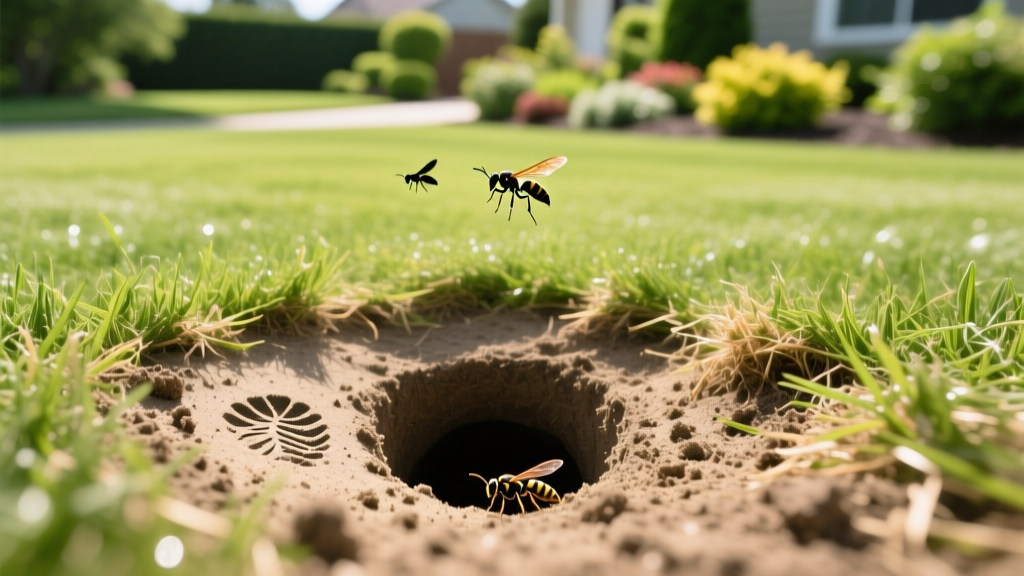
How to Get Rid of Cicada Killer Wasp Burrows in Your Yard
The Reality of Cicada Killer Wasps in Your Lawn
Encountering a cicada killer wasp (Sphecius speciosus) can be alarming. Measuring up to two inches in length with a loud, intimidating buzz, they are the largest solitary wasps in North America. However, understanding their biology is the first step in effective yard defense. According to Penn State Extension, male cicada killers are highly territorial and will aggressively dive-bomb intruders, but they lack stingers entirely. Females possess stingers but are notoriously docile, rarely stinging unless physically crushed or trapped against skin.
Despite their low threat level to humans, their nesting habits wreak havoc on lawn aesthetics. Females excavate extensive burrows in sparse, well-drained soil to paralyze cicadas and provision their young. This results in unsightly 2-to-3-inch dirt mounds scattered across your turf, undermining root systems and creating tripping hazards.
⚠️ Critical Identification Warning: Do not confuse cicada killer burrows with ground-nesting yellowjackets. Yellowjacket nests feature a single, small entry hole (about the size of a nickel) with heavy, continuous traffic. Cicada killer burrows are much larger (quarter-sized), feature a distinct U-shaped mound of freshly turned soil, and typically host only one female per hole.
The Ecological Dilemma: Tolerance vs. Eradication
Before deploying chemical controls, evaluate the severity of the infestation. The University of Minnesota Extension notes that cicada killers are beneficial predators that keep cicada populations in check. If the burrows are confined to a peripheral garden bed or a non-traffic area, tolerance is often the most ecologically sound and cost-effective strategy. However, if they are colonizing high-traffic play areas or severely damaging your primary turfgrass, targeted intervention is necessary.
Decision Matrix: Should You Treat?
| Scenario | Recommended Action | Primary Method |
|---|---|---|
| Fewer than 5 burrows in garden beds | Tolerate & Monitor | None (They die off by early autumn) |
| 10+ burrows in sparse lawn areas | Cultural Modification | Overseeding, deep watering, mulching |
| Active burrows in high-traffic play zones | Targeted Eradication | Insecticidal dusting at dusk |
Cultural Controls: Modifying Your Lawn to Deter Burrowing
Cicada killers are highly selective about their nesting sites. They require bare, sandy, well-drained soil that receives full sun. They physically cannot excavate burrows in dense, thick turf or heavily mulched beds. Therefore, the most permanent solution to get rid of cicada killer wasps is to alter the habitat.
- Thicken Your Turf Canopy: Adjust your mower deck to maintain a grass height of 3.5 to 4 inches. Taller grass shades the soil surface, deterring the sun-baking females prefer. Overseed bare patches in the early fall using Turf-type Tall Fescue at a rate of 8 to 10 lbs per 1,000 square feet to create a dense, impenetrable root mat.
- Alter Soil Moisture Profiles: While drought-stressed, hard-packed soil deters them, moderately moist soil is also unappealing for nesting. Implement a deep, infrequent watering schedule (1 inch of water per week) to keep the topsoil consistently damp during their peak nesting months (July and August).
- Mulch Exposed Beds: Apply a 2-to-3-inch layer of hardwood bark mulch over bare soil in garden beds. Avoid using fine pine straw or sand, which they can easily navigate.
Targeted Chemical & Organic Treatments for Active Nests
When cultural controls are insufficient and immediate eradication is required, liquid sprays are largely ineffective. Liquids soak rapidly into the sandy soil and fail to cling to the wasp's exoskeleton. Insecticidal dusts are the industry standard because the female wasp tracks the dust deep into the burrow on her legs and wings, effectively treating the entire nest.
Product Comparison: Top Dust Formulations
| Product Name | Active Ingredient | Estimated Cost | Best Use Case |
|---|---|---|---|
| Tempo Dust | Cyfluthrin (1%) | $22 - $28 (10 oz) | Fast knockdown; ideal for immediate threat reduction. |
| Delta Dust | Deltamethrin (0.05%) | $28 - $35 (1 lb) | Waterproof formulation; best for humid climates or irrigated lawns. |
| Drione Dust | Silica + Pyrethrin | $30 - $40 (1 lb) | Desiccant action; excellent for dry, sandy soil environments. |
| Food-Grade DE | Diatomaceous Earth | $15 - $20 (4 lb) | Organic alternative; requires completely dry conditions to work. |
Step-by-Step Nest Drenching Protocol
Timing and application technique dictate the success of your treatment. Applying dust incorrectly will result in the female abandoning the burrow and digging a new one a few feet away.
Required Equipment: Insecticidal dust of choice, a bellows hand duster (e.g., JT Eaton Bellows Duster, approx. $15), heavy denim pants, leather work gloves, and a red-lens flashlight (wasps cannot see red light well).
- Wait for Dusk: Cicada killers hunt cicadas during the heat of the day. Wait until 45 minutes after sunset when the females have returned to their burrows for the night and ambient temperatures drop below 75°F.
- Load the Duster: Fill your bellows duster no more than one-third full with your chosen dust. Overfilling causes clumping and prevents a fine, even puff.
- Apply the Dust: Approach the burrow quietly. Insert the duster nozzle about one inch into the hole and give two to three gentle puffs. You want to coat the entrance tunnel, not fill the hole with a pile of dust.
- Leave the Hole Open: Do not plug the hole with dirt or a rock. If you block the entrance, the wasp will simply dig a secondary exit tunnel, bypassing the treated zone entirely. Leave it open so she enters, contacts the dust, and tracks it down to the nesting chamber.
- Re-evaluate in 48 Hours: Check the mound two days later. If fresh soil is being pushed out, the female survived or a new one claimed the hole. Re-treat using the same protocol.
Common Mistakes and Failure Modes
- Using Aerosol Wasp Freeze: Spraying aerosol foams into the ground is a waste of money. The foam expands outward, fails to penetrate the 6-to-10-inch deep nesting chamber, and merely agitates the wasp.
- Treating During the Day: If you treat at noon, the female is out hunting. You are only treating an empty hole, and the dust will degrade in the UV sunlight before she returns.
- Ignoring the Broader Habitat: Killing individual wasps without fixing the underlying sparse lawn conditions guarantees that new females will colonize the exact same prime real estate the following summer.
Frequently Asked Questions
Will cicada killers damage my home's foundation?
No. Unlike carpenter ants or termites, cicada killers only excavate in loose, unconsolidated soil. They cannot bore through concrete, asphalt, or structural wood.
How long do cicada killer wasps stay active?
The adult flight season is remarkably short, typically lasting only 4 to 6 weeks from mid-July through late August. By September, the adults die off, leaving only the grubs overwintering underground.

