
Pest Control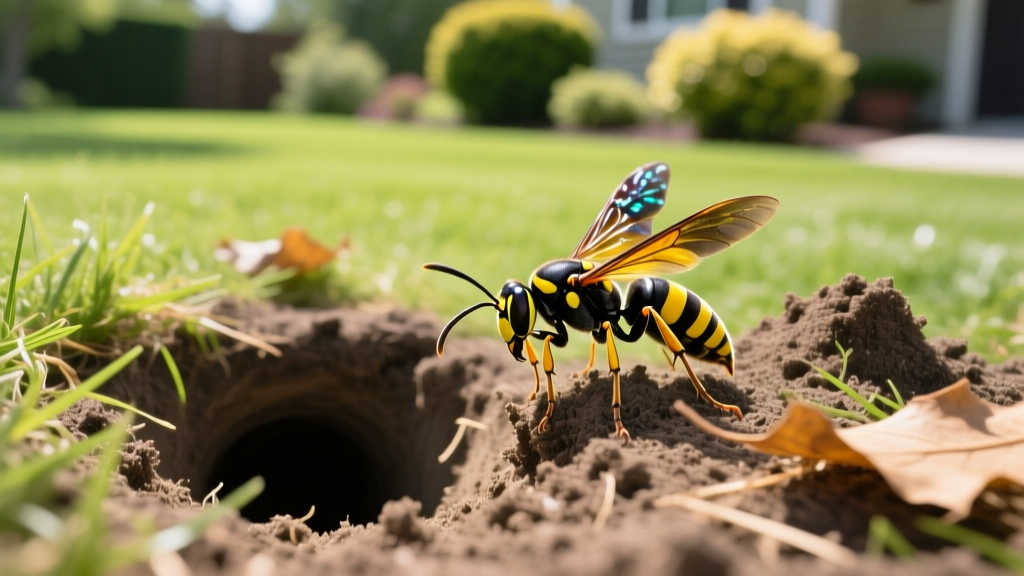
Cicada Killer Wasps: Yard Defense and Burrow Treatment Guide
The Reality of Cicada Killer Wasps: Threat vs. Nuisance
Encountering a two-inch wasp hovering aggressively over your lawn triggers an immediate defensive response. Cicada killer wasps (Sphecius speciosus) are the largest solitary wasps in North America, measuring between 1.5 and 2 inches in length with striking black bodies and yellow abdominal banding. Despite their intimidating size and loud, low-frequency buzzing, they are fundamentally misunderstood pests. According to the University of Florida IFAS Entomology Department, these insects are solitary hunters, not colonial defenders like yellowjackets or hornets.
Understanding their biology is the first step in effective yard defense. Male cicada killers are highly territorial and will aggressively dive-bomb intruders, including humans and pets. However, males lack a stinger and are physically incapable of harming you. Females possess a stinger but are remarkably docile, reserving their venom exclusively for paralyzing cicadas or defending themselves if crushed or stepped on barefoot. The primary threat they pose to homeowners is not physical harm, but aesthetic and structural damage to turfgrass through their extensive burrowing habits.
Crucial Identification Note: Do not confuse cicada killers with European hornets or giant Asian hornets. Cicada killers nest exclusively in the ground, leaving distinct U-shaped burrows with loose soil mounds, whereas hornets build massive aerial paper nests in trees or eaves.
Why They Target Your Lawn: The Soil Preference Matrix
Cicada killers do not randomly select nesting sites. Female wasps seek out specific micro-environments to excavate their nursery chambers, which typically extend 6 to 10 inches deep into the soil. They require ground that is easy to dig but stable enough to prevent collapse. By understanding their preferences, you can manipulate your lawn's environment to make it inhospitable.
| Soil Condition | Cicada Killer Preference | Turf Defense Strategy |
|---|---|---|
| Moisture Level | Dry, well-draining, sandy | Deep, infrequent watering (1.5 inches per week) |
| Turf Density | Sparse, bare, or thinning patches | Overseed with Tall Fescue or Kentucky Bluegrass |
| Soil Compaction | Loose, un-compacted topsoil | Roll lawn in spring; avoid excessive aeration in July |
| Sunlight Exposure | Full sun, south-facing slopes | Plant shade trees or apply heavy organic mulch in beds |
When a female selects a site, she excavates a burrow with a half-inch diameter entrance, pushing the displaced dirt outward to form a distinct, fan-shaped mound that can reach 2 to 3 inches in height. A single female may dig multiple lateral nursery chambers within one main tunnel, paralyzing a cicada and dragging it into each chamber to serve as a living food source for her developing larvae.
Step-by-Step Burrow Treatment Protocol
When burrows appear in high-traffic play areas or pet zones, targeted intervention is necessary. Liquid insecticide sprays are largely ineffective against cicada killers. The wasp's thick exoskeleton repels light water droplets, and their flight speed of 15 to 20 mph makes aerial targeting nearly impossible. Furthermore, spraying the surface does not reach the nursery chambers located up to 10 inches underground. The gold standard for eradication is insecticidal dust applied directly into the burrow entrance.
- Map the Burrows (Daytime): Walk your lawn between 10:00 AM and 2:00 PM when females are actively hunting. Mark active burrows with small landscaping flags or popsicle sticks. Look for fresh, loose soil mounds and wasps entering or exiting the holes.
- Select the Right Agent: Purchase a dust formulated with Carbaryl (e.g., Sevin Dust 5%) or Deltamethrin (e.g., Delta Dust). A 1-pound shaker costs between $12 and $18 and is sufficient to treat over 50 individual burrows.
- Wait for Dusk: Do not apply treatments during the day. Wait until 30 minutes after sunset. At night, the female wasps return to their burrows to roost, and their flight activity ceases entirely, eliminating the risk of being stung or swarmed.
- Apply the Dust: Wearing thick leather gloves and long sleeves, use a bellows hand duster or a narrow-nozzle squeeze bottle to puff approximately one tablespoon of dust directly into the half-inch entrance hole. Do not plug the hole.
- Allow Natural Tracking: Leave the mound completely undisturbed. As the wasp exits the next morning, she will brush against the dust, coating her legs and abdomen. She will carry the toxic dust deep into the nursery chambers, effectively eliminating herself and the developing larvae.
Pro Tip: Never attempt to flood burrows with a garden hose. This merely collapses the upper tunnel, forcing the wasp to dig a secondary exit a few inches away, creating a second mound and failing to drown the larvae sealed in waterproof clay chambers.
Long-Term Cultural Defense: Turf Density Strategies
Chemical treatments address the immediate symptom, but cultural lawn care practices cure the underlying disease. According to Penn State Extension, cicada killers actively avoid excavating in dense, thick, and moist turfgrass because the root matrix makes digging impossible and the shade keeps the soil too cool for their larvae.
- Adjust Mowing Height: Raise your mower deck to 3.5 or 4 inches during the peak July and August emergence period. Taller grass shades the soil surface, lowering the ground temperature and creating a dense physical barrier that deters nesting.
- Overseed Bare Patches: In early September, aggressively overseed any bare or thinning spots with a competitive grass blend. For cool-season lawns, use a mix of Kentucky Bluegrass and Turf-Type Tall Fescue. For warm-season lawns, ensure your Bermuda or Zoysia is thickly established before summer.
- Strategic Irrigation: Shift from light, daily watering to deep, infrequent soakings. Apply 1.5 inches of water per week in one or two sessions. This drives grassroots deeper while keeping the top two inches of soil consistently moist, which cicada killers despise.
- Top-Dressing with Compost: In the spring, apply a quarter-inch layer of fine compost over sandy areas. This binds loose soil particles together, increasing compaction just enough to deter excavation without suffocating your turf.
Decision Framework: When to Treat vs. When to Tolerate
Not every infestation requires chemical intervention. Use this framework to determine your action plan based on the location and severity of the burrows.
'Cicada killers are beneficial predators that naturally regulate cicada populations, which can otherwise damage ornamental trees and shrubs. If the burrows are located in peripheral beds, along fence lines, or in low-traffic zones, tolerance is the most ecologically sound and cost-effective strategy.'
Frequently Asked Questions
Do cicada killers return to the same yard every year?
Yes. Female wasps exhibit strong site fidelity, often emerging from and returning to the exact same favorable soil patches year after year. If you do not alter the soil density and moisture profile, you will likely face recurring infestations every late summer.
Are commercial wasp traps effective for cicada killers?
No. Commercial traps rely on sweet baits (sugar water, fruit juice) designed to attract social, nectar-foraging yellowjackets. Cicada killers are solitary hunters that exclusively seek live protein (cicadas) to provision their nests, rendering sweet traps entirely useless.
What happens to the burrows in the winter?
The adult wasps die off by early autumn. The larvae overwinter deep inside the sealed nursery chambers, pupating in the spring to emerge as adults the following July. The empty surface tunnels typically collapse naturally during winter freeze-thaw cycles and spring rains, leaving only minor surface depressions that can be leveled with a light sand top-dressing.

