
Pest Control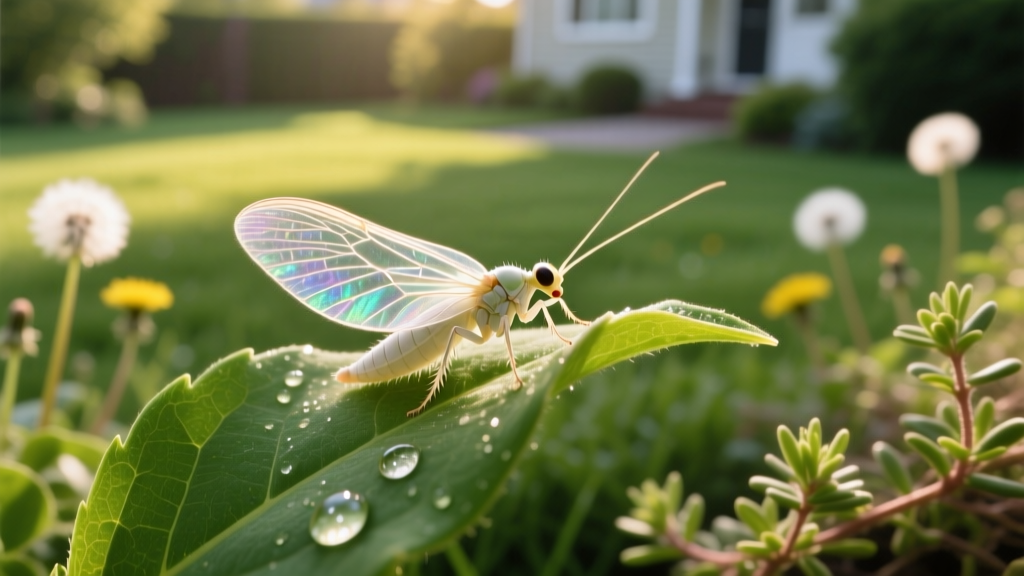
Bugs With Clear Wings: Yard Identification and Defense
Spotting an insect with transparent or translucent wings in your yard often triggers immediate concern. Homeowners frequently mistake these creatures for aggressive wasps, structural threats, or invasive species. However, the reality of bugs with clear wings is far more nuanced. While some are devastating tree borers or structural pests, others are vital biological control agents that protect your garden from aphids and mites.
Accurate identification is the cornerstone of effective pest management. Misidentifying a beneficial lacewing as a pest and spraying broad-spectrum insecticides can decimate your yard's natural defense system. Conversely, ignoring the subtle signs of a clearwing moth infestation can lead to the death of mature ornamental trees within a single season. This guide provides a precise diagnostic framework and targeted defense protocols for the most common clear-winged insects in North American landscapes.
The Clear-Wing Spectrum: Threat Assessment Matrix
Before reaching for a treatment, cross-reference the physical characteristics of the insect with this matrix to determine its ecological role and threat level.
| Insect Type | Wing Characteristics | Body Appearance | Yard Role | Action Required |
|---|---|---|---|---|
| Clearwing Moths | Partially transparent, scale-less patches | Wasp-like, yellow/black or red/black bands | Destructive Pest | Targeted trunk/soil treatment |
| Green Lacewings | Delicate, net-like, fully transparent | Pale green, golden eyes, long antennae | Beneficial Predator | Protect and encourage |
| Termite Alates | Four equal-length, milky/translucent wings | Thick waist, straight antennae, pale/dark | Structural Pest | Professional perimeter defense |
| Glasswing Butterflies | Completely transparent with dark borders | Small, dark body with bright accents | Neutral Pollinator | Tolerate (rare in most zones) |
Deep Dive: 3 Common Clear-Winged Yard Insects
1. Clearwing Moths (Synanthedon spp. & Podosesia spp.)
Clearwing moths are master mimics. The adults look and behave like paper wasps, hovering around tree trunks and emitting pheromones. However, the true damage is caused by their larvae, which bore into the phloem and cambium layers of trees. The Peachtree Borer (Synanthedon exitiosa) and the Lilac/Ash Borer (Podosesia syringae) are the most destructive species in residential landscapes.
Diagnostic Indicator: Look for 'frass'—a sawdust-like excrement mixed with tree sap—extruding from small, perfectly round exit holes at the base of the trunk or in the lower crotches of branches. If you see frass, the larvae are already inside the tree.
2. Green Lacewings (Chrysoperla spp.)
Often called 'aphid lions' in their larval stage, adult green lacewings feature large, intricate, fully transparent wings held in a tent-like shape over their pale green bodies. They are nocturnal flyers, often drawn to porch lights. A single lacewing larva can consume up to 200 aphids per week. They are strictly beneficial and should never be targeted by pest control protocols.
3. Termite Swarmers (Eastern Subterranean Termites)
According to University of Kentucky Entomology, termite alates (swarmers) emerge in massive numbers during warm, humid spring days. Their wings are milky-clear, heavily veined, and all four wings are the exact same length, extending well past the abdomen. This is the primary visual differentiator from flying ants, which have clear wings of unequal lengths. Finding discarded, identical clear wings on windowsills or near foundation walls is a definitive sign of an active subterranean colony.
Targeted Defense Strategies for Destructive Pests
When dealing with genuine threats like clearwing borers or termites, generic bug sprays are ineffective. You must deploy specific active ingredients timed to the insect's life cycle.
Defending Trees Against Clearwing Borers
Because the larvae are protected inside the wood, contact insecticides only work on the adults before they lay eggs. For systemic protection, you must use specific chemical classes.
- Pheromone Traps ($15 - $25): Deploy species-specific pheromone traps (e.g., Suterra or Trécé brands) in early spring. These do not control the population but provide exact flight timing data so you know when to apply chemical barriers.
- Preventative Trunk Sprays: Apply a 10% Permethrin solution (such as Martins 10% Permethrin, approx. $22/gallon) to the trunk and primary scaffold branches. Timing is critical: apply 7 to 10 days before the peak pheromone trap catch. The residue kills adults as they land to mate and lay eggs.
- Systemic Soil Drenches: For high-value trees, use Dinotefuran (e.g., Safari 20SG, approx. $120 for a 12oz bottle). Unlike Imidacloprid, which takes 30-60 days to translocate, Dinotefuran is highly water-soluble and moves into the canopy in under two weeks. Apply as a basal trunk spray or soil drench at a rate of 12 to 24 ounces per 1,000 inches of trunk circumference, as detailed by University of Minnesota Extension.
Defending Structures Against Termite Swarmers
Killing the swarmers with a fly swatter or aerosol does nothing to stop the colony. Subterranean termite defense requires creating a continuous chemical barrier or deploying a chitin synthesis inhibitor.
The Fipronil Trench Method: For DIY perimeter defense, Termidor SC (9.1% Fipronil, approx. $65 for 20oz) remains the industry standard. Dig a 6-inch deep by 6-inch wide trench directly against the foundation. Apply 4 gallons of finished solution (0.8 oz of Termidor per gallon of water) per 10 linear feet of trench. The non-repellent nature of Fipronil allows foraging termites to pass through the treated soil, pick up the active ingredient, and transfer it to the colony via trophallaxis.
Decision Tree: Treat, Tolerate, or Call a Pro?
Use this rapid assessment flow to determine your next step when encountering bugs with clear wings:
- Step 1: Capture and Examine Wings. Are there four wings of equal length, milky-clear, and longer than the body? Yes = Termites. Call a licensed structural pest control professional for a Sentricon or Termidor treatment.
- Step 2: Check the Body. Is the body pale green with delicate, net-like veining on the wings? Yes = Lacewing. Do nothing; allow them to consume your aphid populations.
- Step 3: Inspect the Trees. Is the insect hovering around tree trunks with a wasp-like banded body and partially clear wings? Yes = Clearwing Moth. Check the base of the tree for frass. If frass is present, initiate a Dinotefuran soil drench immediately. If no frass is present, deploy pheromone traps to time a Permethrin trunk spray.
Frequently Asked Questions
Can clearwing moths kill a mature tree?
Yes. Repeated infestations of borers like the Lilac Borer or Dogwood Borer girdle the tree's vascular system. While a single season of boring may only cause branch dieback, three to four consecutive years of unmanaged infestation will typically kill a mature ornamental tree by cutting off nutrient flow.
Why do I see clear-winged bugs near my outdoor lights at night?
Green lacewings are highly attracted to UV and bright white light sources. If you see them on your porch, it indicates a healthy local population of aphid-eating predators. Consider switching exterior bulbs to warm yellow LEDs (2700K or lower) to reduce nighttime insect exhaustion and disorientation.
Are there organic treatments for clearwing borers?
Organic options are limited once larvae are inside the wood. Preventative applications of Beauveria bassiana (a beneficial entomopathogenic fungus, available in products like BotaniGard ES at approx. $45/quart) can infect adult moths as they land on the trunk. Additionally, wrapping the lower 24 inches of susceptible young tree trunks with physical barrier mesh (1mm hardware cloth) prevents females from accessing the bark to oviposit.

