
Pest Control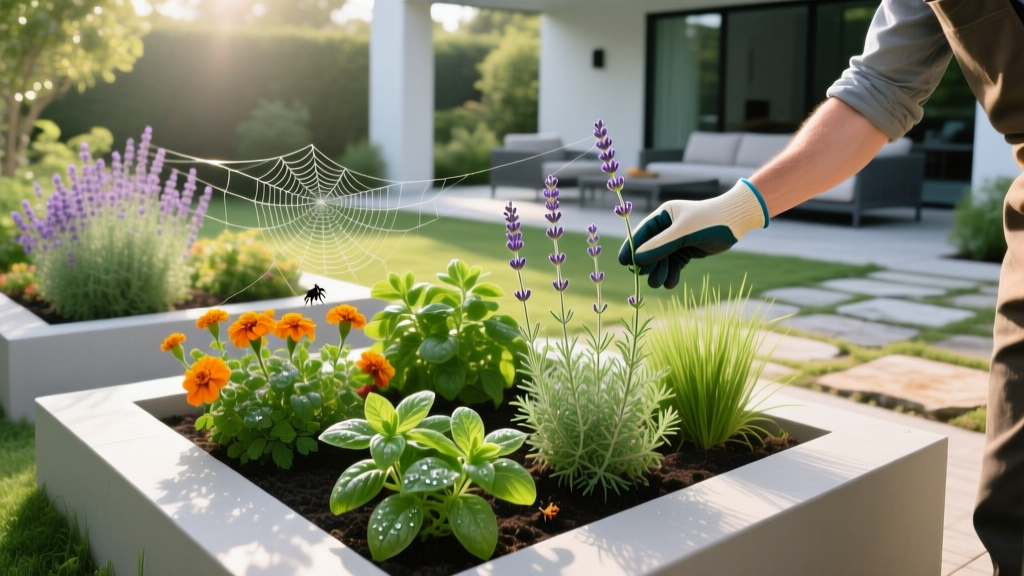
Using Plants as Insect Repellent: A Strategic Garden Playbook
The Mechanics of Botanical Pest Deterrence
Using plants as insect repellent is not a matter of simply placing a potted lavender bush on a patio and expecting a bug-free zone. Effective botanical pest management relies on the strategic deployment of Volatile Organic Compounds (VOCs). These airborne chemical signatures interfere with an insect's olfactory receptors, masking the scent of their preferred host plants or actively signaling toxicity. According to research highlighted by the Entomological Society of America, successful companion planting operates on three distinct mechanisms: chemical masking, trap cropping, and biological allelopathy. Understanding which mechanism your chosen plant utilizes is the first step in transitioning from passive gardening to active pest control.
Chemical masking occurs when a strong-smelling plant, such as alliums, releases sulfur compounds like diallyl disulfide. These compounds overwhelm the chemoreceptors of pests like the black bean aphid (Aphis fabae), rendering the nearby host plant virtually invisible. Trap cropping, conversely, uses highly attractive plants to lure pests away from cash crops. Finally, allelopathy involves root exudates that suppress soil-borne pests, a mechanism most famously leveraged by specific marigold cultivars against nematodes.
Strategic Selection Matrix for Common Lawn and Garden Pests
Selecting the right plant requires matching the specific VOC profile to the target pest's biology. The following matrix outlines high-efficacy pairings based on field-tested entomological data.
| Target Pest | Primary Repellent Plant | Specific Cultivar/Species | Mechanism | Optimal Placement |
|---|---|---|---|---|
| Root-Knot Nematodes | French Marigold | Tagetes patula (Nemagold) | Allelopathy (alpha-terthienyl exudates) | Interplanted directly in root zone |
| Aphids (Various) | Garlic & Chives | Allium sativum / Allium schoenoprasum | Chemical masking (sulfur VOCs) | 6-8 inch perimeter around host |
| Black Bean Aphid | Nasturtium | Tropaeolum majus (Empress of India) | Trap cropping (highly attractive) | 3-5 feet away from target crop |
| Mosquitoes & Ticks | Catnip | Nepeta cataria (Six Hills Giant) | Active repellency (nepetalactone) | Perimeter borders, high-traffic zones |
| Whiteflies | French Basil | Ocimum basilicum (Fin Vert) | Chemical masking (linalool/eugenol) | Interspersed every 12 inches |
Deployment Playbook: Spacing, Timing, and Placement
The spatial arrangement of your repellent plants dictates their success. A common failure mode in organic pest management is clustering repellent plants too densely, which can create microclimates that harbor fungal diseases or inadvertently shelter the very pests you are trying to deter.
Step 1: Establish the Perimeter Defense
For airborne pests like mosquitoes and whiteflies, establish a living perimeter. Plant high-nepetalactone catnip cultivars like 'Six Hills Giant' or 'Walker's Low' in a continuous 12-inch-wide border around your patio or primary garden beds. Laboratory vapor assays indicate that nepetalactone is roughly 10 times more effective than DEET at repelling mosquitoes, but it degrades rapidly under UV light. Therefore, dense planting ensures a continuous, overlapping canopy of VOCs even as individual leaves degrade.
Step 2: Execute Trap Crop Isolation
When using nasturtiums to draw aphids away from brassicas (like kale or broccoli), distance is critical. Plant the nasturtiums exactly 3 to 5 feet away from your primary crop. If planted closer, the aphids will simply migrate the short distance to the brassicas once the nasturtium becomes overcrowded. Monitor the trap crop weekly; when aphid colonies peak, destroy the nasturtium biomass to prevent the next generation from hatching.
Step 3: Root-Zone Interplanting for Soil Pests
To combat root-knot nematodes (Meloidogyne spp.) in tomato beds, you must use French marigolds (Tagetes patula), not African marigolds (Tagetes erecta). French marigolds produce alpha-terthienyl, a compound that is highly toxic to nematodes. Plant them in solid blocks or alternating rows no more than 7 inches apart to ensure the root exudates fully saturate the soil profile. Leave them in the ground for a full 90-day cycle before planting your susceptible cash crop in that exact soil.
⚠️ Warning: The Mint Invasiveness Trap
While peppermint (Mentha × piperita) and spearmint (Mentha spicata) are frequently recommended for flea and ant deterrence, planting them directly in garden beds is a catastrophic mistake. Mint spreads via aggressive subterranean stolons and will rapidly choke out your primary crops. Always grow mint in 3-gallon fabric pots buried up to their rims in the soil, or keep them in isolated container gardens on hardscapes.
Maximizing VOC Output: Maintenance and Mechanical Triggering
Many gardeners assume that simply having the plant in the ground is enough to repel insects. However, many botanical repellents require mechanical damage to release their VOCs in biologically significant quantities. The University of Minnesota Extension notes that the physical disruption of plant tissue is often necessary to activate essential oil glands.
- Brushing and Agitation: For plants like scented pelargoniums (rose geraniums) and lemon balm, gently brush your hands or a soft broom across the foliage daily. This mechanical action bursts the trichomes (oil glands) on the leaf surface, releasing a localized cloud of citronellol and geraniol that actively deters flies and mosquitoes in the immediate vicinity.
- Strategic Pruning: When harvesting herbs like basil or rosemary, avoid clear-cutting. Instead, use the 'pinch-and-leave' method. Pinch off the top two sets of leaves, leaving the bruised stems exposed. The damaged tissue will continue to off-gas repellent terpenes for 24 to 48 hours as it heals, effectively turning your harvesting routine into a pest-control event.
- Mulching with Repellent Biomass: Do not discard the pruned foliage of alliums or strongly scented herbs. Chop the biomass and use it as a top-dress mulch around susceptible plants. As the plant matter breaks down, it continues to release sulfur and phenolic compounds into the soil and lower air canopy, deterring surface-dwelling pests like slugs and cutworms.
Evaluating Efficacy and Managing Expectations
Using plants as insect repellent is a highly effective component of an Integrated Pest Management (IPM) strategy, but it is not a standalone silver bullet. Botanical repellents reduce pest pressure and disrupt host-finding behaviors; they rarely achieve 100% eradication. For severe infestations, companion planting must be paired with targeted organic interventions, such as neem oil applications or insecticidal soaps. By understanding the specific biochemical mechanisms, precise spacing requirements, and maintenance triggers of these plants, you can engineer a landscape that actively defends itself, reducing your reliance on synthetic chemical interventions while promoting a healthier, more biodiverse garden ecosystem.

