
Pest Control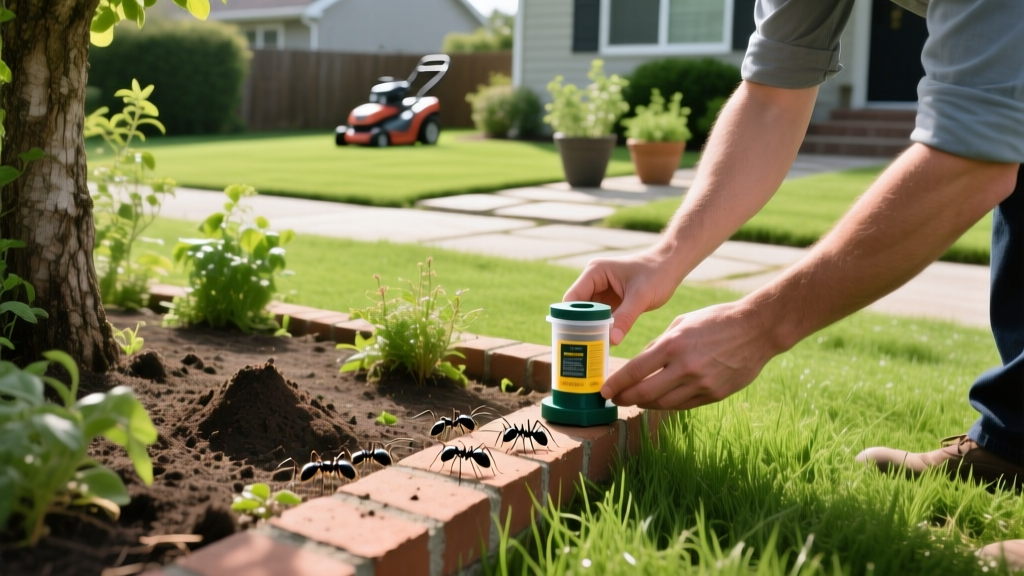
Controlling Ants Outdoors: Yard Perimeter Defense & Baiting Guide
The Yard-to-Home Pipeline: Why Outdoor Colonies Matter
Controlling ants in the yard is rarely just about protecting your grass; it is the first line of defense for your home's structural integrity and indoor sanitation. Outdoor ant colonies act as staging grounds. When environmental stressors like heavy rainfall, drought, or seasonal temperature shifts occur, these yard-based foragers migrate indoors. Furthermore, species like Argentine ants and Carpenter ants actively farm aphids and scale insects on your ornamental shrubs, extracting honeydew and severely weakening your landscape plants. Effective yard defense requires moving beyond reactive, over-the-counter repellent sprays and adopting a proactive, science-backed perimeter and baiting strategy.
Species Identification Matrix: Know Your Enemy
Not all ants damage turf or invade homes in the same way. Misidentifying the species leads to bait rejection and wasted chemical applications. Use this matrix to identify the primary threats in your landscape and select the correct active ingredient.
| Species | Nesting Preference | Turf & Plant Impact | Optimal Bait / Treatment Strategy |
|---|---|---|---|
| Argentine Ants (Linepithema humile) | Shallow soil, mulch beds, debris piles | High (Farms aphids, outcompetes native pollinators) | Sweet baits (Spring) / Protein baits (Late Summer) |
| Pavement Ants (Tetramorium caespitum) | Under concrete slabs, driveway expansion joints | Low (Soil mounding on hardscapes) | Non-repellent liquid perimeter drenches |
| Red Imported Fire Ants (Solenopsis invicta) | Full sun, open turf, large earthen mounds | Severe (Damages root systems, aggressive stinging) | Hydramethylnon broadcast baits + Mound drenches |
| Carpenter Ants (Camponotus spp.) | Moist, decaying wood, tree stumps, fence posts | Moderate (Accelerates wood rot in landscape timber) | Fipronil soil trenching around woody perimeters |
Perimeter Defense: The 18-Inch Vegetation Rule
Before applying any chemical or biological controls, you must alter the physical environment to make your foundation inhospitable. According to integrated pest management guidelines from the University of California Agriculture and Natural Resources (UC ANR), structural ant invasions are drastically reduced by implementing the 18-inch vegetation rule.
Execution Steps for Hardscape Buffering
- Clear the Zone: Remove all mulch, leaf litter, and creeping groundcovers (like ivy or vinca) within 18 inches of your home's foundation. Replace this zone with inorganic materials like crushed gravel or river rock, which do not retain moisture and offer zero nutritional value to foraging ants.
- Prune the Bridges: Trim all tree branches and shrub limbs so they are at least 12 inches away from your siding and roofline. Argentine ants will bypass ground-level chemical barriers entirely by using overhanging branches as aerial bridges into your eaves.
- Moisture Auditing: Ants require consistent moisture. Inspect your downspouts, AC condensation lines, and irrigation heads. Ensure water is diverted at least 4 feet away from the foundation using splash blocks or buried PVC extenders.
Advanced Chemical Controls: Transfer Effects vs. Broadcast Spraying
The most common mistake homeowners make when controlling ants outdoors is using fast-acting, repellent pyrethroids (like bifenthrin or permethrin). These chemicals kill foragers on contact but trigger a survival response called 'budding' in species like Argentine and Pharaoh ants, causing the colony to split into multiple satellite nests.
Warning: The Repellent Trap
Never spray a repellent insecticide near an active ant trail or bait station. The chemical barrier will block foragers from reaching the bait, rendering your expensive baiting program useless. Always separate repellent barrier treatments and baiting zones by at least 48 hours and 10 feet of physical space.
The Fipronil Trenching Method (Non-Repellent Transfer)
For severe perimeter infestations, particularly Carpenter and Pavement ants, a non-repellent soil drench utilizing Fipronil 9.1% (e.g., Termidor SC) is the industry gold standard. Fipronil relies on a delayed 'transfer effect.' Foragers walk through the treated soil, pick up microscopic particles, and carry them back to the queen.
- Dilution Rate: Mix exactly 0.8 fluid ounces of Termidor SC per gallon of water. Do not exceed this rate; higher concentrations create a localized repellent effect.
- Application Math: One 20 oz bottle (approx. $70) yields 25 gallons of finished solution. This treats 250 linear feet of trenching.
- Trenching Specs: Dig a trench 6 inches deep and 6 inches wide directly against the foundation. Apply 1 gallon of solution per 10 linear feet, then backfill the trench with the treated soil.
Targeted Baiting Protocols for Supercolonies
When dealing with massive supercolonies that span multiple neighboring yards, liquid barriers are insufficient. You must use slow-acting gel baits that allow foragers to make hundreds of feeding trips before dying. The National Pesticide Information Center (NPIC) emphasizes the importance of matching the active ingredient to the colony's seasonal nutritional needs.
Indoxacarb Gel Baiting (Advion Ant Gel)
Advion utilizes Indoxacarb 0.05%, a pro-insecticide that only becomes lethal after being metabolized by the ant's internal enzymes. This ensures the bait is carried deep into the nest and fed to the brood before the forager dies.
- Cost Efficiency: A 4-tube box costs approximately $25. Each tube contains 30 grams. Using pea-sized drops (0.1g), one tube yields 300 individual bait placements.
- Placement Strategy: Apply bait directly into driveway expansion joints, behind retaining wall caps, and inside plastic bait stations staked into the mulch line. Never place gel bait in direct sunlight, as UV exposure and heat will dry the moisture out of the matrix within 4 hours, making it unpalatable.
Organic & Biological Yard Defenses
For eco-conscious homeowners or properties adjacent to sensitive waterways, synthetic neurotoxins may not be viable. Biological controls offer a highly specific alternative that protects turf without harming beneficial soil nematodes or earthworms.
Spinosad Mound Drenches
Derived from the soil bacterium Saccharopolyspora spinosa, Spinosad is highly effective against Red Imported Fire Ants. Mix a liquid Spinosad concentrate (typically 0.5% active ingredient) at a rate of 2 tablespoons per gallon of water. Pour 1 to 2 gallons directly onto fire ant mounds in the early morning when the colony is near the surface warming up. This physically drowns the shallow tunnels while delivering a lethal biological toxin to the queen.
Diatomaceous Earth (Food Grade)
While often overhyped as a broadcast lawn treatment, Food Grade Diatomaceous Earth (DE) is highly effective when used as a localized desiccant barrier. Apply a 2-inch wide, heavy band of DE along the tops of retaining walls, around the base of fruit trees, and across patio thresholds. DE works mechanically, lacerating the ant's exoskeleton and causing fatal dehydration. Note that DE must be reapplied after any rainfall or overhead irrigation, as moisture neutralizes its abrasive properties.
Troubleshooting Bait Aversion and Failure Modes
If you have placed baits and the ants are ignoring them, or if the colony appears to rebound after three weeks, you are likely encountering one of three common failure modes:
- Seasonal Diet Shifts: Ant colonies alter their macronutrient requirements based on the reproductive cycle. In early spring, they crave carbohydrates (sugars) to fuel foraging workers. By late summer and early fall, the colony shifts to proteins and fats to develop the reproductive alates (swarmers). If your sweet gel bait is being ignored in August, switch to a protein-based granular bait like Maxforce Complete.
- Competitive Food Sources: If your yard is littered with fallen fruit, unsealed compost bins, or heavy aphid honeydew on your citrus trees, your bait cannot compete. You must practice strict sanitation and physically wash aphids off ornamental plants with a high-pressure hose before deploying baits.
- Bait Matrix Degradation: Leaving gel baits out for more than 14 days results in the evaporation of the humectants (water-retaining agents). Once the bait hardens into a crust, ants will not consume it. Establish a strict 14-day removal and reapplication schedule for all outdoor gel placements.

