
Pest Control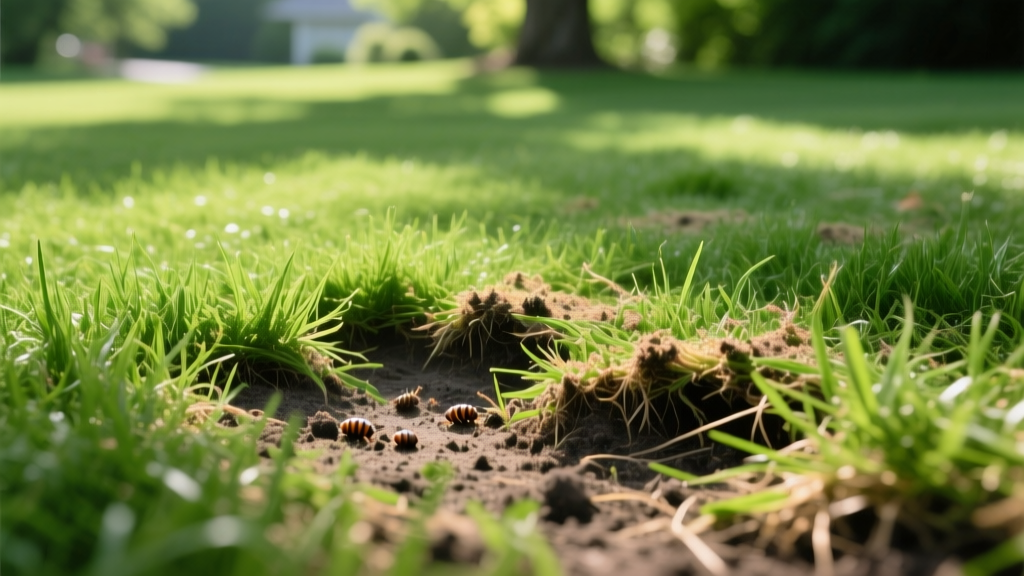
Controlling Grubs in Lawn: Targeted Defense and Treatment Strategies
The Economic Threshold: When to Intervene
White grubs—the larval stage of scarab beetles such as Japanese beetles, European chafers, and June bugs—feed aggressively on turfgrass root systems. However, not every grub sighting warrants chemical intervention. The established economic threshold for turf damage is 5 to 10 grubs per square foot. Below this density, healthy turf with robust root systems can typically outgrow the minor root pruning without showing visible above-ground browning.
Effective controlling of grubs in lawn environments requires shifting from reactive panic to proactive lifecycle management. Misidentifying the grub species or applying the wrong active ingredient during the incorrect lifecycle stage are the primary reasons homeowners waste hundreds of dollars on ineffective treatments. According to University of Kentucky Entomology, timing your application to match the insect's instar stages is the single most critical variable in turf defense.
The Grub Life Cycle: Timing Your Defense
Scarab beetles typically emerge in early summer (June to July) to mate and lay eggs in the soil. These eggs hatch in mid-to-late August, releasing first-instar larvae that immediately begin feeding near the soil surface. As temperatures drop in late autumn, grubs migrate deep into the soil profile to overwinter, returning to the root zone in spring as third-instar larvae before pupating.
Pro-Tip: The Tug Test
Before purchasing any treatment, perform the tug test. Grab a handful of brown, dying grass and pull upward. If the turf rolls back like a carpet with no root resistance, and you expose 5+ C-shaped white larvae per square foot in the top two inches of soil, you have an active, damaging infestation requiring immediate curative action.
Preventative vs. Curative: Choosing Your Chemical Arsenal
Selecting the right synthetic chemistry depends entirely on the current month and the developmental stage of the larvae. Preventatives target newly hatched, vulnerable first- and second-instar grubs, while curatives are formulated with higher toxicity to penetrate the hardened exoskeletons of mature, third-instar grubs.
| Active Ingredient | Trade Name Example | Strategy | Application Window | Avg. Cost / 1,000 sq ft |
|---|---|---|---|---|
| Chlorantraniliprole | Acelepryn | Preventative | April – June | $8.00 – $12.00 |
| Imidacloprid | Merit | Preventative | May – July | $4.00 – $6.00 |
| Trichlorfon | Dylox | Curative | August – October | $6.00 – $9.00 |
| Carbaryl | Sevin | Curative | August – October | $5.00 – $7.00 |
When utilizing neonicotinoids like Imidacloprid, the Environmental Protection Agency (EPA) mandates strict adherence to label instructions regarding pollinator exposure. Never apply Imidacloprid to turf that is currently flowering with clover or dandelions; mow the lawn immediately before application to remove weed blooms and protect foraging bees.
Biological Warfare: Beneficial Nematodes
For homeowners pursuing organic pest management, beneficial nematodes offer a highly effective, non-chemical alternative. Specifically, the species Heterorhabditis bacteriophora (Hb) actively hunts and infects white grubs, releasing symbiotic bacteria that kill the host within 48 hours.
- Viability Check: Nematodes are living organisms. Purchase only from suppliers who ship with ice packs and guarantee overnight delivery. If the sponge inside the packaging smells like rotting fish or ammonia, the nematodes are dead.
- Application Rate: Apply at a rate of 1 to 2 billion nematodes per acre (roughly 25,000 to 50,000 per square foot). Expect to pay $35 to $50 for a package treating 3,000 square feet.
- Environmental Triggers: Soil temperatures must be between 60°F and 85°F. UV light destroys nematodes instantly, meaning application must occur at dusk or on heavily overcast days.
- Irrigation Requirement: You must apply 0.25 to 0.5 inches of water immediately after spraying to wash the nematodes off the grass blades and down into the soil profile where the grubs reside.
Milky Spore: The Long-Game Inoculation
Milky Spore (Paenibacillus popilliae) is a bacterial disease that specifically targets Japanese beetle grubs. It does not affect European chafers or June bugs. When applied to the lawn via a grid-pattern drop spreader, the spores remain dormant until ingested by a susceptible grub. The grub dies, decomposes, and releases billions of new spores into the soil.
Warning: Milky Spore Limitations
Milky Spore is not a quick fix. It requires 2 to 3 years of continuous grub presence to build up a sufficient spore count in the soil to provide lasting control. Furthermore, it is entirely ineffective if your primary grub population consists of non-Japanese beetle species. Verify your grub species by checking the raster pattern (the arrangement of microscopic hairs on the grub's abdomen) before investing in this $40+ treatment.
Cultural Defense Tactics: Starving the Grubs
Chemical and biological controls are only half the defense equation. Modifying your turf's cultural environment can make your lawn inherently hostile to grub survival.
- Strategic Irrigation: Scarab beetle eggs require consistent soil moisture to hatch. If a severe summer drought occurs in July and August, and you allow your lawn to go dormant (withholding irrigation), a significant percentage of the eggs will desiccate and die before hatching. Conversely, overwatering in mid-summer creates the perfect incubator for grub populations.
- Mowing Height Elevation: Maintain your turf at the highest recommended height for your grass species (e.g., 3.5 to 4 inches for Tall Fescue). Taller grass develops deeper, more extensive root systems. A massive root mass can sustain minor grub feeding without the turf exhibiting above-ground wilting or browning.
- Promote Predators: Encourage insectivorous birds by installing birdbaths and avoiding broad-spectrum insecticides that decimate the local food web. Starlings, crows, and robins consume massive quantities of third-instar grubs in early spring.
Troubleshooting: Why Did Your Grub Treatment Fail?
If you applied a curative product like Trichlorfon (Dylox) in September and the turf is still rolling back like a carpet in October, you have likely encountered one of three common failure modes:
1. Thatch Interception
Thatch is the layer of dead and living organic matter between the green vegetation and the soil surface. If your thatch layer exceeds 0.5 inches, it acts as a physical and chemical sponge. Granular Dylox and liquid Imidacloprid will bind to the organic acids in the thatch layer and never reach the soil-dwelling grubs. The Fix: Perform core aeration or use a dethatching rake to mechanically remove the barrier before applying any soil-directed pesticide.
2. Alkaline Soil Degradation
Trichlorfon is highly unstable in alkaline environments. If your soil pH is 7.5 or higher, Trichlorfon undergoes rapid chemical hydrolysis, losing up to 50% of its efficacy within just a few days of application. The Fix: Test your soil pH. If it is highly alkaline, switch to Carbaryl (Sevin) for curative treatments, as it maintains stability in higher pH soils, or apply elemental sulfur months in advance to gradually lower the pH.
3. Inadequate Watering-In
Grub control products must be moved past the thatch and into the top 2 inches of soil. A light 10-minute sprinkle from an oscillating fan sprinkler is insufficient. The Fix: Use a rain gauge or empty tuna cans placed around the lawn to verify you are delivering exactly 0.25 to 0.5 inches of water immediately following the application to drive the active ingredient into the root zone.

