
Pest Control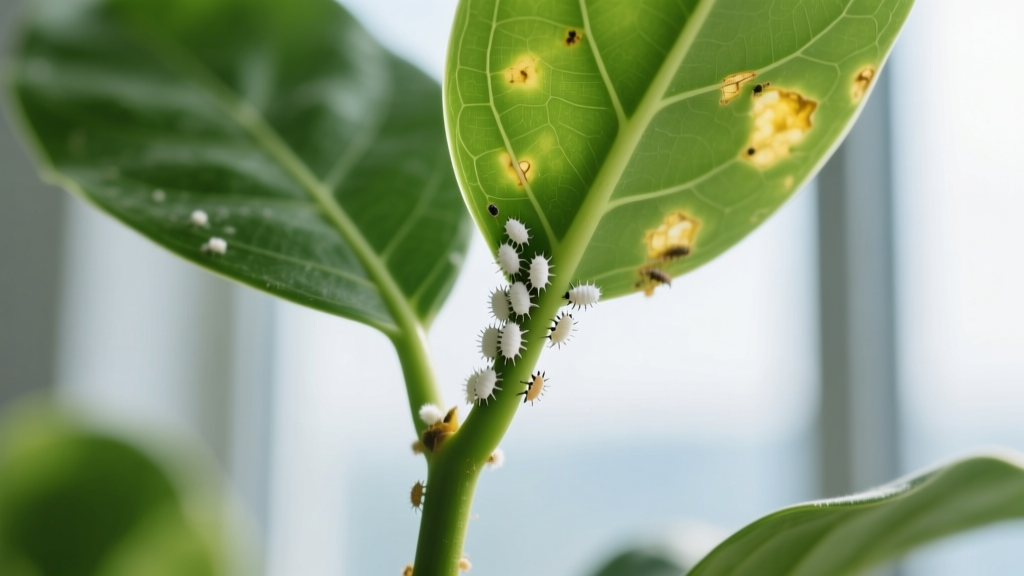
Diagnosing and Eliminating Mealybugs on Plants Fast
The Anatomy of an Infestation: What You Are Actually Looking At
Mealybugs (family Pseudococcidae) are unarmored, soft-bodied scale insects that extract sap from plant phloem, excreting a sugary byproduct known as honeydew. Unlike hard scale insects that fuse to the plant tissue, mealybugs remain mobile throughout their lives, allowing them to rapidly colonize new growth, leaf axils, and root systems. The most common culprits in indoor and greenhouse environments are the citrus mealybug (Planococcus citri) and the longtailed mealybug (Pseudococcus longispinus).
Diagnosing mealybugs on plants requires looking beyond the obvious white, cottony masses. Early-stage nymphs (crawlers) are pale yellow and lack the signature wax filaments, making them nearly invisible to the naked eye. By the time you see the white waxy coating, the population has likely been breeding for at least two generations. At a steady 75°F, a single female can lay 300 to 600 eggs over a 14-day period, with the entire lifecycle from egg to reproductive adult completing in just 30 to 40 days.
⚠️ The Ant Symbiosis Warning: If you notice ants farming on your houseplants or landscape shrubs, they are likely protecting mealybug colonies. Ants harvest the honeydew mealybugs excrete and will actively defend the pests from natural predators. You must control the ant population using borax-based baits (like Terro Liquid Ant Baits, ~$6) simultaneously, or your mealybug treatments will fail.
4-Step Eradication Protocol for Houseplants
Eliminating a moderate to severe infestation requires a multi-modal approach. Relying on a single spray will inevitably result in a rebound, as contact pesticides rarely penetrate the dense waxy ovisacs protecting the eggs.
Step 1: Isolation and Mechanical Disruption
Immediately move the infected plant to a separate room. Use a pressurized water sprayer (set to a gentle mist to avoid tearing foliage) to physically dislodge the bulk of the adult colonies from the leaves. For tight crevices and leaf axils, spot-treat with 70% isopropyl alcohol applied via a cotton swab. Do not use 90% or 99% alcohol; higher concentrations evaporate too rapidly to dissolve the mealybug's hydrophobic wax coating. The 30% water content in 70% alcohol is required to carry the solvent through the wax and dehydrate the insect.
Step 2: Targeted Organic Sprays (Azadirachtin vs. Clarified Neem)
Not all neem oil is created equal. Many commercial sprays use Clarified Hydrophobic Extract of Neem Oil, which only acts as a suffocant. For mealybugs, you need cold-pressed neem oil containing Azadirachtin, a compound that disrupts the insect's molting hormones and acts as an antifeedant. Products like Plantonix Neem Bliss (~$18 for 16 oz) or Arbico Organics Neem Oil (~$22) are highly effective. Mix at a rate of 1 tablespoon per gallon of water with a half-teaspoon of mild liquid dish soap as an emulsifier. Spray at dusk to prevent phototoxicity (leaf burn) and avoid harming daytime pollinators if the plant is outdoors.
Step 3: Insecticidal Soap for Crawler Stage
Because neem oil struggles to penetrate heavy wax, follow up three days later with an insecticidal soap (potassium salts of fatty acids), such as Safer Brand Insect Killing Soap (~$9 for 32 oz). The fatty acids dissolve the cuticle of the soft-bodied nymphs (crawlers) that have hatched since your initial treatment. Reapply every 5 to 7 days for three consecutive cycles to break the reproductive window.
Step 4: Systemic Intervention (Last Resort)
For severe, persistent infestations on non-edible ornamental plants, a systemic insecticide like Imidacloprid (e.g., BioAdvanced 12 Month Tree and Shrub Protect & Feed, ~$18) can be applied as a soil drench. The plant absorbs the chemical into its vascular tissue, poisoning any mealybug that feeds on the sap. Never use systemics on flowering plants that are moved outdoors, as the toxin will translocate to the pollen and nectar, devastating bee populations.
Treatment Matrix: Efficacy and Application Data
| Treatment Method | Target Life Stage | Est. Cost | Reapplication Interval |
|---|---|---|---|
| 70% Isopropyl Alcohol | Adults (Spot Treatment) | $3 - $5 | As needed (Daily) |
| Cold-Pressed Neem Oil | Nymphs & Adults | $18 - $22 | Every 7 days |
| Insecticidal Soap | Crawlers (Nymphs) | $8 - $12 | Every 5-7 days |
| Imidacloprid Drench | All Stages (Systemic) | $15 - $25 | Once per 12 months |
Biological Warfare: Deploying Natural Predators
For greenhouse owners, sunrooms, or large indoor botanical collections, chemical sprays may be impractical or hazardous. Biological control offers a self-sustaining solution. The Cryptolaemus montrouzieri, commonly known as the Mealybug Destroyer, is a predatory lady beetle specifically evolved to hunt Pseudococcidae.
According to the UC Davis IPM Floriculture Guide, releasing these beetles requires specific environmental parameters: temperatures must remain between 70°F and 85°F, and humidity should be moderate. You can purchase 100 adult beetles for approximately $35 to $45 from suppliers like Arbico Organics or Nature's Good Guys. Release them at dusk near the heaviest infestations. The larvae of the Mealybug Destroyer look remarkably like giant mealybugs—white and fuzzy—so do not accidentally squash your allies. A single larva can consume up to 250 mealybugs before pupating.
The Hidden Threat: Diagnosing Root Mealybugs
If your plant is wilting, yellowing, and stunting despite perfect watering habits and clean foliage, you may be dealing with root mealybugs (Rhizoecus spp.). These subterranean pests feed exclusively on root systems and are entirely invisible during a casual visual inspection.
How to Confirm and Treat Root Mealybugs
- Inspection: Gently slide the plant out of its nursery pot. Root mealybugs appear as a faint, powdery white or bluish-grey crust coating the root ball and the interior walls of the pot.
- Soil Drench: Foliar sprays will not reach them. Use a Pyrethrin-based soil drench or repot the plant entirely.
- The Repotting Protocol: Wash the roots under lukewarm water to remove all infested soil. Prune away any black, mushy roots (rot). Dip the bare root system in a solution of 1 part 70% alcohol to 4 parts water for 10 seconds. Repot in fresh, sterile potting mix.
- Preventative Barrier: Mix food-grade Diatomaceous Earth (DE) into the top inch of the new soil. DE acts as a microscopic physical barrier, lacerating the exoskeletons of any crawlers attempting to migrate back into the soil.
Expert Insight: The Sooty Mold Connection
Mealybug honeydew is the primary catalyst for Sooty Mold (Capnodium spp.), a black, powdery fungus that coats leaves and blocks photosynthesis. While the Clemson University Home & Garden Information Center notes that sooty mold does not directly infect plant tissue, its presence is a definitive diagnostic indicator of a sap-sucking infestation. Once the mealybugs are eradicated, wipe the leaves with a damp microfiber cloth and a mild solution of water and white vinegar to restore the plant's light absorption capabilities.
Mealybug honeydew is the primary catalyst for Sooty Mold (Capnodium spp.), a black, powdery fungus that coats leaves and blocks photosynthesis. While the Clemson University Home & Garden Information Center notes that sooty mold does not directly infect plant tissue, its presence is a definitive diagnostic indicator of a sap-sucking infestation. Once the mealybugs are eradicated, wipe the leaves with a damp microfiber cloth and a mild solution of water and white vinegar to restore the plant's light absorption capabilities.
Why Your Treatments Are Failing (Common Edge Cases)
When homeowners report that mealybugs keep returning after treatment, the failure almost always stems from one of three specific edge cases:
- Ignoring the Potting Soil: Citrus and longtailed mealybugs will drop to the soil surface to hide during daylight hours and lay eggs in the top layer of potting mix. If you only spray the leaves, the soil acts as a reservoir. Always drench the topsoil with your neem or soap solution.
- Overlapping Generations: Stopping treatment after the plant "looks clean." You must continue the 7-day spray cycle for a minimum of 21 days to account for the incubation period of eggs hidden deep inside leaf sheaths.
- Cross-Contamination: Failing to sterilize pruning shears, watering cans, and hands after handling an infected plant. A single crawler hitching a ride on a pair of scissors can restart an infestation in a completely different room.

