
Pest Control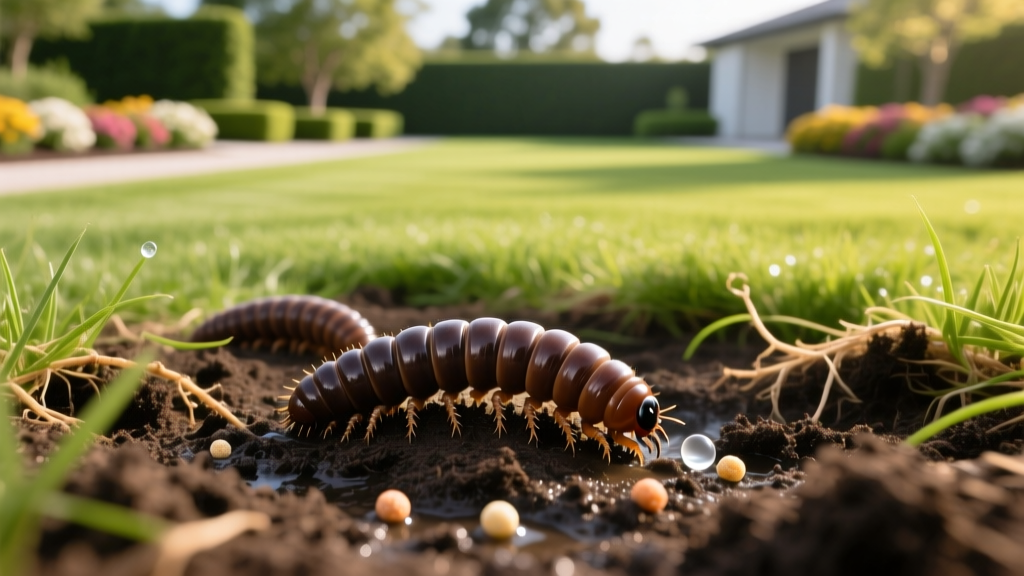
Crane Fly Larvae Insecticide: Best Products and Application Timing
The Leatherjacket Threat: Why Timing Dictates Insecticide Success
European and common crane flies (Tipula paludosa and Tipula oleracea) lay eggs in late summer that hatch into voracious, legless larvae known as leatherjackets. These pests sever grass roots and crowns, leaving behind spongy, brown, dead patches that mimic drought stress or grub damage. Selecting the correct crane fly larvae insecticide is only half the battle; applying it during the wrong life stage guarantees failure and wastes money.
Unlike white grubs, which curl into a C-shape and possess distinct legs, leatherjackets are cylindrical, greyish-brown, and entirely legless, typically measuring 1 to 1.5 inches at maturity. According to Penn State Extension, a lawn can tolerate up to 15 to 25 larvae per square foot before visible damage occurs. Once populations exceed this threshold, targeted chemical or biological intervention becomes mandatory.
Critical Timing Warning: Applying a preventative crane fly larvae insecticide in May or June is entirely ineffective. The larvae are either pupating or in the adult flying stage during early summer. Insecticides must align with the egg-hatch period (late August to October) or the aggressive spring feeding window (March to early April).
Active Ingredient Comparison Matrix
The market offers several chemical classes for leatherjacket control. Your choice depends on whether you are preventing an infestation or attempting to rescue a lawn from an active spring outbreak. Below is a breakdown of the most effective active ingredients, their retail product equivalents, and current cost estimates per 1,000 square feet.
| Active Ingredient | Common Retail Product | Action Type | Optimal Window | Cost / 1k sq ft |
|---|---|---|---|---|
| Chlorantraniliprole | Scotts GrubEx1 / Acelepryn | Preventative | May - July (for Fall hatch) | $4.50 - $5.50 |
| Trichlorfon | Bayer 24-Hour Grub Killer (Dylox) | Curative (Fast) | Sept - Oct OR March - April | $5.50 - $7.00 |
| Bifenthrin | Talstar P Professional | Contact / Curative | Late Aug - Nov | $2.00 - $3.00 |
| Steinernema carpocapsae | NemaSeek Hb / Arbico Organics | Biological | Sept - Oct (Soil > 55°F) | $15.00 - $22.00 |
Chlorantraniliprole is widely considered the gold standard for preventative care due to its low toxicity to pollinators and earthworms, as noted in turf management guidelines by Oregon State University Extension. However, it requires 60 to 90 days to translocate fully through the soil profile, which is why it must be applied in early summer to intercept the fall egg hatch.
Step-by-Step Curative Application Protocol
If you discover active leatherjacket damage in early spring or late fall, you must use a fast-acting curative crane fly larvae insecticide like Trichlorfon (Dylox) or a liquid Bifenthrin application. Follow this exact protocol to maximize the kill rate and prevent chemical runoff.
- Pre-Irrigation (Crucial): Leatherjackets retreat deep into the soil profile when the topsoil is dry. Apply 0.25 inches of water 24 hours before treatment to draw the larvae upward into the thatch and upper root zone.
- Spreader Calibration: For granular Trichlorfon, set your broadcast spreader to the specific setting listed on the bag (typically setting 4 or 5 on a Scotts rotary spreader). Weigh out the exact dose for a 10x10 test area (100 sq ft) to ensure you are not over-applying, which can burn the turf.
- Application: Apply the granular product in two perpendicular passes (north-south, then east-west) to eliminate striping and ensure uniform coverage.
- Immediate Water-In: Within 30 minutes of application, irrigate the lawn with 0.5 inches of water. This washes the active ingredient off the grass blades and into the soil where the larvae are feeding. Failure to water in granular insecticides results in UV degradation and near-zero efficacy.
Biological Defense: Beneficial Nematodes
For homeowners managing organic lawns or those near sensitive waterways where synthetic crane fly larvae insecticides are restricted, entomopathogenic nematodes offer a highly effective biological alternative. Specifically, the species Steinernema carpocapsae actively hunts leatherjackets, entering their natural body openings and releasing bacteria that kill the host within 48 hours.
Pro-Tip for Nematode Success: Nematodes are living organisms and are highly susceptible to UV light and desiccation. Apply them in the late evening or on an overcast day. You must maintain consistent soil moisture (watering lightly every morning) for at least 7 to 10 days post-application to allow the nematodes to reproduce and spread through the soil matrix.
The primary drawback is cost and temperature sensitivity. Soil temperatures must remain consistently above 55°F for the nematodes to be active, which narrows the application window in northern climates to September and early October.
Post-Treatment Lawn Recovery and Resistance
Eradicating the larvae leaves behind bare, spongy patches where the root system was severed. Simply killing the pest will not restore the lawn. Implement these recovery steps immediately following the insecticide's effective period:
- Core Aeration: Rent a core aerator to pull 3-inch plugs from the soil. This relieves the compaction caused by heavy foot traffic during treatment and breaks down the remaining dead thatch layer.
- Overseed with Endophyte-Enhanced Grass: Standard Kentucky bluegrass is highly susceptible to crane fly feeding. When overseeding bare patches, select perennial ryegrass or tall fescue varieties that are explicitly labeled as 'endophyte-enhanced'. These grasses harbor a symbiotic fungus (Epichloë festucae) that produces alkaloids, making the grass blades and crowns naturally toxic to chewing insects like leatherjackets.
- Starter Fertilizer Application: Apply a high-phosphorus starter fertilizer (e.g., 18-24-12) at the time of overseeding to accelerate root establishment in the damaged zones before the winter dormancy period.
By aligning your chemical or biological selection with the precise life cycle of the crane fly, and following up with resistant turfgrass varieties, you can break the multi-year infestation cycle and restore a dense, resilient lawn canopy.

