
Pest Control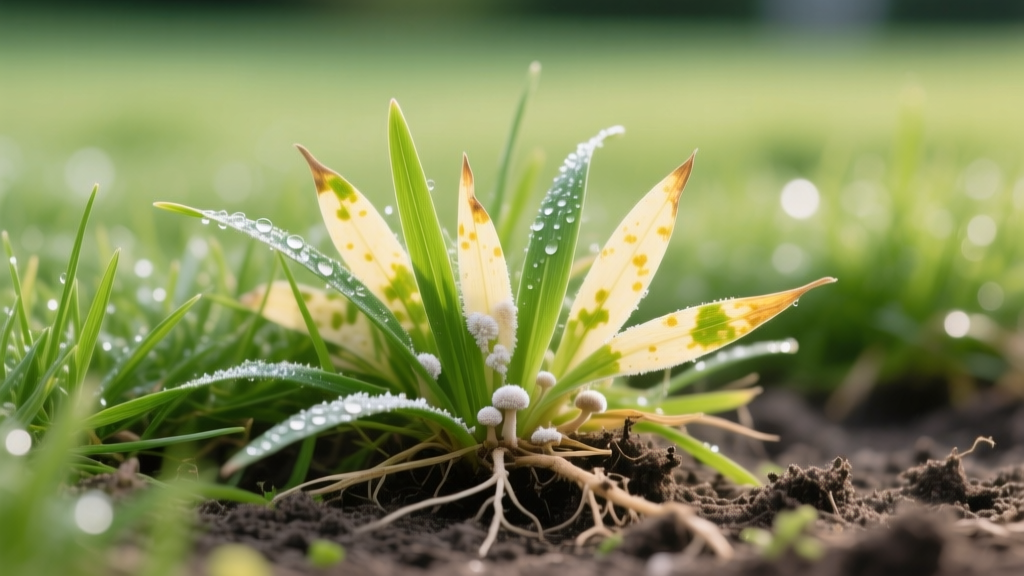
How to Identify and Treat Cream Leaf Blight in Cool-Season Lawns
Understanding Cream Leaf Blight in Cool-Season Turf
Cream leaf blight is a persistent, visually disruptive foliar disease that primarily targets cool-season turfgrasses, including creeping bentgrass, fine fescues, and perennial ryegrass. While it rarely causes catastrophic turf loss on its own, the unsightly cream-to-pale-yellow lesions severely degrade lawn aesthetics and weaken the grass canopy, leaving it vulnerable to secondary pathogens and environmental stress. As of 2026, turfgrass pathologists emphasize that managing this disease requires a precise combination of microclimate manipulation and strictly rotated fungicide applications to prevent chemical resistance.
The pathogen thrives in environments characterized by prolonged leaf wetness, high relative humidity, and moderate temperatures ranging from 60°F to 75°F (15°C to 24°C). Unlike aggressive crown-rot diseases, cream leaf blight is strictly foliar, meaning it attacks the leaf blades rather than the roots or stolons. However, chronic infections will thin the stand density over time, particularly in heavily shaded areas or lawns with poor air circulation.
Visual Diagnosis: Spotting the Early Warning Signs
Accurate diagnosis is the most critical step in turfgrass pathology. Misidentifying cream leaf blight as dollar spot or pink patch leads to ineffective chemical applications and wasted budget. The initial symptoms manifest as small, water-soaked spots on the leaf tips. As the infection progresses, these spots elongate into distinct cream-colored or pale-yellow lesions with irregular, reddish-brown margins.
Diagnostic Field Test: The Morning Dew Inspection
The most reliable time to scout for cream leaf blight is between 6:00 AM and 8:00 AM when morning dew is heavy. Look for a faint, cobweb-like mycelium that may exhibit a very subtle pinkish hue at the margins of the lesions. If the mycelium is thick, white, and cottony, you are likely dealing with Pythium blight or snow mold, not cream leaf blight.
Microclimate Mapping
Before treating, map the affected areas. Cream leaf blight almost always originates in localized microclimates where air drainage is restricted. Common hotspots include the north side of dense shrub borders, areas directly beneath tree canopies, and low-lying depressions where cold air and moisture settle overnight. Addressing these specific zones is more cost-effective than treating the entire property.
Cream Leaf Blight vs. Lookalike Diseases
Because cool-season lawns are susceptible to multiple foliar diseases simultaneously, use this comparison matrix to isolate the exact pathogen before purchasing chemicals.
| Disease | Lesion Color & Shape | Mycelium Presence | Optimal Temp Range |
|---|---|---|---|
| Cream Leaf Blight | Cream/pale-yellow, elongated, irregular margins | Faint, sparse, sometimes pinkish | 60°F - 75°F |
| Dollar Spot | Bleached white, hourglass-shaped, distinct tan borders | Thick, white, cobweb-like | 65°F - 85°F |
| Pink Patch | Pinkish-tan, diffuse margins, no distinct lesions | Abundant pink/salmon mycelium | 50°F - 70°F |
For authoritative visual guides and regional outbreak tracking, consult the NC State University TurfFiles database, which provides updated diagnostic imagery and extension recommendations.
Step-by-Step Fungicide Treatment Protocol
When cultural controls are insufficient to halt the spread of cream leaf blight, targeted fungicide applications are necessary. According to the Fungicide Resistance Action Committee (FRAC), rotating chemical modes of action is non-negotiable to prevent pathogen adaptation. Never apply the same FRAC code consecutively.
Curative and Preventative Application Rates
For active outbreaks, apply the first curative treatment immediately upon confirmation, followed by a preventative rotation 14 to 21 days later. Always use a non-ionic surfactant (NIS) at 0.25% v/v to ensure the chemical penetrates the waxy cuticle of the leaf blade.
- Step 1: QoI Application (FRAC 11)
Apply Azoxystrobin (e.g., Heritage SC) at a rate of 0.4 to 0.8 fl oz per 1,000 sq ft. This systemic chemistry moves translaminarly through the leaf tissue, halting fungal respiration. Use an 8002 flat-fan nozzle at 40 PSI to generate medium-fine droplets for maximum canopy penetration. - Step 2: DMI Rotation (FRAC 3)
14 days later, apply Propiconazole (e.g., Banner MAXX) at 1.0 to 2.0 fl oz per 1,000 sq ft. DMIs inhibit ergosterol synthesis, effectively stopping fungal cell membrane formation. This is highly effective as a follow-up curative strike. - Step 3: SDHI Preventative (FRAC 7)
For long-term suppression in high-risk microclimates, apply Fluxapyroxad (e.g., Xzemplar) at 0.18 to 0.36 fl oz per 1,000 sq ft. SDHIs offer excellent residual control (up to 28 days) and are ideal for late-spring preventative programs before the summer stress period begins.
Cultural Controls: Fixing the Microclimate
Chemical interventions will fail if the underlying environmental triggers remain unaddressed. The Penn State Extension turfgrass program emphasizes that modifying the physical environment is the most sustainable long-term defense against foliar blights.
Precision Irrigation and Dew Removal
Cream leaf blight requires 10 to 12 hours of continuous leaf wetness to infect tissue. You must break this cycle.
- Time Your Watering: Irrigate strictly between 4:00 AM and 6:00 AM. This allows the soil profile to receive necessary moisture while ensuring the leaf surface dries rapidly once the sun rises.
- Syringing: During peak infection windows (overcast days with high humidity), lightly syringe the turf with a hose in the late morning to wash away guttation fluid, which is rich in sugars and spores.
- Dew Removal: Drag a lightweight bamboo pole or a dew whip across the lawn at dawn to physically remove moisture from the leaf blades before the pathogen can penetrate the stomata.
Thatch and Canopy Management
Maintain thatch depth strictly below 0.5 inches. Thatch acts as a sponge, holding moisture against the lower leaf sheaths and creating a humid micro-environment. If your thatch layer exceeds 0.75 inches, schedule core aeration in the early fall, followed by verticutting in the spring. Furthermore, avoid heavy applications of quick-release nitrogen (like urea) during the 60°F to 75°F temperature window, as lush, rapid growth produces thin cell walls that are easily penetrated by fungal hyphae.
Frequently Asked Questions
Can cream leaf blight kill my entire lawn?
No. Because it is a foliar disease, it only destroys the leaf blades, not the crown or root system. The turf will recover once environmental conditions become hot and dry, provided you maintain proper watering and mowing practices.
Is it safe to mow over infected areas?
Yes, but you must sanitize your mower deck and blades with a 10% bleach solution or quaternary ammonium disinfectant immediately after mowing the affected zones. This prevents the mechanical transfer of spores to healthy sections of the lawn via the mower wheels and clippings.

