
Pest Control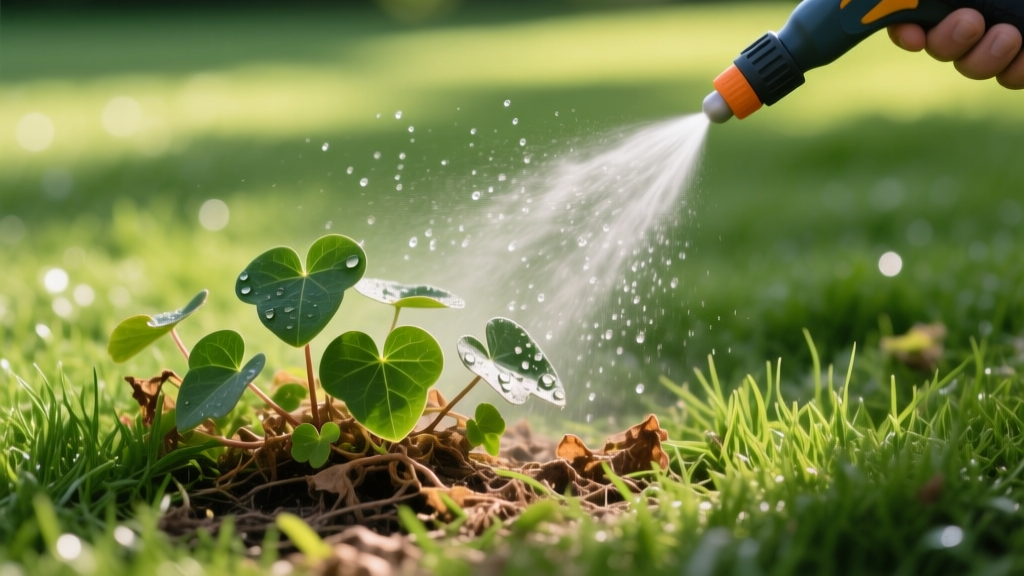
Top Weed Killer That Kills Creeping Charlie: Spot Treatment Guide
Creeping Charlie (Glechoma hederacea), also known as ground ivy, is one of the most notoriously stubborn broadleaf weeds in North American lawns. Its aggressive stoloniferous growth and waxy leaf cuticle allow it to laugh off standard weed-and-feed products. If you are searching for a weed killer that kills creeping Charlie effectively, you must abandon generic 2,4-D sprays and pivot to specialized systemic herbicides paired with penetrating surfactants. This spot-treatment guide details the exact chemical formulations, mixing ratios, and application protocols required to eradicate ground ivy without destroying your surrounding turfgrass.
Why Creeping Charlie Resists Standard Herbicides
Before selecting a product, it is critical to understand why creeping Charlie survives typical lawn care routines. According to the University of Minnesota Extension, ground ivy spreads via above-ground creeping stems (stolons) that root at the nodes. If a herbicide only burns the top growth, the plant simply regenerates from the untouched nodes.
Furthermore, creeping Charlie leaves are covered in a dense, fuzzy, waxy cuticle. When water-based herbicides hit this surface, they bead up and roll off before the active ingredient can penetrate the plant tissue. To achieve a complete kill, the herbicide must be systemic (translocating down to the root system) and must be paired with a high-quality adjuvant to break the surface tension of the leaf.
The Active Ingredients You Actually Need
Not all broadleaf herbicides are created equal. While 2,4-D is the backbone of most cheap commercial weed killers, it is largely ineffective against ground ivy when used alone. The undisputed gold standard for creeping Charlie is Triclopyr. Triclopyr mimics plant growth hormones (synthetic auxins), causing the weed to grow uncontrollably until its vascular system collapses and the plant starves.
| Active Ingredient | Systemic Translocation | Effectiveness on Ground Ivy | Best Use Case |
|---|---|---|---|
| Triclopyr | High | Excellent (Primary Killer) | Spot treatment and full broadcast |
| 2,4-D | Medium | Poor (alone) / Good (blended) | Synergistic blending with Triclopyr |
| Dicamba | High | Good | Synergistic blending for tough broadleaves |
| Quinclorac | Low | Ineffective | Strictly for grassy weeds like crabgrass |
Top Commercial Spot-Treatment Products
To maximize efficacy, look for commercial-grade concentrates rather than ready-to-use hose-end sprays, which are often under-dosed and overpriced. Here are the top formulations available for homeowners and lawn care professionals.
T-Zone SE Broadleaf Herbicide
Active Ingredients: Triclopyr (7.6%), 2,4-D (30.5%), Dicamba (2.7%), Sulfentrazone (2.7%).
Estimated Price: $48 - $55 per gallon.
Why it works: This four-way blend provides the heavy-hitting systemic action of Triclopyr while Sulfentrazone adds rapid contact burn. It is the industry standard for stubborn broadleaf weeds.
Bonide Chickweed, Clover & Oxalis Killer
Active Ingredients: Triclopyr (primary).
Estimated Price: $22 - $26 per quart.
Why it works: An excellent, accessible option for smaller lawns. It relies heavily on Triclopyr to translocate through the stolon network, ensuring the roots are destroyed.
Step-by-Step Spot Treatment Protocol
Applying the right chemical at the wrong time or without the proper adjuvant will result in failure. Follow this exact protocol for spot-treating creeping Charlie patches.
- Choose the Right Window: The optimal time to spray is in the fall, immediately after the first light frost, or in early spring when the weed is actively blooming. According to Iowa State University Extension, fall applications are superior because the plant is actively pulling carbohydrates (and the herbicide) down into its root system for winter storage. Avoid spraying when air temperatures exceed 85°F to prevent turfgrass phytotoxicity and rapid herbicide evaporation.
- Prepare the Tank Mix: For a standard 1-gallon pump sprayer targeting 1,000 square feet, mix 1.5 fluid ounces of T-Zone SE (or the equivalent Triclopyr rate for your chosen product) into 1 gallon of water.
- Add a Penetrating Surfactant (Mandatory): Add 0.5 fluid ounces of Methylated Seed Oil (MSO) or a high-quality Non-Ionic Surfactant (NIS) per gallon of water. MSO is highly recommended for creeping Charlie because its oil-based composition dissolves the waxy leaf cuticle far better than standard soap-based surfactants.
- Agitate Thoroughly: Secure the sprayer lid and shake vigorously for 30 seconds to ensure the oil-based surfactant and water-based herbicide form a stable emulsion.
- Apply to the Point of Glistening: Spray the creeping Charlie patches using a fine fan nozzle. Coat the leaves until they are glistening, but stop before the liquid begins to drip off. Dripping leads to soil pooling, which wastes chemical and increases the risk of turf root damage.
- Observe the 48-Hour Rule: Do not mow your lawn for 48 hours before application (to maximize leaf surface area) and do not mow for 48 hours after application (to allow maximum time for the herbicide to translocate to the roots). Ensure no rain is in the forecast for at least 24 hours post-spray.
The Borax Myth: What NOT to Do
Warning: Avoid internet hacks recommending 20-Mule Team Borax mixed with water to kill creeping Charlie. While boron is toxic to ground ivy, the application rates required to kill the weed will permanently sterilize your soil. Boron does not break down easily and will prevent grass seed from germinating in that area for years, leaving you with bare dirt patches that invite worse weeds like spurge and nutsedge.
Post-Application Lawn Recovery
Triclopyr is generally safe for cool-season grasses (Kentucky Bluegrass, Fescue, Ryegrass) and most warm-season grasses (Bermuda, Zoysia) when applied at labeled rates. However, you may notice slight yellowing or stunting in the surrounding turf immediately after application. This is temporary.
Within 14 to 21 days, the creeping Charlie leaves will curl, turn necrotic brown, and collapse. Once the weed is entirely dead, rake out the desiccated stolon mats to expose the bare soil beneath. Because creeping Charlie thrives in damp, shaded, compacted soils, you must address the underlying environment. Core aerate the treated area, apply a starter fertilizer (e.g., 18-24-12), and overseed with a shade-tolerant fescue blend to choke out any future weed invasions. Keep the soil consistently moist for 14 days to ensure seed germination.
Frequently Asked Questions
Will creeping Charlie come back after one treatment?
In severe infestations, a second follow-up application may be necessary 28 days after the first spray. Ground ivy can regenerate from deep nodes that the initial herbicide wave did not fully reach. Spot treat any new, small shoots as soon as they appear.
Is Triclopyr safe for St. Augustine grass?
No. Triclopyr can cause severe damage to St. Augustine and Centipede grasses. If you have these warm-season turf types, you must rely on repeated applications of Atrazine or a specialized Dicamba-heavy blend labeled specifically for St. Augustine, though eradication will take significantly longer.

