
Pest Control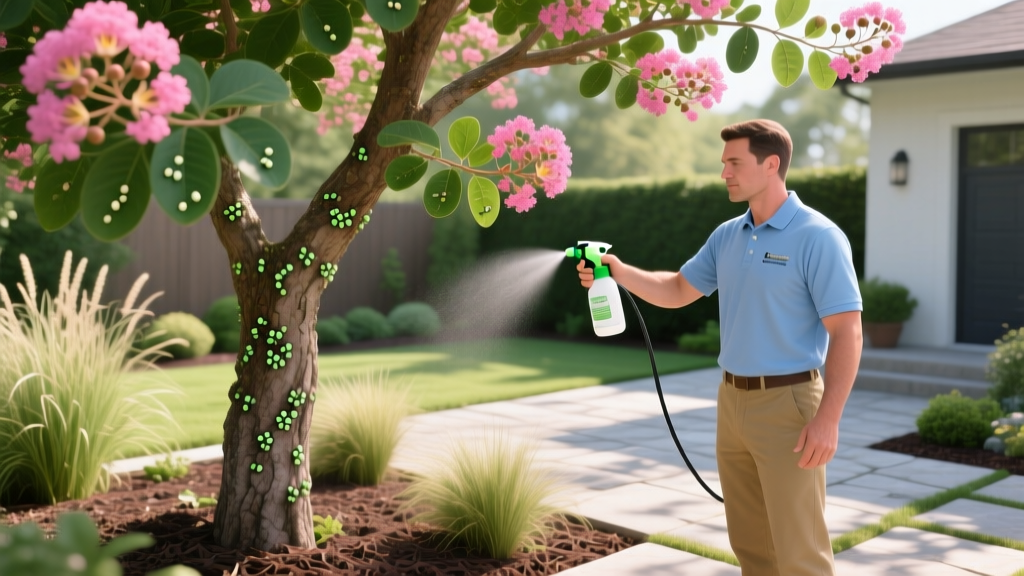
Crepe Myrtle Aphids: Complete Treatment and Yard Defense Guide
The Anatomy of an Infestation: Identifying Crepe Myrtle Aphids
The crape myrtle aphid (Tinocallis kahawaluokalani) is a highly specialized pest that feeds exclusively on Lagerstroemia species. Unlike generalist aphids that attack a wide variety of garden plants, this Asian-native insect targets the soft, newly expanding tissue of crape myrtle leaves and twigs. Homeowners often misdiagnose this pest, confusing the resulting black fungal growth with crape myrtle bark scale (CMBS). The distinction is critical: CMBS presents as white, felt-like patches on the trunk and branches, while aphid damage manifests primarily on the foliage and results in black sooty mold.
Adult crape myrtle aphids are pale yellow with distinct black spots on their abdomen and black-tipped legs. Wingless nymphs and adults congregate on the undersides of leaves, while winged forms (alates) appear when populations become too dense, allowing them to disperse to neighboring trees. According to the University of Florida IFAS Extension, these aphids reproduce parthenogenetically (without mating) in warmer climates, meaning populations can explode from a few founders to thousands in a matter of weeks during late spring and early summer.
The Damage Cycle: Honeydew and Sooty Mold
The primary threat of T. kahawaluokalani is not the sap loss from feeding, which rarely kills a mature tree outright. The real danger lies in their excrement. As aphids pierce the phloem to consume sugar-rich sap, they excrete a sticky, carbohydrate-dense waste called honeydew. This honeydew coats the leaves, branches, and anything beneath the tree canopy—including patio furniture, vehicles, and hardscaping.
Warning: The Sooty Mold Cascade
Within days of honeydew deposition, airborne spores of Capnodium fungi land on the sticky surface and germinate, forming a thick, black, powdery layer known as sooty mold. This mold does not infect the plant tissue directly, but it physically blocks sunlight. Severe sooty mold coverage can reduce photosynthesis by up to 70%, leading to stunted growth, premature leaf drop, and a failure to produce the iconic summer blooms.
Within days of honeydew deposition, airborne spores of Capnodium fungi land on the sticky surface and germinate, forming a thick, black, powdery layer known as sooty mold. This mold does not infect the plant tissue directly, but it physically blocks sunlight. Severe sooty mold coverage can reduce photosynthesis by up to 70%, leading to stunted growth, premature leaf drop, and a failure to produce the iconic summer blooms.
Yard Defense Strategy 1: Biological and Organic Controls
For homeowners practicing Integrated Pest Management (IPM) or those with sensitive pollinator gardens, organic and biological controls offer an effective first line of defense. Because crape myrtle aphids are soft-bodied and lack protective waxy coatings, they are highly susceptible to desiccants and fatty acid-based sprays.
Insecticidal Soaps and Horticultural Oils
Potassium salts of fatty acids (insecticidal soap) disrupt the cellular membranes of soft-bodied insects, causing rapid dehydration. Products like Safer Brand Insect Killing Soap (1.5% active ingredient) or Bonide Insecticidal Soap RTU are highly effective but require direct contact with the aphids.
- Application Rate: Spray until runoff, ensuring thorough coverage of the undersides of the leaves where aphids congregate.
- Timing: Apply at dusk or early dawn. Spraying soap in direct sunlight or when temperatures exceed 85°F will cause severe phytotoxicity (leaf burn) on crape myrtles.
- Frequency: Soap has no residual effect. You must reapply every 5 to 7 days until the population is suppressed.
Biological Predators
The multicolored Asian lady beetle (Harmonia axyridis) and green lacewings (Chrysoperla species) are voracious predators of crape myrtle aphids. A single lacewing larva can consume up to 200 aphids per week. Avoid using broad-spectrum pyrethroids (like bifenthrin or permethrin) if you want to maintain these beneficial insect populations in your yard.
Yard Defense Strategy 2: Systemic Chemical Interventions
When aphid populations are severe, or when dealing with multi-trunk specimens that are too tall for effective foliar spraying, systemic neonicotinoids provide the most reliable, long-term defense. These chemicals are absorbed by the root system and translocated upward through the xylem into the leaves, poisoning the aphids as they feed.
| Treatment Type | Active Ingredient | Duration of Control | Avg. Cost (2026) |
|---|---|---|---|
| Soil Drench (Systemic) | Imidacloprid (1.47%) | 12 Months | $18 - $25 / 32oz |
| Basal Bark Spray | Dinotefuran (21.6%) | 3 - 6 Months | $45 - $60 / 8oz |
| Foliar Contact Spray | Potassium Salts of Fatty Acids | 0 Days (No Residual) | $10 - $15 / 32oz RTU |
| Foliar Contact Spray | Spinosad (0.5%) | 7 - 14 Days | $16 - $22 / 16oz |
Pro-Tip: The Dinotefuran Alternative
If your crape myrtles are already in full bloom and you cannot wait the 4-6 weeks it takes for Imidacloprid to translocate, use a Dinotefuran-based product (like Safari 20SG). Dinotefuran is highly water-soluble and moves through the tree's vascular system much faster, providing knockdown control in 7 to 14 days. Apply it as a basal trunk spray mixed with a penetrating surfactant.
If your crape myrtles are already in full bloom and you cannot wait the 4-6 weeks it takes for Imidacloprid to translocate, use a Dinotefuran-based product (like Safari 20SG). Dinotefuran is highly water-soluble and moves through the tree's vascular system much faster, providing knockdown control in 7 to 14 days. Apply it as a basal trunk spray mixed with a penetrating surfactant.
Step-by-Step: Calculating and Applying an Imidacloprid Soil Drench
To use a product like Bonide Annual Tree and Shrub Insect Control (Imidacloprid 1.47%), you must calculate the correct dose based on the tree's trunk diameter to prevent chemical waste and environmental runoff.
- Measure the Circumference: Wrap a flexible measuring tape around the main trunk at breast height (4.5 feet above the ground). For multi-trunk crape myrtles, measure each trunk individually and add the diameters together.
- Calculate Diameter: Divide the circumference by 3.14. (e.g., A 15.7-inch circumference equals a 5-inch diameter).
- Mix the Drench: The standard rate is 1 fluid ounce of concentrate per 1 inch of trunk diameter. Mix this amount into 1 gallon of water per inch of diameter (e.g., 5 oz of chemical in 5 gallons of water for a 5-inch tree).
- Apply: Clear mulch away from the base. Pour the mixture evenly in a circular trench around the drip line or within 2 feet of the trunk base. Replace the mulch.
- Water: Apply 1/2 inch of irrigation immediately after to push the chemical into the active root zone.
Cultural Practices for Long-Term Defense
Aphids are attracted to the high concentrations of amino acids found in rapidly growing, succulent plant tissue. Over-fertilizing crape myrtles with high-nitrogen synthetic fertilizers (like 24-8-16 turf fertilizers) forces the tree to push out excessive, weak vegetative growth that acts as a magnet for aphids.
Instead, use a slow-release, balanced fertilizer (such as an 8-8-8 or 10-10-10 formulation) applied only once in early spring. Furthermore, avoid severe "crape murder" (topping the tree). Topping creates dense clusters of weak, fast-growing water sprouts at the cut sites, which are highly susceptible to both aphid feeding and powdery mildew. Practice selective drop-crotch pruning to maintain an open canopy that promotes airflow and allows natural predators to access the inner branches.
Frequently Asked Questions
Will sooty mold go away on its own after I kill the aphids?
Yes, but slowly. Once the aphid population is eradicated and honeydew production stops, the sooty mold will gradually dry up, crack, and flake off the leaves. You can accelerate this process by spraying the tree canopy with a strong jet of water from a garden hose a few days after your aphid treatment has taken effect.
Are crepe myrtle aphids harmful to humans or pets?
No. Tinocallis kahawaluokalani does not bite, sting, or transmit diseases to humans or animals. They are strictly a nuisance pest to ornamental plants. However, the sticky honeydew they produce can attract stinging insects like yellow jackets and wasps, which pose a secondary risk in high-traffic yard areas.
Why do my trees get aphids every single year?
Crape myrtle aphids overwinter as eggs laid in the bark crevices of the twigs. If you do not apply a dormant horticultural oil spray in late winter (February) or a systemic soil drench in early spring, the eggs will hatch as soon as the leaf buds break, immediately restarting the infestation cycle. According to Clemson University HGIC, proactive early-spring treatment is the most effective way to break this annual cycle.

