
Pest Control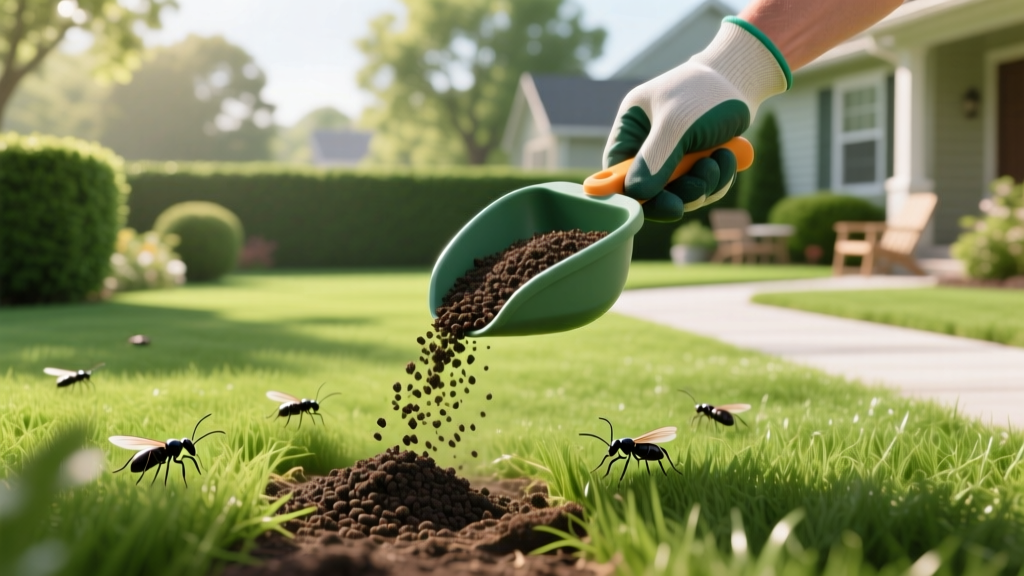
Using D Earth for Fleas: Yard Defense & Application Guide
Flea infestations rarely originate indoors; they begin in the shaded, humid microclimates of your yard. When chemical insecticides fail or pose risks to pets and children, many homeowners turn to mechanical pest control. Using d earth for fleas (diatomaceous earth) offers a non-toxic, highly effective yard defense strategy when applied with precision. Unlike neurotoxic sprays that degrade in UV light, diatomaceous earth (DE) provides residual control by physically destroying the pest's exoskeleton.
However, simply broadcasting DE across your lawn will not eliminate a flea population. Success requires understanding the material's physical properties, targeting specific pupation zones, and integrating rodent vector control. This guide details the exact protocols, product specifications, and application techniques required to break the flea life cycle outdoors.
The Mechanics of Desiccation: How DE Eliminates Fleas
Diatomaceous earth is composed of the fossilized remains of diatoms, a type of hard-shelled algae. The primary component is silicon dioxide (silica). Under a microscope, DE particles resemble microscopic shards of glass. When fleas crawl across treated surfaces, these sharp edges abrade the waxy, protective outer layer of their exoskeleton. Once this lipid barrier is compromised, the insect rapidly loses moisture and dies of desiccation.
CRITICAL WARNING: Food Grade vs. Filter Grade
You must exclusively use Food Grade or Pest Control Grade diatomaceous earth for yard applications. Filter Grade (often sold for swimming pool filtration) has been heat-treated (calcined), which alters its crystalline structure into crystalline silica. Inhaling crystalline silica is a severe respiratory hazard and can cause silicosis in humans and pets. Food-grade DE contains less than 1% crystalline silica and is safe for use in areas where pets and children play, provided you avoid creating airborne dust clouds during application.
Step-by-Step Yard Application Protocol
To achieve a 90%+ reduction in outdoor flea populations, follow this targeted application framework. According to the University of California Integrated Pest Management (IPM) program, fleas primarily develop in shaded, humid areas where pets rest or wildlife frequents, rarely in open, sun-baked lawns.
Step 1: Site Preparation and Mapping
Mow your lawn to a height of 2 to 2.5 inches to allow the DE to reach the soil and thatch layer where flea larvae and pupae reside. Remove heavy leaf litter and debris. Map out 'hot spots': under decks, beneath shrubs, along fence lines, and inside dog runs. These shaded zones retain the moisture fleas need to survive and are your primary targets.
Step 2: Tool Selection
Do not use a standard rotary broadcast spreader; the granules are too fine and will clog the mechanism. Instead, use a bulb duster (like the Harris Duster) or a pump-action dust applicator (like the Chapin 2000). These tools inject the powder deep into the grass canopy and soil cracks without creating excessive airborne dust.
Step 3: Targeted Application Rates
Apply the DE at a rate of 1 to 2 lbs per 1,000 square feet of targeted area. The layer should be barely visible—a light, frost-like dusting. If you apply it too thickly (creating visible white mounds), fleas will simply walk around the piles. The goal is a microscopically thin, even coating that forces the insects to crawl through it.
Step 4: The 'Mist-and-Settle' Technique (Pro Insight)
The biggest failure point with d earth for fleas is wind displacement. Freshly applied DE is highly hydrophobic and easily blown away. To lock it into the thatch layer, immediately follow your dry application with a fine misting from your garden hose. Use a misting nozzle, not a jet spray. The water droplets will weigh down the DE, pushing it into the soil and thatch where fleas pupate. As the sun dries the grass, the DE reactivates its desiccating properties, now safely anchored against wind and light foot traffic.
Top Food-Grade DE Products Compared
Not all food-grade DE is milled equally. Particle size and packaging dictate usability. Below is a comparison of the top-performing products available for residential yard defense, based on current 2026 market pricing and formulation quality.
| Brand & Product | Size & Price | OMRI Listed | Included Accessories | Best Use Case |
|---|---|---|---|---|
| Harris Food Grade DE | 4 lb bag (~$17.99) | No | Includes red bulb duster | Best overall value for targeted spot treatments |
| Safer Brand Ant & Crawling Insect Killer | 4 lb bag (~$14.49) | Yes | Shaker can top | Organic gardens; easy shaker application for small beds |
| Bonide Diatomaceous Earth | 4 lb bag (~$12.99) | No | None (bag only) | Budget option for large perimeter dusting |
Troubleshooting: Why Your Application Failed
If you applied DE but are still finding fleas on your pets, one of the following failure modes is likely responsible:
- Applying to Wet Soil: DE loses its abrasive and desiccating properties when saturated. While the 'mist-and-settle' trick works for anchoring, applying DE to already muddy or rain-soaked ground renders it useless until it completely bakes dry. Always apply during a dry weather window of at least 48 hours.
- Ignoring the Pupal Stage: Flea pupae are encased in a sticky, protective cocoon that is highly resistant to desiccation. DE will kill emerging adults and larvae, but pupae can remain dormant for up to 150 days. You must reapply DE every 3 to 4 weeks during peak season to intercept newly hatched adults before they find a host.
- Overlooking Wildlife Vectors: According to the Centers for Disease Control and Prevention (CDC), fleas are primarily introduced to yards via wildlife hosts. If you treat your grass but allow opossums, raccoons, and roof rats to sleep under your deck, they will continuously re-seed your yard with flea eggs.
Integrating Rodent & Wildlife Vector Defense
Using d earth for fleas is only half the battle; you must simultaneously cut off the supply chain. Implement these exclusion tactics to stop rodents and wildlife from reinfesting your treated zones:
- Trench and Screen: Dig a 12-inch trench around the base of your deck, shed, or crawlspace. Bury 1/4-inch galvanized hardware cloth, extending it 6 inches above grade. This prevents roof rats and feral cats from nesting in the humid, flea-friendly spaces beneath structures.
- Eliminate Harborages: Clear brush piles, stack firewood at least 20 feet from the home, and trim tree branches that overhang your roofline to disrupt squirrel and rat transit routes.
- Deploy DE in Bait Stations: Place a small mound of DE inside commercial, tamper-resistant rodent bait stations (without the poison bait). As rodents enter the station, the DE coats their fur, which they subsequently track back to their nests, effectively treating the hidden flea colonies.
'The National Pesticide Information Center notes that while diatomaceous earth is a low-toxicity physical control, its efficacy is entirely dependent on environmental moisture and proper particle placement. It is not a 'set and forget' solution, but rather a persistent barrier that requires strategic maintenance.' — NPIC Fact Sheet
Frequently Asked Questions
Is d earth for fleas safe for my dogs and cats?
Yes, food-grade DE is non-toxic if ingested or touched by pets. However, inhaling large amounts of the fine dust can cause temporary respiratory irritation. Keep pets indoors during the dry application process and the subsequent misting phase. Once the dust has settled and dried into the thatch, it is completely safe for them to walk and play on.
How long does it take for DE to kill fleas?
Desiccation is not instantaneous. Once a flea comes into direct contact with properly applied DE, it typically takes 12 to 48 hours for the insect to die from moisture loss. You will not see an immediate 'knockdown' effect like you would with a pyrethroid spray, but the long-term population collapse is more sustainable.
Can I mix DE with water and spray it through a hose-end sprayer?
No. While you can suspend DE in water to apply it, the particles will quickly settle to the bottom of the tank, clogging the sprayer lines and nozzles. Furthermore, spraying a wet slurry often results in thick, clumpy deposits that lose their efficacy. Dry application followed by a fine mist is the only reliable method for lawn application.
Does DE harm beneficial insects like bees and earthworms?
DE is non-selective and will harm beneficial insects that crawl through it, including ground beetles and ants. However, because you are targeting shaded, specific hot spots rather than broadcasting across the entire lawn, the impact on pollinators like bees (which forage on flowers, not soil) is minimal. Earthworms are generally unaffected as they reside deep in the soil profile and possess a protective mucus coating that repels the abrasive particles.

