
Pest Control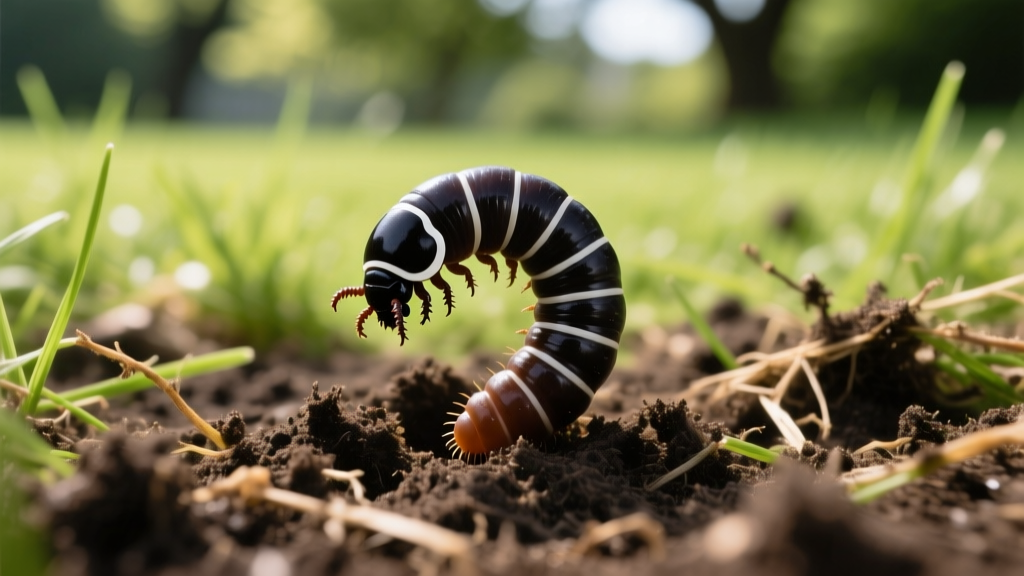
Dark Grub Worm Infestation: How to Identify and Treat It
What Exactly is a Dark Grub Worm?
The term "dark grub worm" is not a single scientific classification but rather a descriptive term used by turfgrass managers and homeowners to identify specific scarab beetle larvae that exhibit dark brown or black coloration. While the common Japanese beetle grub is typically creamy white with a brown head capsule, two primary pests fit the "dark grub" profile and wreak havoc on residential lawns:
- Black Turfgrass Ataenius (Ataenius spretulus): These grubs are notably smaller (about 1/4 inch long) and range from dark brown to nearly black. They are highly destructive to cool-season grasses and can produce two generations per year in northern climates, leading to compounding root loss.
- Late-Instar Masked Chafers (Cyclocephala borealis): While younger masked chafer grubs are white, late-stage instars (third instar) develop dark, hardened dorsal plates and a dark brown head capsule. When feeding in organic-rich topsoil, their digestive tracts often show through their semi-translucent skin, giving them an overall dark, muddy appearance.
Unlike surface-feeding pests like chinch bugs, dark grub worms reside in the soil profile, chewing through the primary root systems of turfgrass. This severs the plant's ability to uptake water and nutrients, resulting in rapid, localized die-off that is frequently misdiagnosed as drought stress or fungal disease.
⚠️ Critical Identification Warning: Do not confuse dark grub worms with beneficial ground beetles or predatory larvae. Grub worms will always exhibit a distinct C-shaped resting posture and possess three pairs of jointed legs near the head capsule. Ground beetle larvae are elongated, fast-moving, and do not curl into a C-shape.
Diagnosing Dark Grub Damage vs. Environmental Stress
Because grub damage mimics drought, precise diagnostic protocols are required before applying any chemical or biological controls. According to University of Minnesota Turfgrass Science, treating a lawn for grubs when the actual issue is soil compaction or localized dry spot wastes money and introduces unnecessary pesticides into the environment.
The Tug Test and Peel-Back Method
- Locate the Margins: Find the border where dead, brown grass meets healthy, green grass. Grubs feed outward from a central hatching point, so the active feeding zone is always at the margin.
- Perform the Tug Test: Grab a handful of the brown grass and pull gently. If the grass detaches easily with no root resistance and the roots look sheared off cleanly, grub activity is highly probable.
- The Peel-Back: Use a flat spade to cut a 1-foot by 1-foot square of turf, about 2 inches deep. Fold it back like a carpet.
- Count the Pests: Sift through the top 3 inches of exposed soil. For small Ataenius grubs, the treatment threshold is 5 to 7 grubs per square foot. For larger masked chafer grubs, the threshold is 8 to 10 per square foot.
Treatment Matrix: Chemical and Organic Solutions
Effective dark grub worm management requires matching the active ingredient to the grub's current life stage. Preventative chemicals target hatching eggs and first-instar larvae, while curative chemicals and biologicals target active, feeding grubs in the late summer and early fall.
| Product Type | Active Ingredient | Application Timing | Estimated Cost (per 5,000 sq ft) |
|---|---|---|---|
| Preventative Granular | Chlorantraniliprole (Acelepryn G) | April to early June | $65 - $75 |
| Curative Granular | Trichlorfon (Dylox 6.2G) | Late July to September (when grubs are active) | $20 - $25 |
| Biological Control | Heterorhabditis bacteriophora (Hb Nematodes) | Late August to September (Soil temp > 60°F) | $30 - $40 |
| Organic Bacterial | Milky Spore (Paenibacillus popilliae) | Spring or Fall (Note: Ineffective on Ataenius) | $45 - $55 |
Why Milky Spore Fails Against Dark Grubs
Many homeowners default to Milky Spore for organic grub control. However, as noted by Penn State Extension, Milky Spore is highly specific to the Japanese beetle grub. It will not infect or kill the Black Turfgrass Ataenius or Masked Chafer grubs. If your soil sampling reveals dark-colored grubs, relying on Milky Spore will result in total control failure. You must pivot to Hb nematodes or chemical curatives.
Step-by-Step Protocol: Applying Hb Nematodes
Beneficial nematodes are microscopic, unsegmented roundworms that actively hunt grubs in the soil, entering their bodies and releasing bacteria that kill the pest within 48 hours. The EPA recognizes biological pesticides like nematodes as highly effective, low-risk alternatives to synthetic chemicals. For dark grub worms, the Heterorhabditis bacteriophora (Hb) strain is mandatory, as it actively cruises through the soil profile, whereas other strains wait passively for pests to bump into them.
Pro-Tip: Nematode Viability Check
Before applying, mix a small pinch of the nematode powder into a cup of lukewarm water. Wait 5 minutes, then shine a flashlight through the glass. You should see tiny, thread-like organisms wriggling. If the water is completely clear and motionless, the nematodes are dead from improper shipping storage, and you must contact the vendor for a replacement.
Before applying, mix a small pinch of the nematode powder into a cup of lukewarm water. Wait 5 minutes, then shine a flashlight through the glass. You should see tiny, thread-like organisms wriggling. If the water is completely clear and motionless, the nematodes are dead from improper shipping storage, and you must contact the vendor for a replacement.
Application Steps for Maximum Efficacy
- Mow and Dethatch: Cut the grass to 2 inches and remove excess thatch. Thatch thicker than 1/2 inch will trap nematodes on the surface, where UV light will kill them.
- Pre-Water the Soil: Apply 1/4 inch of irrigation to the lawn the night before. Nematodes require a moist soil matrix to swim through and locate grubs.
- Mix the Solution: Use a hose-end sprayer designed for biologicals (remove any internal mesh filters that will crush the nematodes). Mix the recommended dose (typically 25,000 nematodes per square foot) into cool, distilled water. Chlorinated tap water will kill them on contact.
- Apply at Dusk: Spray the lawn between 6:00 PM and 8:00 PM to avoid UV degradation and rapid surface evaporation.
- Post-Water Immediately: Apply another 1/4 inch of water immediately after spraying to wash the nematodes off the grass blades and down into the root zone where the dark grubs are feeding.
Defending Against Secondary Animal Damage
Dark grub worms are a primary food source for skunks, raccoons, and armadillos. Often, the first sign of a grub infestation is not dead grass, but turf that has been rolled up and shredded by foraging wildlife. A single raccoon can destroy 500 square feet of pristine lawn in one night while hunting for Ataenius grubs.
Immediate Wildlife Deterrents
While you wait for your curative grub treatment (like Dylox or nematodes) to take effect—usually 7 to 14 days—you must secure the physical perimeter. Liquid repellents based on castor oil (such as Nature's Mole & Vole Repellent) can temporarily mask the scent of the grubs. For immediate physical defense, lay down 1/2-inch galvanized hardware cloth or bird netting over the most heavily damaged areas, securing the edges with 6-inch landscape staples. This prevents mammals from digging while allowing water and sunlight to reach the recovering turf.
Long-Term Cultural Yard Defense
Grubs thrive in lawns with shallow root systems and excessive irrigation. To make your yard inherently hostile to dark grub worms, transition to deep, infrequent watering protocols. Watering for 45 minutes once a week encourages grass roots to grow 4 to 6 inches deep. Because Ataenius and masked chafer grubs primarily feed in the top 2 inches of soil, deeper root systems ensure the grass can sustain minor root pruning without showing surface browning. Furthermore, maintaining a soil pH between 6.2 and 6.8 optimizes nutrient uptake, allowing the turf to rapidly regenerate roots even while under minor pest pressure.

