Pest Control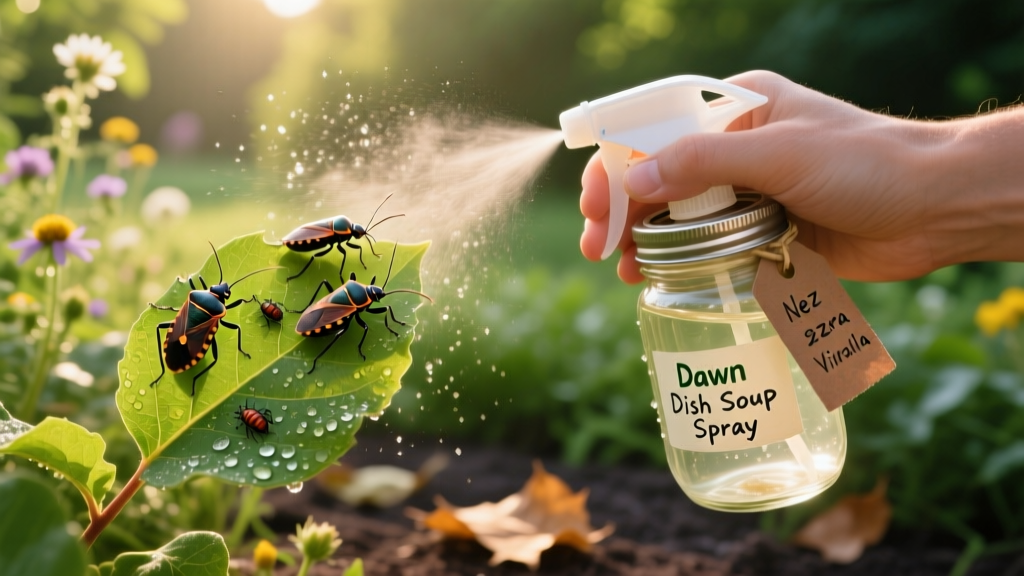
Dawn Dish Soap for Stink Bugs: Organic DIY Spray Guide
The Entomological Mechanics: Why Soap Kills Stink Bugs
The brown marmorated stink bug (Halyomorpha halys) is a notoriously resilient garden pest and winter home invader. Unlike aphids or spider mites, adult stink bugs possess a thick, protective exoskeleton and a waxy epicuticle that repels standard water-based treatments. When homeowners attempt to use synthetic pyrethroids indoors, the bugs often release their namesake foul-smelling aldehyde pheromones, staining surfaces and attracting more congregating insects.
Using dawn dish soap for stink bugs bypasses these issues through a purely physical mode of action. Dawn contains sodium lauryl sulfate (SLS) and sodium laureth sulfate (SLES), which act as powerful surfactants. According to NC State Extension, insecticidal soaps work by dissolving the waxy protective layer of an insect's cuticle and blocking their spiracles (breathing pores). Because stink bugs breathe through these microscopic abdominal pores, the reduced surface tension of soapy water allows the liquid to penetrate the exoskeleton, leading to rapid dehydration and suffocation within minutes.
The Ultimate DIY Dawn Soap Stink Bug Spray Recipe
Not all dish soaps are created equal for garden use. The formulation matters immensely to avoid destroying your plants while targeting the pests.
Ingredient Selection
- The Soap: Use Original Blue Dawn. Avoid Dawn Platinum, Ultra, or Powerwash variants. These newer formulations contain added enzymes, heavy degreasers, and artificial dyes that will strip the protective wax off your plant leaves, causing severe phytotoxicity (leaf burn).
- The Water: Use distilled or softened water. Hard tap water contains high levels of calcium and magnesium ions that bind with soap anions, creating insoluble soap scum. This scum clogs your spray nozzle and drastically reduces the surfactant's efficacy against the stink bugs.
Step-by-Step Mixing Guide
- Fill a 32-ounce spray bottle with 16 ounces of warm distilled water (warm water helps the surfactants dissolve uniformly).
- Add exactly 1.5 tablespoons of Original Blue Dawn. This creates a roughly 1.5% soap concentration, the scientifically proven threshold for soft-bodied and medium-bodied insects without causing immediate plant damage.
- Top off the bottle with the remaining 16 ounces of distilled water.
- Cap the bottle and invert it gently three times. Do not shake vigorously, as this creates excessive suds that make spraying difficult.
⚠️ Phytotoxicity Warning: Even at a 1.5% concentration, soap can damage sensitive plants like sweet peas, ferns, and certain tomato cultivars. Always perform a patch test: spray a single leaf and wait 24 hours. If the leaf shows no yellowing or necrotic spotting, the mixture is safe for the rest of the plant.
Application Strategy: Indoor vs. Outdoor Use
Stink bugs require different tactical approaches depending on whether they are feeding on your garden crops or attempting to overwinter inside your home. Penn State Extension notes that BMSB populations peak in late summer before migrating to structures in early autumn.
| Variable | Outdoor Garden Defense | Perimeter & Indoor Control |
|---|---|---|
| Target Area | Undersides of leaves, fruit clusters, stems | Window sills, siding, eaves, baseboards |
| Application Time | Early morning or dusk (temps below 85°F) | Late August to October (migration season) |
| Reapplication | Every 4-7 days, or immediately after rain | Once monthly until first hard frost |
| Safety Precaution | Avoid spraying pollinators directly | Test on painted surfaces to prevent streaking |
Outdoor Garden Perimeter Defense
When treating garden crops like tomatoes, peppers, and beans, spray the soapy solution directly onto the stink bugs. Contact is mandatory; Dawn soap has zero residual effect once the water evaporates. You must physically wet the insect. Focus heavily on the undersides of leaves where nymphs congregate. Never spray during the heat of the day; the combination of soap and intense UV radiation will scorch plant tissue.
The Shop-Vac Soapy Water Trap
For indoor invasions, spraying stink bugs on your walls is a mistake. The dying bug will release its alarm pheromones, and the soapy residue will leave a sticky film on your paint. Instead, use the wet-vacuum method:
- Pour exactly 2 inches of your Dawn soap mixture into the bottom of a wet/dry Shop-Vac canister.
- Attach the hose and turn the vacuum on.
- Hover the nozzle 1 inch away from the stink bugs on your walls or window screens. The suction will pull them into the canister.
- The soapy water at the bottom breaks the surface tension, ensuring the bugs drown instantly upon impact rather than floating and crawling back out of the exhaust port.
Dawn Soap vs. Commercial Insecticidal Soaps
Many gardeners wonder if they should just buy pre-mixed commercial insecticidal soaps (like Safer Brand or Bonide) instead of mixing Dawn. Here is a breakdown of the economic and practical trade-offs based on current 2026 market pricing:
- Cost Efficiency: A 16oz bottle of Original Blue Dawn costs roughly $2.50 and yields over 10 gallons of spray at a 1.5% dilution rate (approx. $0.02 per gallon). A 32oz ready-to-use commercial insecticidal soap costs around $8.50 (approx. $1.06 per gallon).
- Purity: Commercial insecticidal soaps use potassium salts of fatty acids, which are specifically refined to minimize plant damage. Dawn contains synthetic detergents, fragrances, and dyes that carry a slightly higher risk of phytotoxicity on sensitive foliage.
- Verdict: Use Dawn for hardy plants, structural perimeter sprays, and the indoor vacuum trap. Reserve commercial potassium-based insecticidal soaps for highly sensitive greenhouse plants and delicate seedlings.
Common Mistakes and Failure Modes
Even with an organic approach, user error can lead to crop damage or ineffective pest control. Avoid these critical mistakes:
- Using Antibacterial Soaps: Never substitute Dawn with antibacterial dish liquids. The added triclosan or chloroxylenol compounds do not improve insect mortality but introduce unnecessary biocides into your garden soil.
- Ignoring Water pH: If your local water is highly alkaline (pH above 8.0), the soap will precipitate out of the solution. If you must use tap water, add 1 teaspoon of white vinegar per gallon to buffer the pH before adding the soap.
- Expecting Residual Control: Soap only kills on contact. Spraying a leaf today will not prevent a stink bug from landing on it tomorrow. You must pair soap sprays with physical exclusion methods, like repairing window screens and sealing foundation cracks with silicone caulk before autumn.
Frequently Asked Questions
Will Dawn dish soap kill stink bug eggs?
No. Stink bug eggs are laid in barrel-shaped clusters and coated in a highly resilient, waterproof chorion. Soap solutions cannot penetrate this shell. You must manually crush the egg masses or scrape them into a bag of soapy water to destroy them.
Is it safe to spray Dawn soap on edible vegetables?
Yes, Original Blue Dawn is non-toxic to humans when properly diluted and rinsed. However, you should always rinse harvested vegetables with clean water before consumption to remove any soapy residue, which can impart a bitter taste to leafy greens and herbs.
Does the soap attract other pests?
While the soap itself does not attract pests, the added fragrances in some dish liquids can occasionally draw bees or wasps. Sticking to the unscented or original blue formula minimizes this risk. For more comprehensive organic pest management strategies, consult your local University Extension office for region-specific biological controls, such as the samurai wasp (Trissolcus japonicus), which naturally parasitizes stink bug eggs.