
Pest Control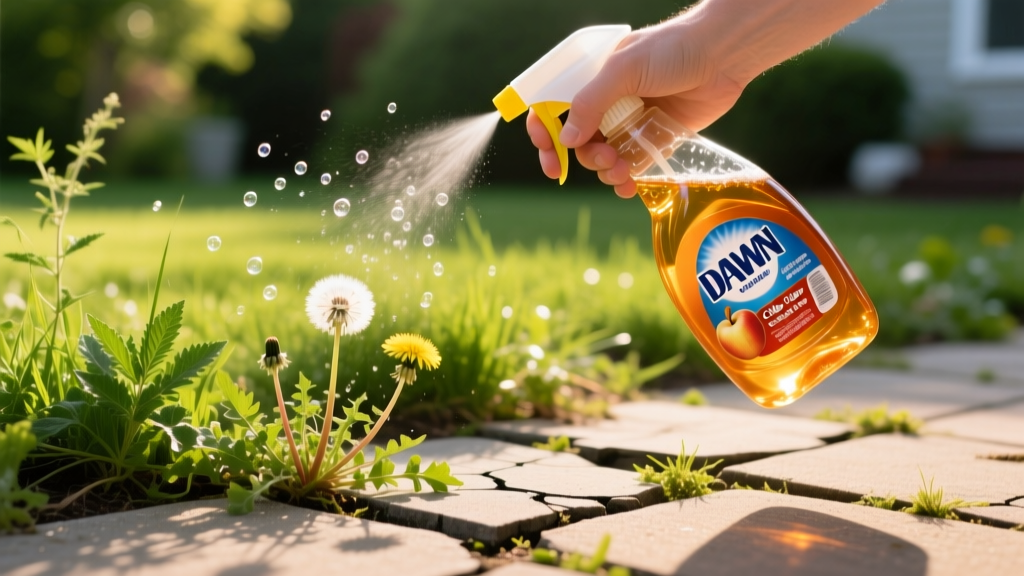
DIY Weed Killer Recipe With Dawn and Vinegar: Does It Actually Work?
The Chemistry of Desiccation: Why This Recipe Works
When searching for an effective organic herbicide, the combination of household vinegar and dish soap remains the most debated topic in lawn care. To understand if this weed killer recipe with Dawn and vinegar actually works, you must look at the cellular level. Vinegar contains acetic acid (CH3COOH). When applied to foliage, acetic acid rapidly dissolves the waxy cuticle of the leaf and destroys the plant's cell membranes, causing immediate water loss and desiccation. However, acetic acid alone has a high surface tension (approximately 72 mN/m), which causes it to bead up and roll off the waxy leaves of mature weeds.
This is where Dawn dish soap acts as a crucial non-ionic surfactant. By adding Dawn to the mixture, you drop the surface tension of the liquid to roughly 30 mN/m. This allows the acidic solution to flatten, spread evenly across the leaf surface, and penetrate the stomata. According to the Environmental Protection Agency (EPA), acetic acid-based solutions are recognized as viable, minimum-risk organic alternatives for spot-treatment of nuisance weeds in hardscapes and garden beds.
⚠️ The Dangerous 'Salt' Myth
Hundreds of online tutorials instruct homeowners to add Epsom salt or table salt (sodium chloride) to their vinegar recipes. Never do this. While salt will dehydrate the plant, sodium accumulates in the soil, destroying soil structure through a process called flocculation. This creates a hardpan layer that prevents water infiltration and renders the soil toxic to future desirable plantings, including grass seed and ornamentals. Stick strictly to the acid and surfactant.
The Exact Weed Killer Recipe With Dawn and Vinegar
Not all vinegars or dish soaps are created equal. Standard culinary white vinegar (5% acidity) is often too weak to burn mature broadleaf weeds, while 20% horticultural vinegar is highly corrosive and requires heavy personal protective equipment (PPE). The optimal balance for residential use is 6% to 10% cleaning vinegar.
Ingredient Breakdown & Sourcing
- 1 Gallon of 6% Cleaning Vinegar: Brands like Heinz Cleaning Vinegar or Green Gobbler (typically $5.50 to $7.00 per gallon in 2026). Do not use 5% culinary vinegar for tough weeds, and avoid 20% agricultural vinegar unless you are wearing a face shield and chemical-resistant gloves.
- 1.5 Tablespoons (22.5 ml) of Dawn Ultra Original (Blue): You must use the original blue formula. Avoid Dawn Platinum, Dawn Powerwash, or scented variants. The added degreasers, enzymes, and solvents in the 'Platinum' lines can leave a sticky residue that clogs sprayer nozzles and causes unpredictable phytotoxicity if drift hits desirable plants.
- Optional Co-Solvent (Expert Upgrade): Add 1/4 cup of 70% isopropyl alcohol. This acts as a rapid-evaporation agent, forcing the acetic acid to dry onto the leaf tissue faster before it can drip off into the soil.
Mixing Protocol
- Fill a 1-gallon pump sprayer halfway with the 6% cleaning vinegar.
- Add the 1.5 tablespoons of Dawn Ultra Original. (Adding the soap before the rest of the liquid prevents excessive foaming).
- Add the isopropyl alcohol if using.
- Top off with the remaining vinegar.
- Seal the sprayer and gently invert it three times to mix. Do not shake vigorously, or the surfactant will create a massive foam head that ruins your pumping pressure.
Equipment Warning: Protect Your Sprayer Seals
Acetic acid is highly corrosive to standard rubber O-rings and cheap plastic pump mechanisms. If you use a standard $15 hardware store pump sprayer, the acid will degrade the rubber seals within three uses, causing the sprayer to lose pressure and leak onto your hands.
The Fix: Invest in a sprayer equipped with Viton or PTFE (Teflon) seals. Models like the Chapin 20000 1-Gallon Pump Sprayer or the Solo 418 feature chemical-resistant seals that will withstand repeated acetic acid applications without degrading.
Application Matrix: When to Spray for 100% Burn
Because this weed killer recipe with Dawn and vinegar is a strict contact desiccant (it does not translocate to the roots like systemic herbicides), environmental conditions dictate your success rate. Spraying on a cool, cloudy morning will result in a 40% failure rate.
| Environmental Factor | Optimal Condition | Poor Condition (Avoid) |
|---|---|---|
| Temperature | Above 75°F (24°C). Heat accelerates cellular dehydration. | Below 60°F (15°C). Acid works too slowly; weeds recover. |
| Sunlight | Full, direct sunlight (10:00 AM to 2:00 PM). | Overcast, cloudy, or late evening applications. |
| Moisture | Bone-dry foliage. No morning dew present. | Wet leaves or rain expected within 12 hours. |
| Wind Speed | Under 5 mph to prevent drift onto desirable turf. | Windy conditions (causes non-selective burning). |
Failure Modes: What This Recipe Will NOT Kill
The most common complaint regarding organic vinegar sprays is weed regrowth. This is not a failure of the recipe, but a misunderstanding of plant biology. Acetic acid only kills the tissue it physically touches. It has zero soil residual activity and does not travel through the plant's phloem to the root system.
- Annual Weeds (Crabgrass, Chickweed, Spurge): The recipe works flawlessly. These weeds have shallow, fibrous root systems. Burning the top growth completely exhausts their limited energy reserves, killing them permanently.
- Perennial Taproot Weeds (Dandelions, Bindweed, Dock, Thistle): The recipe will burn the leaves to a crisp within 4 hours, but the deep taproot remains entirely unharmed. The weed will push out new foliage from the crown within 7 to 14 days. To kill perennial taproots organically, you must repeatedly spray the new growth every time it emerges (usually 3 to 4 cycles) to starve the root of carbohydrates via photosynthesis deprivation, or manually extract the root with a weeding fork.
'When utilizing contact desiccants like acetic acid, consistency is your primary weapon. You are essentially acting as a mechanical mower, repeatedly defoliating the weed until its internal starch reserves hit zero. Do not judge the efficacy of an organic spray by a single application on a mature dandelion.'
— Soil & Turf Management Best Practices, Cornell University Pesticide Safety Education Program
DIY Mix vs. Commercial Organic Herbicides (2026 Market)
Is it worth mixing your own, or should you buy a pre-formulated organic herbicide? Below is a cost and efficacy comparison based on current 2026 retail pricing.
| Product Type | Active Ingredient | Cost per Gallon | Pros & Cons |
|---|---|---|---|
| DIY Dawn & 6% Vinegar | 6% Acetic Acid + Surfactant | ~$6.00 | Extremely cheap; requires manual mixing; weak on mature perennials. |
| Avenger Weed Killer | d-Limonene (Citrus Oil) | ~$35.00 | Excellent cuticle stripping; strong citrus odor; higher cost. |
| BurnOut / Horticultural Vinegar | 20% to 30% Acetic Acid | ~$28.00 | Devastating burn down; highly corrosive; requires heavy PPE. |
| Iron HEDTA (e.g., Fiesta) | Chelated Iron | ~$45.00 | Selective (kills broadleaves, spares grass); expensive; stains concrete. |
Frequently Asked Questions
Will this recipe lower my soil pH permanently?
No. While acetic acid is highly acidic (pH of roughly 2.5), it breaks down rapidly in the soil environment. Soil microbes metabolize the acetate ions within 48 to 72 hours, converting them into carbon dioxide and water. It will not cause long-term acidification of your garden beds or lawn, provided you are spot-spraying and not drenching the soil.
Can I use apple cider vinegar instead of white cleaning vinegar?
You can, but it is economically inefficient. Apple cider vinegar typically maxes out at 5% acidity and costs three to four times more per gallon than cleaning vinegar. Furthermore, the residual sugars and organic compounds in unfiltered apple cider vinegar can attract ants, wasps, and fungal gnats to your garden beds as the liquid breaks down.
Is Dawn soap safe for the soil microbiome?
In the highly diluted concentrations used in this recipe (1.5 tablespoons per gallon), the sodium lauryl sulfate in Dawn breaks down quickly via microbial action and will not harm earthworms or beneficial mycorrhizal fungi. However, avoid pooling large amounts of the soapy solution in a single depression, as high concentrations of surfactants can temporarily disrupt the lipid membranes of soil-dwelling organisms.

