
Pest Control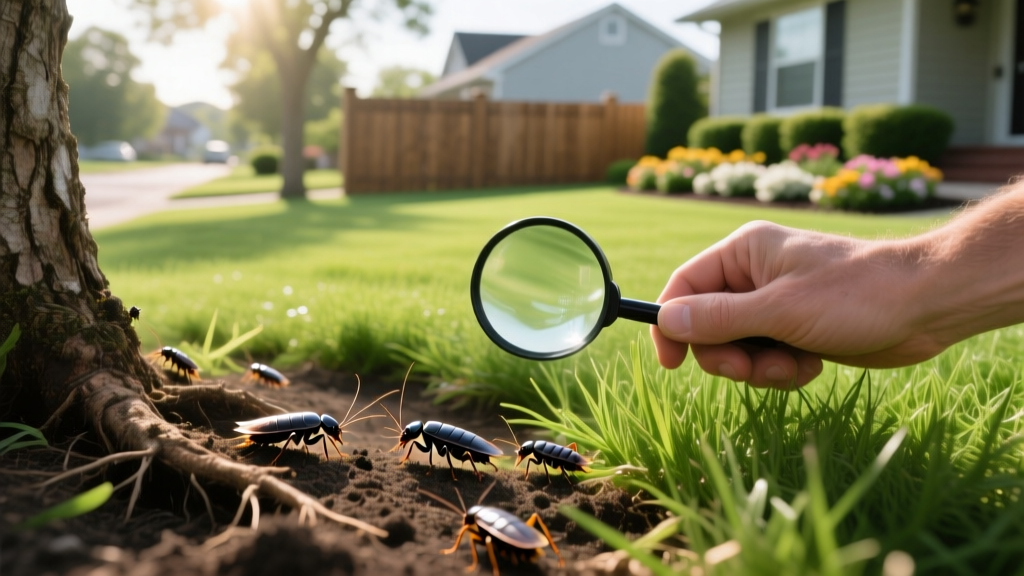
How to Deal With Roaches in Your Yard and Perimeter
Treating cockroaches exclusively indoors ignores the primary staging ground for infestations: your yard. Outdoor species like the American, Smokybrown, and Oriental cockroach thrive in mulch beds, sewer lines, and dense vegetation, eventually migrating inside through weep holes and cracked foundations. According to the Environmental Protection Agency (EPA), effective pest management requires an integrated approach that targets outdoor harborage before pests breach the building envelope. If you want to know how to deal with roaches permanently, you must secure your perimeter first.
Identify the Outdoor Invaders
Not all roaches behave the same way. Identifying the specific species in your yard dictates your treatment strategy, as their moisture requirements and harborage preferences vary significantly.
| Species | Size | Coloration | Primary Outdoor Harborage |
|---|---|---|---|
| American Cockroach | 1.5 - 2.0 inches | Reddish-brown with yellow prothorax margin | Sewer lines, palm trees, woodpiles, storm drains |
| Smokybrown Cockroach | 1.25 - 1.5 inches | Uniform dark mahogany/brown | Tree holes, roof shingles, dense ivy, gutters |
| Oriental Cockroach | 1.0 - 1.25 inches | Glossy black to dark brown | Damp soil, crawlspaces, leaf litter, water meter boxes |
The Perimeter Defense Strategy
Before applying any chemicals, you must alter the microclimate of your yard to make it inhospitable. Cockroaches require high humidity and shelter to survive. Modifying your landscaping removes these critical resources.
Vegetation and Mulch Management
Dense vegetation traps moisture against your foundation. Maintain an 18-inch clearance gap between shrubbery and the exterior walls of your home. For mulch beds, limit organic mulch (pine bark, cypress) to a maximum depth of 2 inches, and keep it at least 6 inches away from your siding.
Warning: Never pile mulch against wood siding or stucco weep screeds. This creates a hidden, damp highway directly into your wall voids.
If roaches are a persistent issue, replace the first 12 inches of mulch adjacent to your foundation with inorganic materials like crushed gravel, river rock, or rubber mulch, which do not retain moisture or provide food sources.
Moisture Correction
The Centers for Disease Control and Prevention (CDC) notes that eliminating water sources is a primary defense against pests. Grade soil away from the foundation to prevent pooling. Extend downspout diverters at least 4 feet away from the house, and repair leaking hose bibs and irrigation valves immediately. Oriental cockroaches, in particular, will die within a week without access to free water.
Chemical Frameworks for Yard Treatment
Over-the-counter aerosol sprays fail outdoors because UV radiation and rain rapidly degrade their active ingredients. Professional-grade perimeter defense relies on specialized formulations designed to withstand environmental stress.
Liquid Residual Barriers
For immediate population knockdown and long-lasting protection, use a microencapsulated liquid suspension. Products like Demand CS (lambda-cyhalothrin 9.7%) or Onslaught FastCap encase the active ingredient in microscopic polymer shells. This protects the chemical from UV degradation and prevents it from washing away in light rain, providing 60 to 90 days of residual control.
- Application Rate: Mix 0.4 to 0.8 fl oz per gallon of water.
- Target Zone: Apply a continuous band 3 feet up the foundation wall and 3 feet out into the soil/mulch.
- Cost: Approximately $45 to $60 for an 8 oz bottle, which yields up to 30 gallons of finished solution.
Granular Baits for Mulch Beds
Liquid sprays kill on contact but do not eliminate the colony. Granular baits exploit the roaches' foraging behavior and coprophagy (eating feces). Maxforce FC Roach Bait Granules (Fipronil 0.05%) or Advion Insect Granules (Indoxacarb 0.22%) are highly effective in outdoor harborage areas. Scatter the granules deep into mulch beds, leaf litter, and around tree bases at a rate of 2 to 4 ounces per 100 square feet. The delayed action of the active ingredient allows foraging roaches to return to their harborage and transfer the toxin to the rest of the population.
Dusts and Exclusion: Sealing the Envelope
Even with a treated perimeter, physical exclusion is non-negotiable. Roaches exploit microscopic gaps to enter homes.
Amorphous Silica Gel Dusts
Forget diatomaceous earth (DE) for outdoor use; it clumps and becomes useless when exposed to ambient humidity. Instead, use CimeXa Insecticide Dust (100% Amorphous Silica Gel). CimeXa destroys the insect's waxy cuticle via absorption rather than abrasion, meaning it remains highly effective even in damp environments. Apply it using a bellows hand duster into weep holes, behind siding, under deck boards, and around utility penetrations. A 10 oz bottle costs around $25 and lasts for years if kept dry inside wall voids.
Physical Exclusion Materials
Pack Stuf-Fit Copper Mesh into large gaps around plumbing lines, AC refrigerant lines, and foundation cracks. Copper does not rust and cannot be chewed through by rodents. Once packed, seal the opening with a high-quality polyurethane expanding foam or silicone caulk. Never use steel wool, which will rust, stain your foundation, and lose its structural integrity within months.
Seasonal Maintenance Calendar
Outdoor roach defense is not a one-time application. Follow this seasonal framework to maintain a hostile environment for pests year-round.
- Spring: Clear winter leaf litter and debris from gutters and yard edges. Apply granular bait to mulch beds as soil temperatures rise above 60°F and foraging activity begins.
- Summer: Monitor tree holes and dense ivy for Smokybrown cockroaches. Re-apply liquid residual barriers every 60 days, as high UV indices and heavy summer thunderstorms accelerate degradation.
- Fall: Rake and remove all fallen leaves from foundation beds. Seal foundation cracks and apply CimeXa dust to weep holes before dropping temperatures drive roaches indoors seeking warmth.
- Winter: Inspect firewood stacks. Keep firewood elevated on metal racks and stored at least 20 feet away from the house to prevent introducing wood-dwelling roaches and eggs into your living space.

