
Pest Control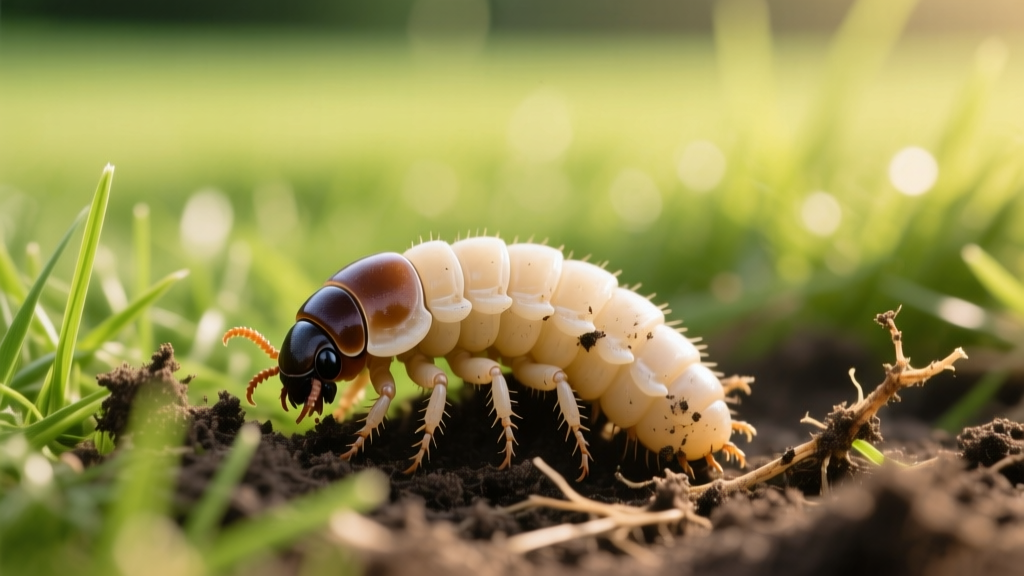
Decoding Images of Grubs: Identify and Treat Lawn-Damaging Larvae
The Limits of Generic Grub Identification
When homeowners search for images of grubs online, they are usually confronted with generic photos of fat, white, C-shaped larvae. While these pictures confirm the presence of a grub, they rarely provide the specific biological data required to save your turf. Treating all white grubs as a single, uniform pest is a costly mistake that leads to wasted chemicals, dead grass, and frustrated lawn care efforts.
As of 2026, turfgrass entomology emphasizes species-specific management. The three primary lawn-destroying grubs in North America—the Japanese beetle, the European chafer, and the June bug—have vastly different life cycles, feeding thresholds, and chemical susceptibilities. To effectively defend your yard, you must look past superficial similarities and learn to decode the microscopic anatomical features that separate these species.
The Raster Pattern: The True Fingerprint of a Grub
If you are comparing images of grubs to identify an infestation in your yard, you are likely looking at the wrong end of the insect. The definitive identifier for white grub species is the raster pattern—the specific arrangement of microscopic hairs, spines, and bare patches on the underside of the grub's abdomen, just above the tail end.
Pro Tip: How to View the Raster Pattern
To see the raster pattern, gently hold the grub with its head pointing away from you and its belly facing up. Use a 10x to 20x jeweler's loupe or a smartphone macro lens. Look specifically at the lower third of the abdomen. You are looking for the arrangement of tiny bristles, not just the overall color or size of the larva.
Comparing the Big Three Lawn Pests
Understanding the differences between the primary grub species dictates your entire treatment strategy. Below is a detailed comparison matrix based on current entomological data from Ohio State University Extension.
| Species | Raster Pattern | Mature Size | Primary Damage Window | Treatment Threshold |
|---|---|---|---|---|
| Japanese Beetle (Popillia japonica) |
V-shaped, two distinct rows of spines converging toward the center | Up to 1.25 inches | Late August to October | 7-10 per sq. ft. |
| European Chafer (Rhizotrogus majalis) |
Y-shaped, distinct zipper-like line running down the center of the abdomen | Up to 1 inch | September to November, and early Spring | 3-5 per sq. ft. |
| June Bug (May Beetle) (Phyllophaga spp.) |
Irregular, parallel rows of spines with no distinct geometric shape | Up to 1.5 inches | Multi-year cycle; peak damage in late summer | 5-7 per sq. ft. |
Why Misidentifying Grubs Costs You Money
The most common financial mistake in lawn pest defense is applying the wrong biological control to the wrong species. A prime example is the misuse of Milky Spore (Paenibacillus popilliae).
Milky Spore is a naturally occurring bacterium that is highly effective at controlling Japanese beetle grubs. However, it has zero efficacy against European chafers or June bugs. If your lawn is being decimated by European chafers (which have a much lower damage threshold and feed more aggressively on roots than Japanese beetles), spending $60 to $80 on a Milky Spore dispenser will yield absolutely no results. According to Rutgers University, European chafers are currently the most destructive grub species in the Northeast and Midwest, making accurate identification via the Y-shaped raster pattern a critical first step before purchasing any biological controls.
Step-by-Step: The 1-Square-Foot Soil Sampling Method
Do not guess your grub population based on brown patches alone; drought stress and fungal diseases mimic grub damage. Perform a physical soil count using this standardized methodology:
- Select the Test Zone: Choose an area where healthy green grass meets a brown, damaged patch. Grubs feed on the margins of dead zones, not in the completely dead center.
- Cut the Sod: Using a flat-edged spade, cut a precise 1-foot by 1-foot square into the turf, cutting exactly 3 inches deep.
- Peel and Inspect: Roll back the sod square like a carpet. Examine the exposed soil and the root mat attached to the underside of the grass.
- Count and Identify: Count every C-shaped larva in that exact square foot. Collect 2 or 3 specimens in a sealed container with damp soil for raster pattern identification.
- Calculate Density: If you find more than the species-specific threshold (e.g., 5 European chafers in one square foot), immediate or preventative treatment is mathematically justified.
Modern Defense Strategies: Biological vs. Synthetic
Once you have positively identified the species and confirmed the population exceeds the threshold, select your defense mechanism. The 2026 turf management consensus favors targeted, low-toxicity options where possible, reserving broad-spectrum synthetics for severe infestations.
Biological Controls (Curative & Preventative)
- Beneficial Nematodes (Heterorhabditis bacteriophora): These microscopic worms actively hunt and infect grubs. They are highly effective against all three major species. Cost & Application: Expect to pay roughly $45 to $60 for a package of 10 million nematodes, covering about 2,000 square feet. They must be applied in late summer (August/September) when grubs are small and near the surface, requiring heavy irrigation immediately after application to wash them into the soil.
- Milky Spore: Strictly for Japanese beetles. Applied via a grid pattern using a specialized dispenser. Takes 2 to 4 years to establish in the soil but provides long-term, self-sustaining control once active.
Synthetic Preventatives (The Gold Standard)
For high-value lawns or severe historical infestations, Chlorantraniliprole (commonly sold under the professional brand name Acelepryn or consumer brand Scotts GrubEX1) remains the industry standard.
Why it works: Unlike older chemicals (like imidacloprid) that have faced regulatory scrutiny and resistance issues, chlorantraniliprole targets the insect's muscle receptors, causing paralysis. It is highly toxic to grubs but has an exceptionally low toxicity profile for mammals, birds, and earthworms.
Timing Warning for Synthetics
Chlorantraniliprole is a slow-acting preventative. It must be applied in April or May so it can translocate into the root system before eggs hatch in July. Applying this chemical in August to kill actively feeding, large grubs will fail. For late-summer curative control, you must switch to a fast-acting synthetic like Trichlorfon (Dylox), which degrades rapidly in the soil and requires immediate watering.
Frequently Asked Questions
Can birds and skunks digging in my lawn confirm a grub infestation?
Yes, secondary predator damage is a strong indicator. Skunks, raccoons, and crows will tear up sod to eat grubs. However, they will also dig for earthworms and sod webworms. Always perform the 1-square-foot soil test to confirm the presence, species, and density of the grubs before treating.
Are all white C-shaped larvae in my garden beds harmful?
No. If you find large, white grubs in your compost pile or deep mulch beds, they are likely the larvae of the Green June Beetle or Stag Beetles. These detritivores feed on decaying organic matter, not living turf roots. They are beneficial to soil health and should not be treated with pesticides.
Does watering my lawn less in the summer prevent grub damage?
Allowing your lawn to go dormant during July and August can actually mask grub damage, but it does not kill the grubs. In fact, drought-stressed turf has a lower threshold for grub feeding; it takes fewer grubs to destroy dry grass than well-hydrated grass. Maintain a baseline of 0.5 inches of water per week during peak grub season to keep roots resilient.
Accurate pest defense begins with moving beyond generic pictures. By mastering the raster pattern, conducting precise soil sampling, and selecting species-specific treatments, you can protect your turf investment and maintain a dense, healthy root system year after year. For more localized data on grub emergence timelines, consult your local university extension office, such as the University of Minnesota Extension.

