
Pest Control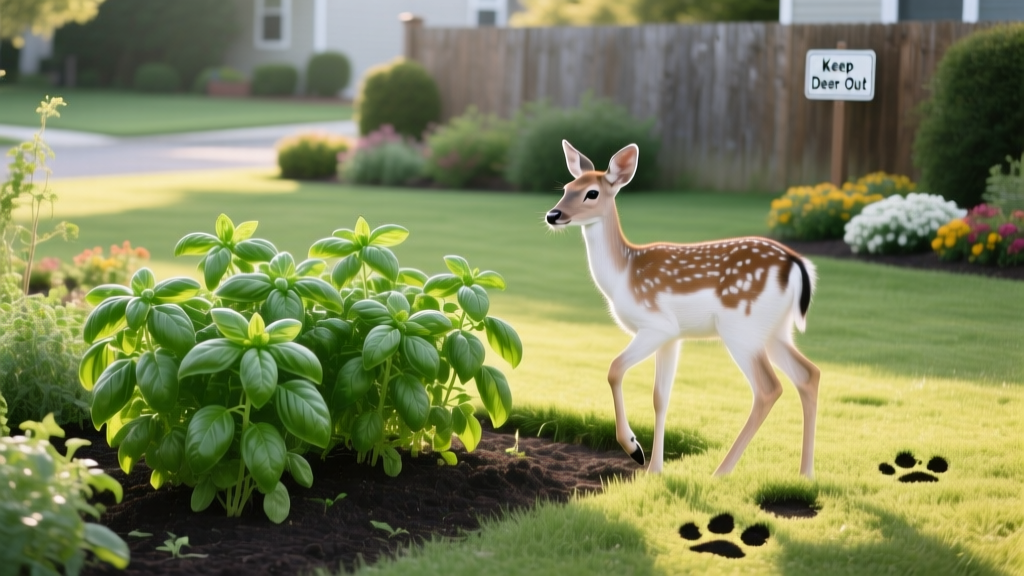
Do Deer Like Basil? Science, Exceptions, and Garden Protection
The Short Answer: Deer Rarely Eat Basil
When homeowners ask, 'do deer like basil?', the horticultural consensus is a definitive no. White-tailed deer (Odocoileus virginianus) possess an acute sense of smell, utilizing roughly 297 million olfactory receptors to evaluate forage before taking a bite. Sweet basil (Ocimum basilicum) produces high concentrations of volatile organic compounds (VOCs) that actively repel them. In agricultural and landscaping matrices, basil is classified as 'rarely severely damaged' or deer-resistant. However, understanding the biochemical mechanics of this resistance—and the rare environmental exceptions where deer will ignore it—is critical for maintaining a thriving herb garden.
Warning: The 'Deer-Proof' Myth
No plant is 100% deer-proof. According to the Penn State Extension, a starving deer will sample almost any vegetation. 'Deer-resistant' simply means the plant is unpalatable under normal foraging conditions.
No plant is 100% deer-proof. According to the Penn State Extension, a starving deer will sample almost any vegetation. 'Deer-resistant' simply means the plant is unpalatable under normal foraging conditions.
The Biochemical Shield: Why Basil Repels Deer
Basil's defense mechanism is entirely chemical. The plant's trichomes (tiny hair-like structures on the leaves and stems) store essential oils that emit a pungent aroma. When a deer approaches, these oils overwhelm their vomeronasal organ, signaling that the plant is toxic or nutritionally void. The three primary compounds responsible for this deterrence include:
- Eugenol: The same compound found in cloves, providing a sharp, spicy aroma that irritates the deer's nasal passages.
- Linalool: A floral, woodsy terpene that acts as a natural insect and herbivore deterrent.
- Methyl Chavicol (Estragole): Responsible for the anise/licorice scent in certain basil varieties, which is highly unpalatable to ruminants.
Because deer rely heavily on scent to identify high-calorie, low-toxin forage, the overwhelming aromatic profile of basil causes them to bypass it in favor of more neutral-smelling plants like hostas, daylilies, or young vegetable greens.
Deer Resistance Matrix: Common Culinary Herbs
Not all herbs share basil's level of protection. Below is a comparison of how common garden herbs fare against deer browsing, based on regional extension data.
| Herb Species | Resistance Level | Primary Deterrent Compound |
|---|---|---|
| Basil (Ocimum basilicum) | Rarely Damaged | Eugenol, Linalool |
| Rosemary (Salvia rosmarinus) | Rarely Damaged | Camphor, Pinene |
| Mint (Mentha spp.) | Rarely Damaged | Menthol |
| Cilantro (Coriandrum sativum) | Occasionally Damaged | Linalool (lower concentration) |
| Parsley (Petroselinum crispum) | Frequently Damaged | None (Highly palatable) |
The Exceptions: When Will Deer Eat Basil?
While mature basil is largely safe, specific environmental and biological factors can strip away its natural protections. The University of Maryland Extension notes that deer browsing behavior shifts drastically based on caloric desperation and plant maturity.
1. The Seedling Vulnerability Window
During the first 14 to 21 days of growth, basil seedlings have not yet developed dense trichomes or synthesized high concentrations of essential oils. At this stage, the leaves are tender, moisture-rich, and lack the pungent eugenol profile of mature plants. Deer will readily nip the tops off unprotected seedlings, mistaking them for generic, palatable broadleaf weeds.
2. The Late-Winter Starvation Window
Between late February and early April, natural forage is scarce, and deer are experiencing severe caloric deficits. During this 'starvation window,' deer will sample plants they normally avoid, including basil, simply to maintain rumen function and stave off starvation.
3. Severe Drought Conditions
Deer obtain up to 30% of their daily water intake from vegetation. During prolonged summer droughts, deer will target the succulent, moisture-dense leaves of garden plants. If basil is heavily irrigated while surrounding wild flora is desiccated, deer may tolerate the strong scent to access the water content within the leaves.
Proactive Protection Strategies for Basil
If you live in an area with high deer population density (over 30 deer per square mile), relying solely on basil's natural scent is insufficient. Implement these targeted protection strategies based on the plant's growth stage.
Stage 1: Physical Seedling Barriers
Because seedlings lack chemical defenses, physical exclusion is mandatory. Use 1/2-inch galvanized hardware cloth to create cloches over newly transplanted basil. Alternatively, use floating row covers (such as Agribon AG-19) anchored with soil staples. Keep the covers in place until the plants reach 8 inches in height and emit a strong, visible aromatic oil residue on your fingers when touched.
Stage 2: Chemical Repellents
For perimeter protection, apply putrescent whole egg solid repellents. Products like Liquid Fence Deer & Rabbit Repellent (typically priced around $28 to $32 per gallon concentrate) mimic the scent of decaying protein, triggering a predator avoidance response in deer.
- Application Rate: 1 gallon of diluted spray per 1,000 square feet of foliage.
- Frequency: Apply every 14 days during active growth, and immediately after 1.5 inches of cumulative rainfall.
- Caution: Do not spray putrescent egg solids directly on basil leaves intended for immediate culinary harvest, as the odor can taint the flavor profile. Spray the surrounding soil and non-edible border plants instead.
Stage 3: The 'Aromatic Moat' Companion Planting
Use basil as a biological fence. Plant a dense, 18-inch-wide perimeter of Genovese or Thai basil around highly vulnerable crops like tomatoes, peppers, or ornamental hostas. The concentrated wall of eugenol and linalool masks the scent of the inner crops, confusing the deer's foraging radar. Interplanting with rosemary and lavender amplifies this effect, creating a multi-terpene barrier that is highly effective in suburban environments.
Recovery: Pruning Deer-Nibbled Basil
If a deer does take a bite out of your basil, the plant is rarely doomed. Basil is a vigorous grower that responds well to aggressive pruning. Snip the damaged stem 1/4 inch above the next lowest set of healthy leaf nodes. Apply a diluted liquid kelp fertilizer (such as Neptune's Harvest, approx. $22/gallon) to the soil to stimulate lateral branching. Within 10 to 14 days, the plant will produce two new stems from the cut node, resulting in a bushier, higher-yielding plant that now possesses a stronger, more mature aromatic profile.

