
Pest Control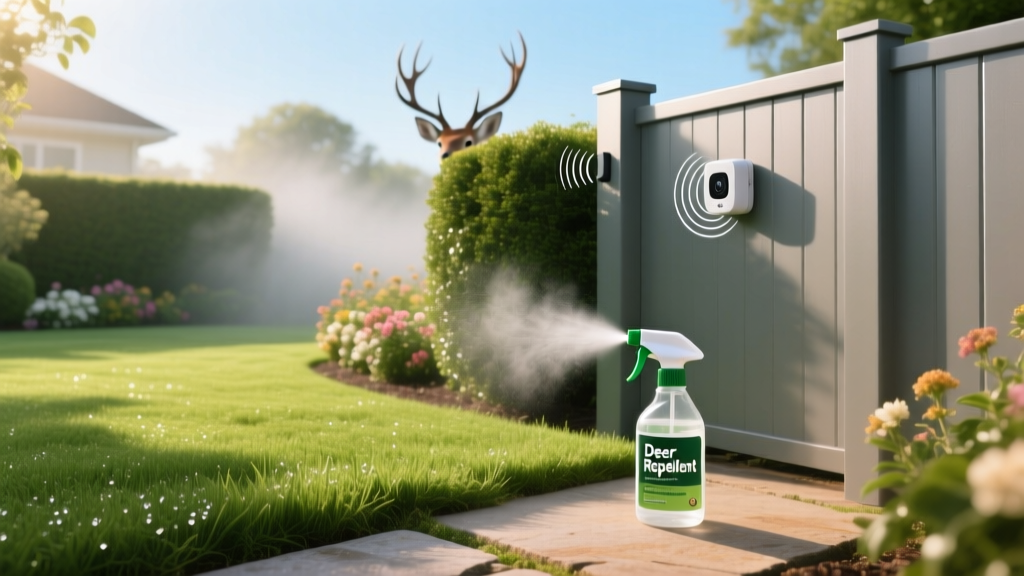
Top Deer Deterrent for Garden Protection: Fencing, Sprays, and Tech
Whitetail deer consume between 6 and 10 pounds of forage daily, and a single browsing herd can decimate a meticulously landscaped garden in a single night. When selecting a deer deterrent for garden protection, homeowners often cycle through ineffective gimmicks before investing in proven exclusion methods. Effective deterrence requires understanding deer biomechanics, sensory perception, and seasonal dietary shifts. This guide breaks down the exact specifications, material costs, and active ingredients required to protect your landscape in 2026.
The Physics of Deer Exclusion: Fencing Specifications
Physical barriers remain the only 100% effective deer deterrent for garden perimeters. Whitetail deer possess incredible leaping ability but suffer from poor parallax vision, meaning they struggle to judge depth and height simultaneously. They can clear an 8-foot vertical obstacle, but they will not attempt a jump if they cannot clearly see the landing zone or if the barrier appears too wide.
Material Comparison and Installation Metrics
| Fencing Type | Required Height | 2026 Avg. Cost (Per Linear Ft.) | Lifespan | Best Use Case |
|---|---|---|---|---|
| Woven Wire (Galvanized) | 8 feet (vertical) | $3.50 - $5.00 | 20+ years | Permanent perimeter security |
| Polypropylene Mesh | 8 feet (vertical) | $0.75 - $1.50 | 5 - 8 years | Large woodland property lines |
| Electric Slanted Fence | 4 feet (slanted at 45°) | $2.00 - $3.00 | 10 - 15 years | Orchards and wide garden rows |
| Metal Deer Grid (No-Climb) | 6 feet (with top extender) | $4.50 - $6.50 | 25+ years | High-end residential aesthetics |
Installation Pro-Tip: If using polypropylene mesh, deer will often push their heads through the gaps to test the barrier before attempting to push through or jump. To prevent this, weave a high-visibility paracord or aluminum wire through the mesh at the 4-foot and 6-foot marks. This creates a visual cue that stops them from blindly walking into the fence and tearing it down.
Chemical Repellents: Contact vs. Area Treatments
When fencing is not feasible due to HOA restrictions or budget constraints, chemical repellents serve as a secondary deer deterrent for garden beds. Repellents function via two primary mechanisms: fear-inducing odors (area repellents) and taste-aversion compounds (contact repellents).
Putrescent Egg Solids vs. Capsaicin
The most heavily researched area repellent relies on putrescent whole egg solids. Products like Liquid Fence and Deer Off utilize a 20.8% concentration of putrescent egg, which mimics the scent of predator decay. When applied to the perimeter of a garden, it triggers a flight response. Conversely, contact repellents rely on capsaicin (the active heat compound in chili peppers) or thiram (a fungicide with a bitter taste profile).
- Putrescent Egg (Area): Apply every 30 days during the growing season. Rainfast after 6 hours of drying. Cost: ~$25 per gallon concentrate.
- Capsaicin (Contact): Must be applied directly to the foliage. Highly effective on young shoots but requires reapplication immediately after any rainfall exceeding 0.5 inches. Cost: ~$18 per quart ready-to-use.
- Blood Meal (Area/Contact): A dual-action organic option (12-0-0 NPK). Sprinkle a 2-inch wide band around the garden perimeter. Reapply every 14 days. Cost: ~$15 per 5 lbs.
Warning on Winter Application: Never apply liquid capsaicin or egg-based sprays when temperatures are below 40°F (4°C). The liquid can freeze inside the plant's stomata, causing cellular rupture and severe frost damage to your ornamentals.
Motion-Activated Technology: The PIR Sprinkler Advantage
Ultrasonic noise emitters have been widely debunked by wildlife biologists; deer quickly habituate to high-frequency sounds that lack a physical threat. However, motion-activated water sprinklers leverage a deer's instinctual fear of sudden movement and tactile shock.
The industry standard is the Orbit 62100 Yard Enforcer. It utilizes a Passive Infrared (PIR) sensor to detect the heat signature of a warm-bodied mammal.
Orbit Yard Enforcer Technical Specifications
- Detection Range: Up to 35 feet with a 120-degree arc.
- Response Time: Fires a 5-second burst of water within 0.5 seconds of heat detection.
- Power Source: 4 AA alkaline batteries (lasts approximately 3,000 activation cycles).
- Water Usage: Uses only 2 to 3 cups of water per activation, preventing garden soil saturation.
- Current Retail Price: $65 - $80.
For maximum effectiveness, position the PIR sensor at a height of 24 to 30 inches off the ground, angling it slightly downward to catch the deer's chest and legs as they approach the garden bed. Move the unit every two weeks to prevent deer from learning the sensor's blind spots.
Passive Deterrence: Botanical Selection Frameworks
No plant is entirely deer-proof; a starving deer in late February will eat almost anything. However, selecting plants with high concentrations of alkaloids, fuzzy foliage, or strong volatile oils creates a passive deer deterrent for garden landscapes. According to research published by the Rutgers New Jersey Agricultural Experiment Station, plants rated 'A' (Rarely Damaged) should form the outer perimeter of your garden.
Highly Resistant Perimeter Plants (Rutgers Rating 'A')
- Boxwood (Buxus sempervirens): Contains toxic steroidal alkaloids.
- Bleeding Heart (Dicentra spectabilis): Isoquinoline alkaloids cause immediate gastrointestinal distress in ruminants.
- Catmint (Nepeta cataria): High nepetalactone content masks the scent of more palatable nearby plants.
- Lamb's Ear (Stachys byzantina): Dense, silvery trichomes (leaf hairs) make chewing physically uncomfortable.
Real-World Cost Analysis for a 50x50 Foot Garden
To provide actionable budgeting data, here is a cost-benefit matrix for protecting a 2,500 square foot garden (200 linear feet of perimeter) using different deterrence strategies in 2026.
| Deterrent Strategy | Initial Setup Cost | Annual Maintenance | Effectiveness Rating |
|---|---|---|---|
| 8ft Polypropylene Fence | $300 (mesh + zip ties) | $50 (replacement stakes) | 95% |
| Putrescent Egg Spray Regimen | $45 (concentrate + sprayer) | $120 (monthly concentrate) | 75% (drops in winter) |
| 2x Motion-Activated Sprinklers | $150 (units + hose splitters) | $20 (batteries + winterization) | 85% (requires repositioning) |
| Slanted Electric Wire (3-strand) | $450 (charger + wire + posts) | $15 (electricity + weed clearing) | 98% |
Frequently Asked Questions
Do deer repellent granules work better than liquid sprays?
Granular repellents (typically blood meal or garlic oil infused into clay pellets) are superior for ground-level protection against browsing on low-growing crops like hostas and lettuce. However, they degrade rapidly in heavy rain. Liquid sprays adhere directly to the leaf cuticle and offer better protection for shrubs and vertical growth.
Can I use a standard farm fence to keep deer out?
Standard 4-foot or 5-foot woven wire farm fences will not stop deer. As noted by Cornell University's NYSIPM program, deer easily clear 5-foot barriers without a running start. You must either extend a standard fence to 8 feet using angled top poles and netting, or install a specialized slanted outrigger fence.
Why do deer eat my plants in the winter even when I use repellents?
Winter browsing is driven by caloric desperation. When natural forage is buried under snow, deer lose their aversion to bitter-tasting or foul-smelling plants. During winter months, physical exclusion (fencing) or trunk wrapping with hardware cloth is the only reliable deterrent.

