
Pest Control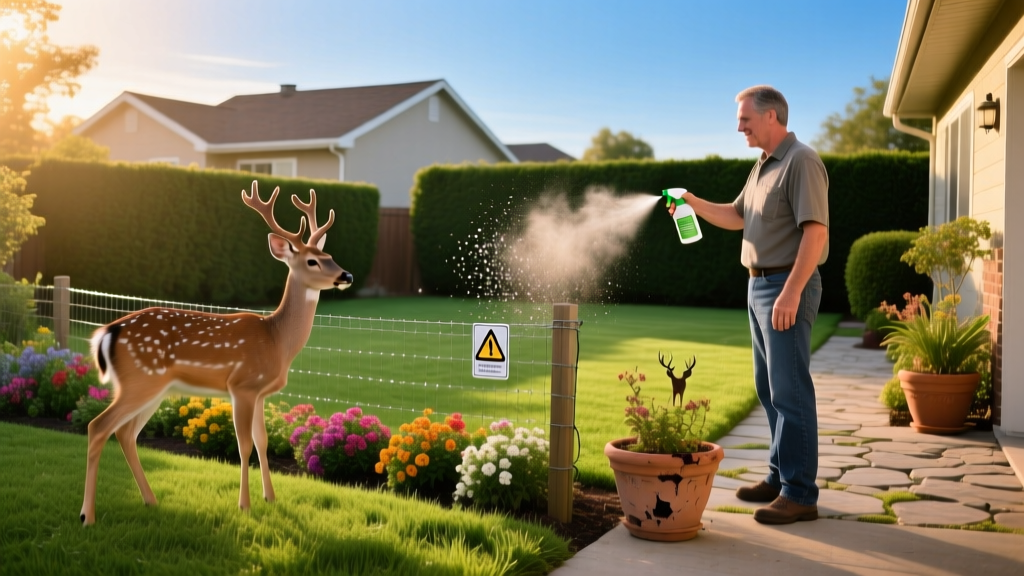
How to Keep Deer Away From Plants: Repellents vs Fencing
White-tailed deer consume between 6 and 10 pounds of browse daily, shifting their dietary preferences based on seasonal availability and local herd pressure. A single doe can strip a $500 landscaping investment of its new spring growth in a single night. Understanding how to keep deer away from plants requires moving beyond anecdotal home remedies and deploying strategies rooted in cervid biology, physical exclusion metrics, and chemical olfactory disruption.
The Biology of Deer Browsing and Olfactory Mapping
Deer possess approximately 297 million olfactory receptors, compared to the 5 million found in humans. This hyper-developed sense of smell dictates their foraging behavior. Before taking a bite, a deer will sniff the foliage to assess toxicity, nutritional value, and the presence of predators or unnatural compounds. Effective deterrence relies on either physically blocking access to the browse or introducing volatile organic compounds (VOCs) that trigger a flight response or mimic the scent of decay and predator markers.
According to Cornell University Wildlife Damage Management, deer habituate rapidly to static visual and auditory deterrents. Scarecrows, motion-activated sprinklers, and ultrasonic emitters may work for 48 to 72 hours, but once the herd realizes the stimulus poses no physical threat, they will resume browsing. Long-term management requires physical exclusion or rotating chemical repellents.
Physical Barriers: The Only 100% Guarantee
When herd pressure is high—defined as regular daytime sightings or severe winter browse damage—physical fencing is the only permanent solution. The critical metric for deer fencing is height and perception of depth. Deer are exceptional jumpers (capable of clearing 8 feet vertically) but lack the visual acuity to judge depth accurately when looking upward.
Fencing Material Comparison Matrix
| Material Type | Required Height | Cost per Linear Foot (2026) | Lifespan | Best Application |
|---|---|---|---|---|
| Woven Wire (12.5 ga, 2x4 mesh) | 8 feet | $2.50 - $3.50 | 20-30 years | Permanent perimeter, high wind areas |
| UV-Stabilized Polypropylene | 7.5 - 8 feet | $0.85 - $1.20 | 7-10 years | Wooded perimeters, DIY installations |
| High-Tensile Electric (5-wire) | 4 feet (spaced) | $1.10 - $1.50 | 15+ years | Agricultural borders, large acreage |
| Slant Fence (Woven/Poly) | 4-5 feet (45° angle) | $1.80 - $2.50 | Varies | Small garden enclosures, aesthetic zones |
The Slant Fence Technique
For smaller garden enclosures where an 8-foot vertical fence is visually oppressive or violates HOA regulations, the slant fence is highly effective. By angling a 4-to-5-foot fence outward away from the garden at a 45-degree angle, you exploit the deer's inability to jump both high and wide simultaneously. The deer perceives the barrier as wider than it is, and the angled top prevents them from getting the leverage needed to clear it.
Chemical and Scent Repellents: Disrupting the Olfactory Map
When fencing is impractical, chemical repellents offer the next best defense. Repellents are categorized into two modes of action: contact (taste) and area (odor). For maximum efficacy, modern landscape management relies heavily on contact repellents formulated with putrescent whole egg solids or capsaicin.
Temperature Restrictions for Application: Never apply liquid repellents when temperatures are below 40°F (the emulsion will fail to bind to the leaf cuticle) or above 85°F (risk of severe phytotoxicity and leaf burn). Apply during early morning or late evening hours.
Top Active Ingredients and Product Efficacy
- Putrescent Whole Egg Solids (e.g., Liquid Fence, Deer Out): Priced between $25 and $35 per gallon. These mimic the scent of decaying protein, signaling to the deer that the plant is diseased or that a predator is nearby. They must be applied to the point of runoff on new growth and reapplied every 3 to 4 weeks, or immediately after 1 inch of rainfall.
- Capsaicin and Hot Pepper Wax (e.g., Deer Off, Bonide Go Away): Priced around $20 to $30 per gallon. These rely on taste and trigeminal nerve irritation. They are highly effective for edible gardens where egg-based odors are undesirable, but they require strict adherence to pre-harvest intervals (PHI) on vegetables.
- Blood Meal and Garlic (Area Repellents): Best used as a perimeter buffer. Hung in mesh bags or broadcast as a dry powder, these create an odor zone. However, they degrade rapidly in UV light and wash away in heavy rain.
Research from Penn State Extension indicates that rotating the active ingredient of your repellent every 60 to 90 days prevents herd habituation. If you use an egg-based spray in May and June, switch to a capsaicin-based formula in July and August.
Strategic Plant Placement and Buffer Zones
No plant is entirely deer-proof if the animal is starving, but many are highly resistant due to toxicity, fuzzy foliage, or strong essential oils. Integrating these into your landscape design creates a natural buffer zone.
The Rutgers University Cooperative Extension maintains a definitive database rating landscape plants from A (Rarely Damaged) to D (Frequently Severely Damaged). When designing a garden in high-pressure zones, anchor your beds with 'A' rated species:
- Narcissus (Daffodils): Contain lycorine, a toxic alkaloid that causes immediate gastrointestinal distress if ingested.
- Paeonia (Peony): Possess a tough, waxy leaf cuticle and mild toxicity that deer actively avoid.
- Lavandula (Lavender) & Salvia: High concentrations of volatile essential oils overwhelm the deer's olfactory receptors, masking the scent of more palatable plants nearby.
- Dicentra (Bleeding Heart): Contains isoquinoline alkaloids; highly shade-tolerant and consistently ignored by foraging herds.
Pro-Tip for Hosta and Daylily Addicts: If you must grow 'D' rated plants like Hostas or Hemerocallis, interplant them densely with Allium (ornamental onions) and treat them with a systemic imidacloprid soil drench in early spring. While imidacloprid targets insects, the physical interplanting of strong-smelling Allium disrupts the deer's ability to locate the hostas by scent.
Decision Framework: Matching Deterrence to Property Size
Selecting the right strategy depends on your acreage, budget, and the severity of local herd pressure. Use this framework to determine your primary defense line:
- Under 1/4 Acre (Urban/Suburban Lots): Rely on aggressive chemical repellent rotation (putrescent egg + capsaicin) applied every 21 days during the spring flush. Supplement with motion-activated sprinklers (e.g., Orbit 62100 Yard Enforcer) set to activate only between 8 PM and 5 AM to conserve water and battery.
- 1/4 to 1 Acre (Suburban Estates): Install a 7.5-foot UV-stabilized polypropylene fence around the primary garden zones. Use black metal posts to ensure the fence blends into the tree line, exploiting the deer's poor depth perception. Treat unfenced perimeter plants with area repellents.
- Over 2 Acres (Rural/Agricultural): Full perimeter fencing is cost-prohibitive. Deploy a 5-wire high-tensile electric fence baited with peanut butter on the outer wire to deliver a psychological shock to the herd's nose and tongue. Protect high-value ornamental islands near the home with localized 5-foot slant fences.
Managing deer damage is an ongoing arms race. By combining physical exclusion where budget permits, rotating chemical active ingredients to prevent habituation, and anchoring your landscape with botanically resistant species, you can maintain a thriving garden despite heavy local browsing pressure.

