
Pest Control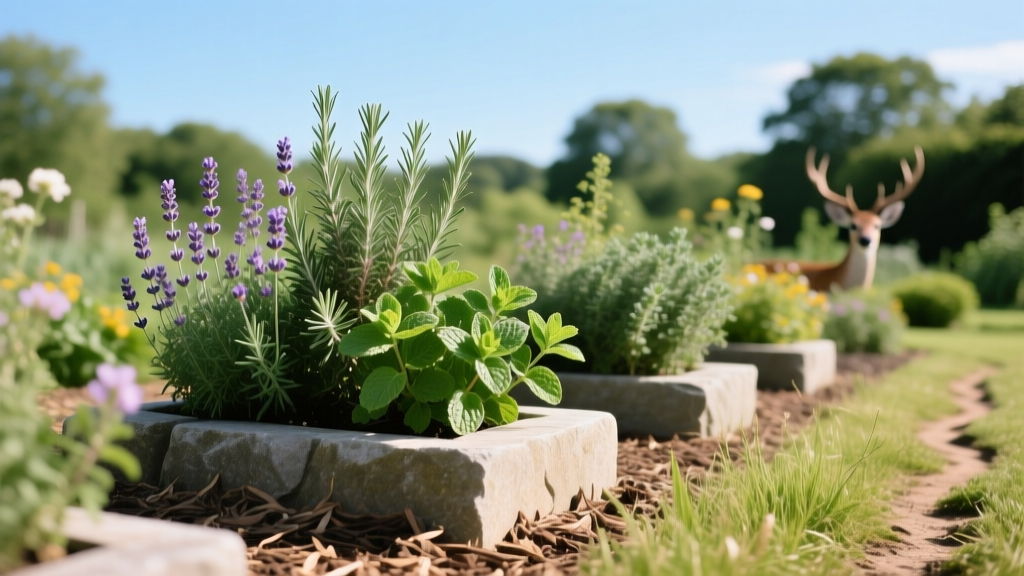
Best Deer Proof Herbs for Natural Garden Pest Deterrence
White-tailed deer cause over $1.5 billion in agricultural and residential landscaping damage annually. For homeowners, the cost of replacing destroyed hostas, daylilies, and young fruit trees can easily exceed $2,000 per season. While physical fencing and chemical repellents offer temporary fixes, integrating deer proof herbs into your landscape design provides a sustainable, low-maintenance biological barrier that disrupts mammalian foraging patterns without harming local ecosystems.
The Olfactory Science of Botanical Deterrence
Deer possess approximately 297 million olfactory receptors—nearly 50 times more than humans. They rely heavily on scent to locate tender, high-moisture foliage. Deer proof herbs do not necessarily taste toxic; instead, they weaponize volatile organic compounds (VOCs) like camphor, alpha-pinene, and linalool. These essential oils overwhelm the deer's olfactory sensors, effectively masking the scent of desirable plants nearby and causing mild nasal irritation that triggers avoidance behavior.
According to the Rutgers Cooperative Extension, plant resistance is categorized on a scale from A (Rarely Damaged) to D (Severely Damaged). The most effective herbs for perimeter defense consistently score in the 'A' or 'B' categories due to their high terpene concentrations and, in some cases, abrasive leaf textures.
Top 6 Deer Proof Herbs for Perimeter Defense
Selecting the right cultivar is critical. Standard species may lack the essential oil concentration required for heavy browsing pressure. Use this matrix to select herbs based on your USDA Hardiness Zone and soil profile.
| Herb Species | Recommended Cultivar | USDA Zones | Rutgers Rating | Optimal Soil pH | Spacing (On-Center) |
|---|---|---|---|---|---|
| Rosemary | 'Tuscan Blue' or 'Majorca Pink' | 7-10 | A | 6.5 - 7.5 | 24 - 36 inches |
| Lavender | 'Hidcote' or 'Munstead' | 5-9 | A | 6.5 - 8.0 | 18 - 24 inches |
| Common Sage | 'Berggarten' (Fuzzy texture) | 4-10 | A | 6.0 - 7.0 | 18 - 24 inches |
| Thyme | 'Silver Edge' or Creeping Thyme | 4-9 | B | 6.0 - 8.0 | 6 - 12 inches |
| Oregano | Origanum vulgare (Greek) | 4-9 | B | 6.5 - 7.5 | 12 - 18 inches |
| Mint | Mentha piperita (Peppermint) | 3-11 | A | 6.0 - 7.0 | Container Only |
1. Rosemary (Rosmarinus officinalis)
For zones 7 and above, 'Tuscan Blue' is the premier choice. It grows up to 6 feet tall, creating a dense, woody visual and olfactory screen. Rosemary requires exceptional drainage; plant in raised beds amended with 30% pumice or crushed granite. In colder zones (5-6), substitute with Artemisia (Wormwood), which offers similar silvery foliage and intense camphor scents.
2. Lavender (Lavandula angustifolia)
English lavender cultivars like 'Hidcote' are significantly more cold-hardy and deer-resistant than French or Spanish varieties. The high linalool content is highly offensive to deer and rabbits. Pro Tip: Plant lavender on 12-inch soil berms to prevent root rot, which is the primary cause of lavender failure in residential landscapes.
3. Common Sage (Salvia officinalis)
While deer avoid the scent of sage, they also detest the texture. The 'Berggarten' cultivar features unusually broad, heavily pubescent (fuzzy) leaves. This trichome coverage creates a physical sensation on the deer's tongue that mimics mold or disease, triggering an immediate rejection reflex.
⚠️ The Winter Starvation Caveat
No plant is 100% deer-proof under extreme biological stress. During late winter (February and early March), when native forage is buried under snow or depleted, a starving deer will consume toxic yew, thorny barberry, and highly pungent rosemary. Botanical deterrence must be paired with physical barriers or synthetic repellents (like putrescent egg solids) during these high-stress months. The USDA APHIS Wildlife Services recommends rotating chemical repellents every 4 weeks during winter to prevent habituation.
Strategic Planting Frameworks for Maximum Deterrence
Simply dotting a few herbs around the yard will not stop a determined herd. You must deploy these plants using specific spatial frameworks to manipulate deer movement and mask target plants.
Framework 1: The 3-Foot Perimeter Band
Deer prefer to step into a garden, browse the edge, and retreat quickly. Create a continuous 3-foot-wide band of dense, woody herbs (Rosemary and Lavender) along the primary entry points of your property. Plant them in a staggered double row, 18 inches apart. This forces deer to push through a dense, highly aromatic thicket, which they instinctively avoid due to the risk of eye injury and olfactory overload.
Framework 2: The 1:3 Intercropping Matrix
If you are growing highly vulnerable plants like hostas, tulips, or daylilies, use the 1:3 intercropping ratio. For every one vulnerable plant, surround it with three pungent herbs. For example, plant a single hosta in the center, and plant three 'Silver Edge' thyme or peppermint divisions in a tight triangle around it (8 inches away from the hosta crown). The VOCs emitted by the surrounding herbs create a localized "scent dome" that hides the hosta from passing deer.
- Warning on Mint: Never plant Mentha species directly into garden beds. Mint spreads via aggressive underground rhizomes and will choke out your ornamental plants. Plant mint in 15-gallon nursery pots, sink the pots into the soil up to the rim, and surround the rim with a copper tape barrier to prevent rhizome escape.
Maintenance: Activating Essential Oil Release
Deer proof herbs only deter pests if their essential oils are actively volatilizing into the air. A dormant, unpruned rosemary bush releases minimal scent. To maximize deterrence during peak browsing seasons (spring emergence and autumn fattening), you must mechanically bruise the foliage.
- Weekly Shearing: Use bypass hand pruners to lightly nick or shear 5% to 10% of the herb's foliage every 7 days. This physical damage forces the plant to release alpha-pinene and camphene as a stress response.
- Evening Activation: Perform your pruning in the early evening. VOC evaporation rates are highest when temperatures begin to drop and humidity rises, carrying the scent closer to the ground where deer forage.
- Fertilization Restraint: Do not over-fertilize deer proof herbs with high-nitrogen synthetic fertilizers. Excess nitrogen increases water content in the leaves, diluting the essential oil concentration and making the plant more palatable to mammals. Stick to low-nitrogen, slow-release organic fertilizers applied only once in early spring.
When Herbs Fail: Layering Physical Deterrents
Botanical deterrence is highly effective for moderate deer pressure (suburban edges, small herds). However, if your property borders deep woods or established deer migration corridors, herbs must serve as the first layer in a multi-tiered defense system. Combine your herb perimeter with 8-foot poly-tape fencing or motion-activated ultrasonic emitters. The herbs mask the scent of your prized ornamentals, while the physical or auditory barriers address the deer's instinctual fear of entrapment and sudden stimuli.

