
Pest Control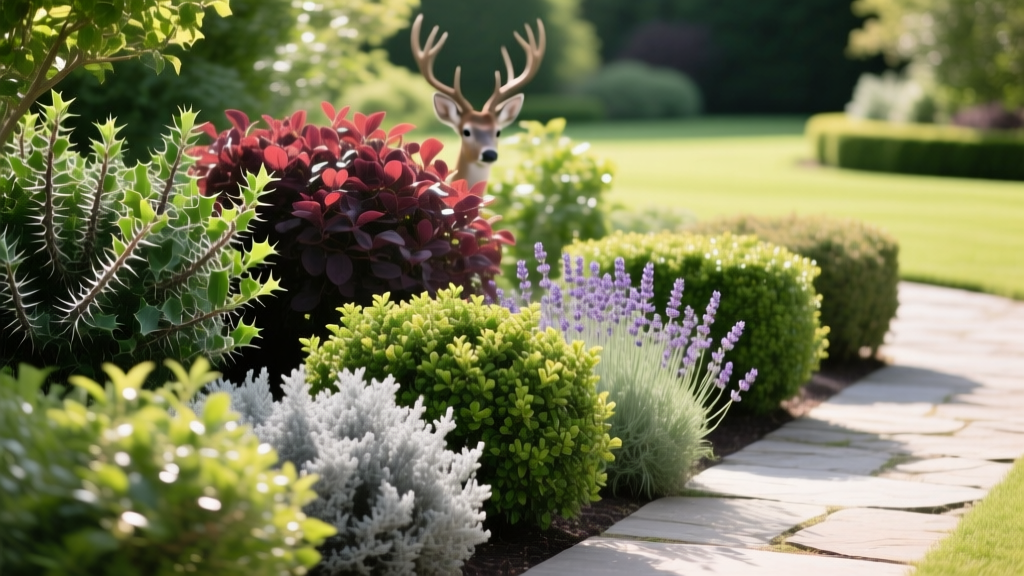
Top Deer Resistant Shrubs for Perimeter Defense and Mammal Deterrence
The Science of Mammal Deterrence: Why Specific Shrubs Work
White-tailed deer cause over $2 billion in landscape and agricultural damage annually in the United States. While many homeowners rely on temporary chemical sprays, integrating deer resistant shrubs into your perimeter landscaping provides a permanent, passive defense system. To design an effective mammal deterrence strategy, you must understand how deer select forage.
Deer possess approximately 297 million olfactory receptors—nearly as many as bloodhounds and 50 times more than humans. They use this acute sense of smell to detect volatile organic compounds (VOCs) like terpenes and alkaloids from hundreds of yards away. Furthermore, their saliva interacts with plant tannins, creating an astringent, bitter feedback loop that triggers immediate rejection. According to Rutgers University's extensive deer-resistant plant database, shrubs that combine high alkaloid concentrations, tough waxy cuticles, and strong aromatic oils consistently achieve the highest 'Rarely Damaged' ratings.
Tier 1: The Heavy Hitters (Toxic & Aromatic Shrub Defense)
For the outermost boundary of your property, you need shrubs that are biologically unpalatable or mildly toxic to mammals. These plants form the primary shield against heavy browsing pressure.
⚠️ Pet & Livestock Warning: Many highly deer-resistant shrubs contain compounds toxic to dogs, cats, and horses. If your property borders open pasture or you have free-roaming pets, cross-reference your plant choices with the ASPCA toxic plant list before installation.
1. Japanese Plum Yew (Cephalotaxus harringtonia)
Unlike true yews (Taxus), which are heavily browsed in winter, the Japanese Plum Yew contains harringtonine, an alkaloid that deters almost all mammalian herbivores. It thrives in USDA Zones 6-9, tolerates deep shade, and features needle-like foliage that physically irritates the deer's muzzle. Expect to pay $60 to $110 for a mature 5-gallon specimen.
2. Mountain Laurel (Kalmia latifolia)
Native to the Appalachian region (Zones 4-9), Mountain Laurel produces stunning spring blooms but harbors grayanotoxins in its leaves and twigs. Ingestion causes severe gastrointestinal and neurological distress in mammals. Its thick, leathery, waxy cuticle also makes it difficult for deer to tear and chew. Nursery pricing averages $50 to $90 for a 3-gallon container.
3. Boxwood (Buxus sempervirens)
The classic hedging shrub contains buxine and other steroidal alkaloids that emit a distinct, feline-like odor when crushed or exposed to high summer heat. This scent is highly aversive to deer. For perimeter defense, select the 'Green Giant' or 'Winter Gem' cultivars for rapid growth and dense branching.
Tier 2: Tactile & Olfactory Barriers (Physical Deterrents)
When toxicity is a concern, or when you need to fill the transition zones between your outer boundary and your inner garden, rely on physical and olfactory barriers. These deer resistant shrubs use thorns, bristles, or overpowering scents to disrupt the feeding cycle.
| Shrub Species | Active Deterrent Mechanism | USDA Zones | Mature Height | Avg. Cost (3-Gal) |
|---|---|---|---|---|
| Barberry (Berberis thunbergii)* | Dense, sharp thorns; acidic foliage | 4-8 | 3-5 ft | $25 - $40 |
| Bayberry (Myrica pensylvanica) | Waxy, highly aromatic resinous leaves | 3-7 | 6-10 ft | $35 - $55 |
| Juniper (Juniperus chinensis) | Prickly needles; high terpene oils | 4-9 | 4-15 ft | $30 - $65 |
| Oregon Grape (Mahonia aquifolium) | Holly-like spiny margins; berberine alkaloids | 5-8 | 3-6 ft | $28 - $45 |
*Note: Japanese Barberry is classified as invasive in several northeastern and mid-Atlantic states. Always check local Department of Natural Resources (DNR) regulations and opt for sterile cultivars like 'Orange Rocket' or native alternatives like Mahonia where required.
Strategic Planting: Building a 3-Zone Perimeter Defense
Simply buying deer resistant shrubs is not enough; spatial arrangement dictates success. Penn State Extension wildlife management guidelines emphasize that disrupting the deer's line of sight and physical access is critical. Implement this 3-zone framework to secure your property:
- Zone 1: The Outer Shield (Property Line)
Plant a continuous, unbroken hedge of 6-foot-tall evergreen shrubs (e.g., Boxwood or Juniper). Space plants exactly 18 to 24 inches on-center (OC) to force branches to interlock. This creates a visual and physical wall that prevents deer from seeing attractive forage inside your yard, reducing their motivation to jump the barrier. - Zone 2: The Aromatic Transition (Mid-Yard)
Stagger plantings of highly aromatic shrubs like Bayberry and Russian Sage (Perovskia atriplicifolia). The overlapping VOCs create an 'olfactory smokescreen' that masks the scent of your vulnerable core plants (like hostas or daylilies). - Zone 3: The Core Protection (Garden Beds)
Integrate tactile deterrents like Mahonia or Barberry as underplantings around the base of highly susceptible ornamental trees. Deer often target the lower branches of young maples or fruit trees; a 3-foot ring of spiny shrubs prevents them from stepping close enough to browse.
💡 Pro Planting Tip: When installing your perimeter hedge, do not use high-nitrogen synthetic fertilizers. Excess nitrogen pushes rapid, soft, succulent growth that actually increases the palatability of normally resistant shrubs. Instead, use a slow-release organic granular fertilizer (like 4-3-4 NPK) and inoculate the root zone with mycorrhizal fungi to promote deep, drought-stress-resistant root systems.
Edge Cases & Failure Modes: When Deer Eat 'Resistant' Shrubs
No plant is 100% deer-proof under all conditions. Understanding the failure modes of your landscape defense will save you thousands of dollars in replacement costs.
- Winter Starvation Override: In late February and March, when snow cover exceeds 12 inches and natural forage is depleted, deer will strip the bark and eat the toxic foliage of Mountain Laurel and Rhododendron out of sheer caloric desperation. The biological drive to survive overrides the bitter taste feedback loop.
- Fawning Season Experimentation: Between May and July, does teach their newborn fawns how to forage. Fawns lack the learned aversion to toxic or aromatic plants and will 'taste-test' everything in the landscape. This experimental browsing can severely damage young, unestablished shrubs before they reach their mature chemical defenses.
- Drought Stress Concentration: During severe summer droughts, the water content in plant tissues drops, concentrating tannins and alkaloids. While this makes the plant more toxic, it also causes the shrub to shed its older, tougher leaves, pushing out a flush of stressed, highly visible new growth that attracts curious browsing.
"Homeowners often assume that planting a 'deer resistant' species means they can walk away forever. In high-pressure suburban corridors where deer populations exceed 40 per square mile, you must supplement young shrubs with putrescent egg-solid repellents for the first 24 months until the plants develop their mature lignin and alkaloid profiles."
Integrating Supplemental Repellents
If you live in a high-density deer corridor, protect your newly installed deer resistant shrubs during their vulnerable establishment phase using a putrescent egg-solid repellent (e.g., Plantskydd). A 1.3-gallon jug costs approximately $45 to $55 and covers up to 1,000 square feet of foliage. Apply it every 60 days during the growing season, and immediately after heavy rain, to simulate the scent of predator decay, triggering the deer's innate flight response rather than just relying on taste aversion.
Frequently Asked Questions
Do deer resistant shrubs also deter rabbits and voles?
Not always. While the aromatic oils in Juniper and Bayberry deter rabbits, the dense, low-growing canopy of Boxwood can actually provide ideal winter shelter for voles. To prevent vole girdling, maintain a strict 3-inch mulch-free radius around the base of all perimeter shrubs and consider installing 1/4-inch hardware cloth cylinders buried 6 inches deep around the root flares.
How long does it take for a shrub hedge to become an effective physical barrier?
When planted at 24-inch OC spacing and pruned for lateral branching, most vigorous cultivars like 'Green Giant' Boxwood or Juniperus chinensis 'Spartan' will form an impenetrable visual and physical barrier within 3 to 4 growing seasons.

