
Pest Control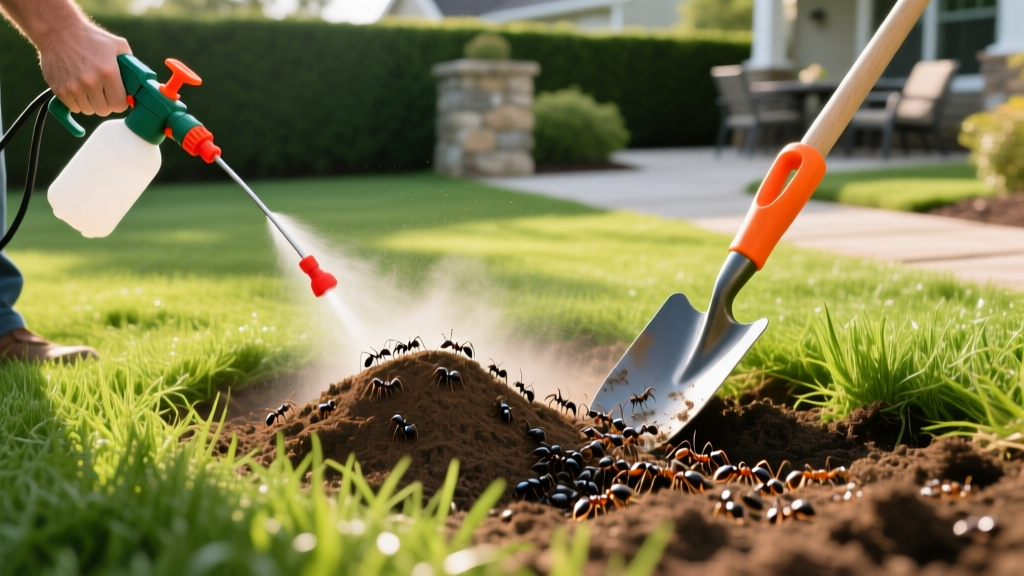
How to Destroy an Ant Bed: The Two-Step Yard Eradication Method
The Hidden Threat of the Yard Ant Bed
Discovering an ant bed in your yard is more than a cosmetic nuisance; it is an indicator of a complex, subterranean superorganism that can undermine turfgrass root systems, damage wooden landscape features, and pose severe allergic risks to humans and pets. While homeowners often default to aerosol surface sprays, these treatments only kill the foraging workers visible above ground, leaving the reproductive queens intact deep within the soil profile. To permanently destroy an ant bed, particularly those housing aggressive species like the Red Imported Fire Ant (Solenopsis invicta) or wood-destroying Carpenter Ants (Camponotus spp.), you must deploy a systematic, biology-driven eradication protocol.
⚠️ Warning: The Budding Failure Mode
Never physically disturb, kick, or poke an active ant bed before applying treatment. Disturbing the mound triggers a survival mechanism known as "budding," where the colony panics, splits into multiple satellite colonies, and relocates several queens deeper into the soil or into adjacent structural voids, turning a single-mound problem into a multi-acre infestation.
Why Surface Sprays Fail: The Anatomy of the Mound
An established fire ant bed is a marvel of environmental engineering. The visible mound is merely the tip of the iceberg, designed to capture solar heat and regulate humidity. The actual colony network extends up to three feet underground and several feet laterally. When you apply a fast-acting, repellent contact insecticide (like bifenthrin or permethrin) directly to the surface, the chemical acts as a barrier. The foraging ants detect the toxin, seal off the treated tunnels, and route the colony's resources to untreated lateral galleries. According to the UC Statewide Integrated Pest Management Program, reliance on repellent surface sprays is the primary reason homeowners experience recurring ant bed flare-ups season after season.
Monogyne vs. Polygyne Colonies
Understanding your local ant population's social structure dictates your treatment volume. Monogyne colonies contain a single queen and are highly territorial, spacing their mounds 100+ feet apart. Polygyne colonies contain multiple queens, tolerate neighboring mounds, and can pack up to 400 ant beds per acre. Polygyne infestations require aggressive, acre-wide broadcast baiting rather than isolated mound treatments.
The Professional Two-Step Eradication Protocol
Pest control professionals rely on the "Two-Step Method" to achieve 90% to 95% long-term suppression of ant beds. This method combines the delayed action of granular baits with the localized lethality of mound drenches or dusts.
Step 1: Broadcast Baiting (Week 1)
The first step targets the foraging workers. You must apply a slow-acting granular insecticide bait across the entire yard, not just on the visible mounds. Foraging ants mistake the granules for food, carry them deep into the subterranean galleries, and regurgitate the toxic matrix to the larvae and queens. Because the active ingredient is slow-acting, the colony does not associate the food source with the subsequent deaths, preventing bait aversion.
- Hydramethylnon (e.g., Amdro Fire Ant Bait): Disrupts cellular metabolism. Priced around $18 for a 3-pound bag. Apply at a rate of 1 to 1.5 pounds per acre using a handheld rotary spreader.
- Indoxacarb (e.g., Advion Fire Ant Bait): Requires bio-activation by the ant's digestive enzymes, making it exceptionally effective against bait-shy colonies. Priced around $45 for a 2-pound bag. Apply at 1.5 pounds per acre.
Step 2: Individual Mound Treatment (Week 2 or 3)
Seven to ten days after the broadcast bait application, inspect the yard for any remaining active ant beds. These are typically the largest, most established colonies that may have had enough stored food to ignore the bait, or satellite colonies that were missed. Treat these specific mounds using a non-repellent liquid drench or a toxic dust.
- Liquid Drenching: Mix a non-repellent suspension concentrate like Termidor SC (9.1% Fipronil) at a rate of 0.8 fluid ounces per gallon of water. Slowly pour 1 to 2 gallons of the solution directly over and around the perimeter of the ant bed. Fipronil utilizes the Transfer Effect (TDE), meaning ants that walk through the treated soil unknowingly transfer the toxin to untreated nestmates through physical contact.
- Dust Injection: For mounds located near electrical boxes, HVAC units, or water meters where liquid drenching is hazardous, use a deltamethrin-based dust (e.g., DeltaDust). Apply the dust lightly over the surface of the undisturbed mound and let the ants naturally pull the particles into their ventilation shafts.
Product Comparison Matrix
| Product Category | Active Ingredient | Brand Example | Approx. Cost (2026) | Best Application Scenario |
|---|---|---|---|---|
| Metabolic Bait | Hydramethylnon | Amdro Pro | $18 / 3 lbs | Standard broadcast prevention |
| Bio-Activated Bait | Indoxacarb | Advion Fire Ant | $45 / 2 lbs | Bait-shy or polygyne colonies |
| Non-Repellent Liquid | Fipronil 9.1% | Termidor SC | $85 / 20 oz | Individual mound drenching & perimeter barriers |
| Waterproof Dust | Deltamethrin | DeltaDust | $28 / 1 lb | Mounds near electrical/water infrastructure |
Environmental Variables: Timing the Treatment
The most expensive, professional-grade bait will fail entirely if applied under the wrong environmental conditions. Ant foraging behavior is strictly governed by soil temperature and moisture levels.
The Soil Temperature Rule: Foraging activity peaks when soil temperatures at a 2-inch depth are between 70°F and 85°F. If the soil is hotter than 90°F, fire ants retreat deep underground to escape the heat and will not surface to collect bait. If the soil is below 60°F, their metabolism slows drastically, and bait collection halts.
Furthermore, never apply granular bait if rain is forecast within the next 24 hours, or if your automated irrigation system is scheduled to run that night. Moisture degrades the lipid-based matrix of the bait granules, rendering them unpalatable to the ants within hours. The EPA Safe Pest Control Guidelines emphasize that aligning pesticide application with local weather patterns is critical for minimizing environmental runoff and maximizing target-species ingestion.
Post-Eradication Yard Defense
Once the visible ant beds are eradicated, your yard remains vulnerable to re-invasion from nuptial flights (mating swarms) originating from neighboring properties. Implement these structural defenses to make your landscape inhospitable to new queens seeking to establish a colony:
- Mulch Management: Carpenter ants and moisture ants thrive in decaying wood. Keep organic mulch layers no thicker than 2 inches and maintain a strict 12-inch mulch-free gap between landscaping beds and your home's foundation.
- Moisture Correction: Ants require consistent water sources. Repair leaking drip-irrigation emitters, regrade low-lying turf areas that hold standing water, and ensure downspout extenders discharge at least 4 feet away from the soil perimeter.
- Perimeter Barrier: Apply a 6-inch wide band of Termidor SC or Alpine WSG (Dinotefuran) along the foundation perimeter twice a year (spring and fall) to intercept foraging trails before they can establish satellite mounds in the lawn.
Monitoring and Maintenance
Eradication is not a one-time event; it is an ongoing management process. Drop a small piece of greasy food (like a potato chip or a dab of peanut butter) near the perimeter of your property every three weeks during the active season. If you observe ants recruiting to the food source within 15 minutes, it is time to re-initiate Step 1 of the broadcast baiting protocol before a new mound breaks the surface of your turf.

