
Pest Control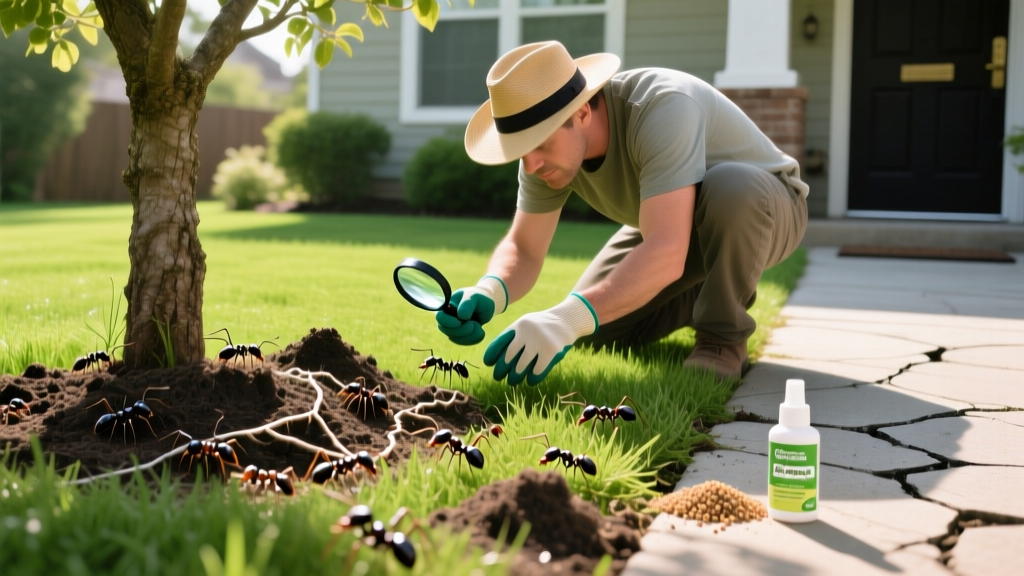
How to Destroy Ants at Home: Yard-to-Indoor Defense Guide
The Biology of Colony Collapse: Why Sprays Fail
When homeowners ask how to destroy ants at home, their first instinct is often to reach for a contact spray. This is a critical mistake. Ant colonies operate on a strict division of labor. According to the University of California IPM, only about 10% of a colony consists of foraging workers. The other 90%—including the queen, brood, and interior workers—remain deep within the nest.
The 10% Rule & Colony Budding: Contact sprays only kill the visible 10% foragers. Worse, the sudden die-off triggers a survival mechanism called 'budding.' The remaining colony senses a threat and splits into multiple satellite colonies, each with its own reproductive queen. You haven't destroyed the ants; you've multiplied them. To achieve total eradication, you must exploit trophallaxis—the process where foragers share food mouth-to-mouth and anus-to-mouth with the rest of the colony.
Phase 1: Yard & Perimeter Defense
Stopping ants indoors begins with establishing a hostile environment outdoors. The most effective method for yard defense is a non-repellent liquid barrier applied to the home's foundation. Unlike repellent sprays (like bifenthrin) that ants simply walk around, non-repellents are undetectable. Ants walk through the treated zone, pick up a lethal dose, and carry it back to the nest.
Executing the Trench and Treat Method
For a durable perimeter barrier, use a Fipronil-based concentrate like Taurus SC (9.1% Fipronil). A 20 oz bottle typically costs between $50 and $60 and treats up to 60 linear feet of foundation when properly diluted.
- Dig a Trench: Use a hand trowel to dig a trench 6 inches deep and 6 inches wide directly against the foundation.
- Mix the Solution: Combine 0.8 fluid ounces of Taurus SC per gallon of water. For an average home, you will need 4 to 6 gallons of finished solution.
- Apply: Pour 1 gallon of the mixed solution into every 10 linear feet of the trench. Pour slowly to allow the soil to absorb the liquid without pooling.
- Backfill: Push the soil back into the trench, mixing the treated soil with the remaining solution as you fill.
This barrier remains active in the soil for up to 90 days, intercepting Argentine, Carpenter, and Odorous House ants before they reach your siding or weep holes.
Phase 2: Indoor Targeted Baiting
Once the perimeter is secured, address the foragers already inside using slow-acting gel baits. The active ingredient must be delayed enough to allow the forager to return to the nest and feed the queen.
| Bait Product | Active Ingredient | Target Species | Avg. Price |
|---|---|---|---|
| Syngenta Advion Ant Gel | Indoxacarb (0.05%) | Sweet-feeding ants (Argentine, Odorous) | $28 (4 tubes) |
| Optigard Ant Gel | Thiamethoxam (0.01%) | Sweet & protein-feeding ants | $32 (4 tubes) |
| Maxforce Quantum | Imidacloprid (0.03%) | Stubborn sweet-feeding colonies | $45 (10g tube) |
Application Protocol for Gel Baits
Do not smear the bait. Apply discrete drops, roughly the size of a pea, every 10 to 12 inches along baseboards, under cabinet hinges, and near plumbing penetrations. Place the bait directly in the path of ant trails. Never spray insecticide near gel bait placements, as the chemical residue will contaminate the bait and repel the ants.
Phase 3: Exclusion and Sealing the Envelope
Chemical controls buy you time, but physical exclusion provides permanent relief. Ants can enter through gaps as small as 1/16th of an inch. Follow the EPA guidelines on safe pest control by sealing structural vulnerabilities.
- Use Copper Mesh: Stuff tightly woven copper mesh into large gaps around HVAC lines, plumbing stacks, and weep holes. Unlike steel wool, copper will not rust and stain your siding.
- Seal with Silicone: Cover the copper mesh and seal window frames and door sweeps with 100% silicone caulk. Avoid acrylic or latex caulks, as they shrink and crack during temperature fluctuations, reopening entry points.
- Trim Vegetation: Cut back tree branches and shrubs so they are at least 18 inches away from the roofline and siding. Ants use these branches as aerial bridges to bypass your foundation barrier.
Troubleshooting: Bait Aversion and Dietary Shifts
A common failure mode in DIY ant destruction is 'bait aversion.' If you place Advion gel and the ants ignore it after 48 hours, you are likely dealing with a dietary shift or a formulation lock.
The Protein vs. Carbohydrate Cycle
Ant colonies shift their nutritional needs based on their reproductive cycle. In spring and early summer, they crave proteins and fats to feed developing larvae. In late summer and fall, they shift to carbohydrates (sugars) to store energy for the queen. If your sugar-based gel bait is being ignored in May, switch to a protein-based bait like Advance 375A (Abamectin) or mix a few drops of the gel with a tiny amount of peanut butter.
Formulation Lock
If ants consume the bait but the colony survives, they may have developed an aversion to the specific inert ingredients (the humectants and preservatives) in the gel matrix. Rotate to a different active ingredient and matrix. If Indoxacarb fails, switch to Thiamethoxam (Optigard) or Dinotefuran (Alpine WSG) to break the lock.
Maintenance and Monitoring
Destroying ants at home is not a one-time event; it is a seasonal management protocol. Reapply your Fipronil trench barrier every 90 days during the active season (April through October). Monitor indoor bait stations monthly, replacing dried-out gel with fresh drops. By combining a non-repellent exterior barrier with slow-acting interior baits and rigorous physical exclusion, you force the colony into a trophallaxis loop that guarantees total eradication without triggering colony budding.

