
Pest Control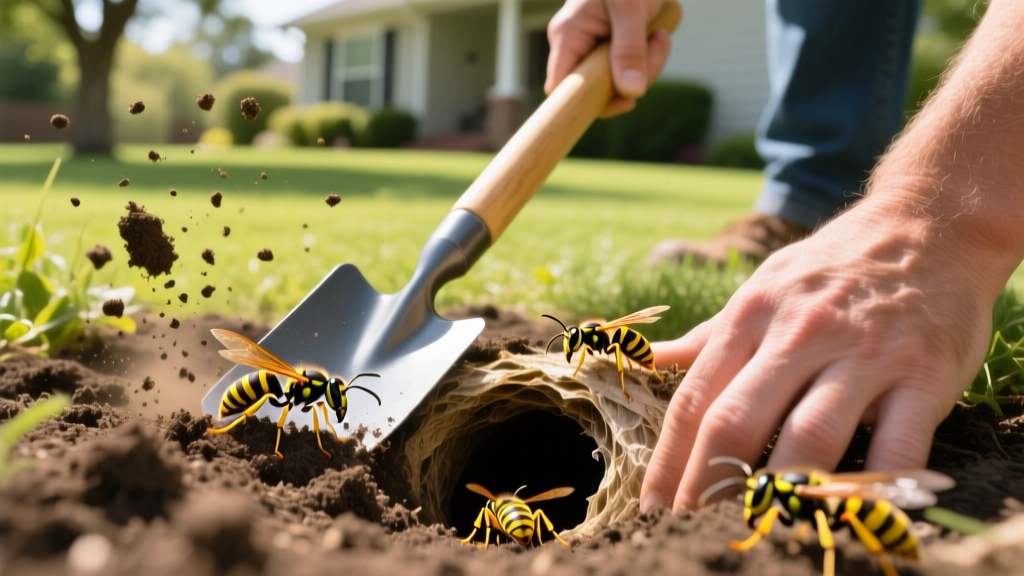
How to Destroy Yellow Jacket Nest in Ground: Step-by-Step Rescue
Symptom Diagnosis: Confirming a Subterranean Colony
Before initiating any eradication protocol, you must confirm the pest. Ground-nesting yellow jackets (Vespula spp., particularly the Eastern yellowjacket, Vespula maculifrons) frequently hijack abandoned rodent burrows, hollow landscape timbers, or dense thatch layers. Unlike solitary ground-dwelling bees, which are docile and beneficial, yellow jackets are highly aggressive, colonial predators that will vigorously defend their subterranean envelope.
Diagnose the infestation by observing the entrance hole. A yellow jacket nest typically features a single, primary entrance roughly the size of a nickel to a quarter, surrounded by a small mound of excavated, finely granulated soil. If you observe a steady stream of 10 to 50 insects entering and exiting the hole per minute during peak daylight hours, you are dealing with a mature colony containing anywhere from 1,000 to 4,000 workers.
Diagnostic Warning: Do not confuse yellow jackets with digger bees or cicada killers. Digger bees operate individually, have fuzzy bodies, and hover erratically. Yellow jackets fly in a direct, purposeful line straight into the burrow and possess distinct, hairless yellow-and-black banding. Misidentifying the insect can lead to unnecessary chemical application and the destruction of beneficial pollinators.
The Biology of the Ground Nest: Why Standard Sprays Fail
Understanding the physical architecture of the nest is critical to understanding how to destroy yellow jacket nest in ground environments effectively. The paper envelope is rarely located directly beneath the entrance hole. Instead, the foraging tunnel can extend horizontally for several inches before dropping vertically, with the actual nest suspended 12 to 36 inches deep in the soil cavity.
Because of this offset architecture, liquid aerosol sprays and foaming wasp killers are virtually useless for subterranean colonies. Liquids soak into the surrounding soil matrix before reaching the paper envelope, failing to deliver a lethal dose to the queen. Furthermore, flooding the hole with water or household chemicals like gasoline only agitates the colony, prompting them to chew secondary exit holes through the root zone of your lawn, creating a multi-directional hazard.
Product Selection Matrix: Dust vs. Liquid vs. Aerosol
To eliminate a ground nest, you must leverage the colony's grooming and trophallaxis (food-sharing) behaviors. Insecticide dust clings to the foragers' legs and bodies. As they travel deep into the nest and interact with the queen and larvae, the dust transfers throughout the colony, resulting in total eradication within 24 to 48 hours.
| Product Type | Active Ingredient | Est. Cost | Efficacy for Ground Nests |
|---|---|---|---|
| Tempo Dust | Cyfluthrin (1%) | $18 - $22 (10oz) | Excellent. Fast knockdown, tracks deep into the burrow. |
| Delta Dust | Deltamethrin (0.06%) | $22 - $26 (1lb) | Superior in damp soil. Waterproof formulation resists moisture. |
| Drione Dust | Pyrethrins + Silica | $25 - $30 (1lb) | Good, but highly susceptible to soil moisture. Use only in dry conditions. |
| Aerosol Foams | Tetramethrin/Prallethrin | $6 - $9 (15oz) | Fail. Expands in the tunnel, blocks the entrance, and misses the deep nest. |
Step-by-Step Rescue Protocol
Executing the treatment requires precise timing and specialized application tools. According to entomologists at the University of Minnesota Extension, yellow jacket foraging activity ceases as temperatures drop, making late evening the only safe window for intervention.
Phase 1: Daytime Mapping (The Flour Trick)
Ground nests often have secondary, hidden exits located up to three feet away from the primary entrance. During the day, while wearing protective gear, lightly dust the area around the primary hole with all-purpose baking flour. Watch the flight paths. If you see wasps emerging from a secondary hole in the turf, mark it with a landscaping flag. All entrances must be treated simultaneously.
Phase 2: Nighttime Application
- Timing: Wait until at least two hours after sunset. Ensure the ambient temperature is below 65°F. At this time, all foragers have returned, and the colony's metabolic rate is sluggish.
- PPE Requirements: Wear a commercial bee veil, long sleeves, heavy leather gauntlet gloves (cotton is easily penetrated by stingers), and tuck your pants into thick socks.
- Tool Preparation: Use a specialized bulb duster (e.g., JT Eaton Bellow Hand Duster, approx. $12). Fill the bulb only one-third full with Tempo or Delta Dust. Overfilling prevents the air pocket necessary to create a fine, penetrating cloud.
- Application: Approach the hole using a red-filtered flashlight (yellow jackets cannot see red light well). Insert the duster nozzle directly into the entrance and puff 3 to 4 times. You should see a light dusting of powder on the rim of the hole.
- Secondary Exits: Repeat the 3-puff application at every marked secondary exit.
Critical Mistake to Avoid: Never plug the hole with dirt, rocks, or steel wool immediately after dusting. Plugging the entrance traps the surviving wasps inside, forcing them to excavate new escape routes through your lawn's root system. Leave the hole open so returning foragers track the residual dust into the nest over the next 24 hours.
Post-Treatment Monitoring and Lawn Recovery
Allow exactly 48 hours before assessing the site. Approach the hole during mid-morning and observe for 5 minutes. If zero insects emerge, the colony has been successfully eradicated. The queen will have succumbed to the dust transfer, and the remaining workers will have expired.
Once confirmed dead, lawn remediation is required to prevent future pest occupation and to restore the turf canopy:
- Fill the Void: Mix a 50/50 blend of screened topsoil and fine compost. Pack the mixture tightly into the burrow entrance using a tamping tool to eliminate the air cavity, which could otherwise attract digging rodents or future overwintering queens.
- Overseed: Apply a matching grass seed blend (e.g., Kentucky Bluegrass or Tall Fescue, depending on your hardiness zone) over the disturbed soil.
- Hydrate: Water the patched area lightly twice daily for 14 days to ensure germination and soil settling.
Troubleshooting: Why the Nest is Still Active
If you observe active foraging 72 hours post-treatment, one of three failure modes has occurred:
Failure Mode 1: Moisture Degradation. If it rained within 12 hours of application and you used a non-waterproof dust like Drione, the silica aerogel clumped, rendering the active ingredient immobile. Fix: Reapply using a waterproof Deltamethrin-based dust (Delta Dust) once the soil surface dries.
Failure Mode 2: Missed Secondary Exits. The colony detected the chemical threat at the primary entrance and rerouted all traffic through an unmarked secondary exit under a nearby shrub or patio slab. Fix: Re-initiate the flour-tracking protocol during the day to map the new egress points and treat them at dusk.
Failure Mode 3: Nest Depth Exceeds Dust Reach. In rare cases involving deep sandy soils, the nest envelope may be situated deeper than 36 inches, beyond the effective draw of the bulb duster. Fix: According to guidelines from University of Kentucky Entomology, if dusting fails repeatedly, a professional pest control operator must be engaged to inject micro-encapsulated liquid insecticides under high pressure directly into the deep cavity.
Preventative Lawn Care Strategies
Yellow jackets seek out existing voids in the landscape. Maintaining a dense, healthy turf canopy is your primary defense. Aerate compacted lawns annually to reduce rodent activity (which creates the initial burrows), and maintain a mowing height of 3 to 4 inches to shade the soil surface, making it less attractive to ground-dwelling insects seeking warmth. By eliminating the void spaces and managing the soil ecology, you drastically reduce the probability of a subterranean colony establishing on your property in subsequent seasons.

